
Quick verdict
The short answer
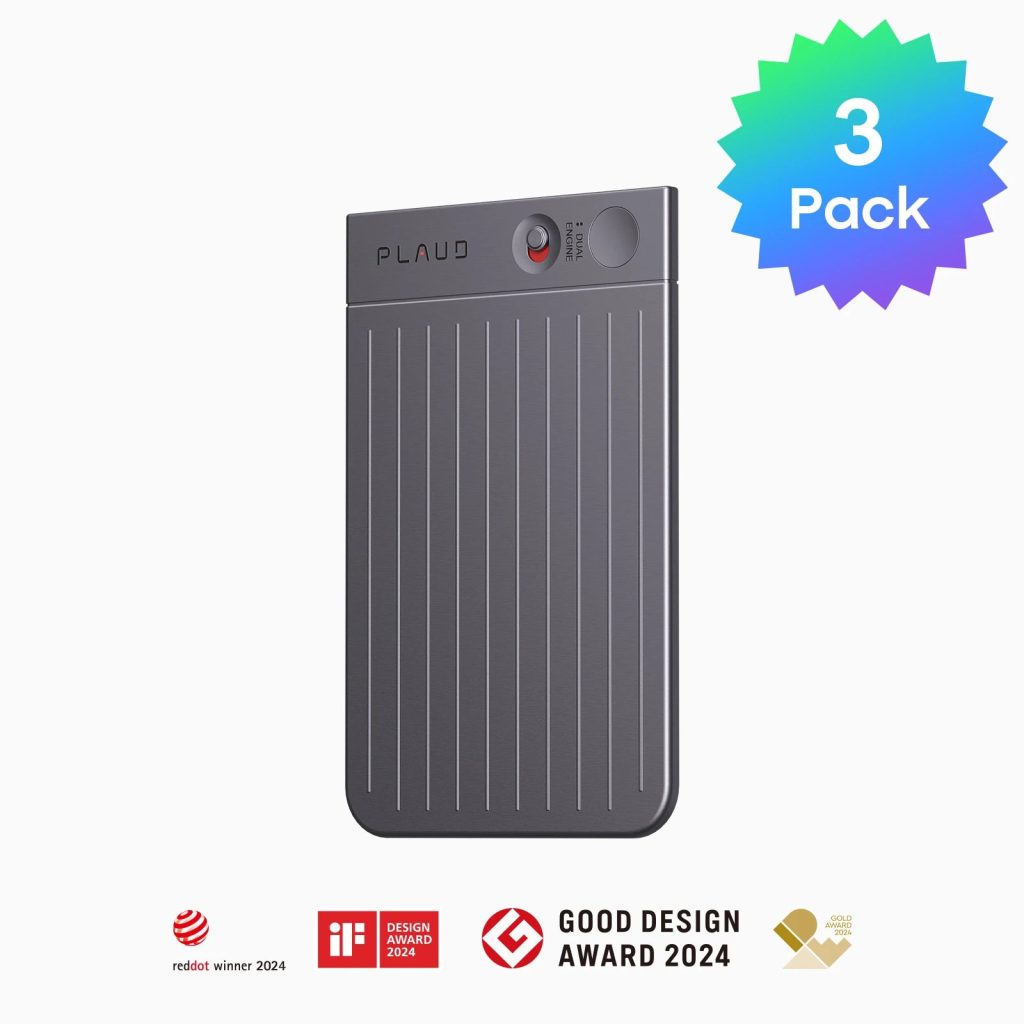
The Plaud Note is the most polished dedicated AI voice recorder you can buy: a credit-card-thin device (2.99mm, 30g) that records meetings, lectures, and phone calls, then turns them into transcripts, summaries, and mind maps with GPT-powered AI. At $159 with 300 free transcription minutes a month, it’s a serious productivity tool for note-heavy professionals. The honest math: the hardware is a one-time cost, but heavy users will need a paid minutes plan ($99.99/year Pro or $239.99/year Unlimited), so budget for the subscription you may actually need. For anyone whose work product starts as a conversation, it’s the rare gadget that pays for itself in reclaimed hours.
This is a research-based review. We have not tested the Plaud Note hands-on; every fact below comes from the manufacturer’s published specs, pricing, and independent reporting. Prices and specs checked September 30, 2026.
Key specs
| Spec | Plaud Note |
|---|---|
| Price | $159 (US) |
| Form factor | Credit-card recorder, 2.99mm thin, 30g |
| Storage | 64GB local (up to ~240 days recording at 2 hrs/day, per Plaud) |
| Battery | Up to 30 hours continuous recording; 60 days standby |
| Microphones | 2 MEMS microphones + 1 vibration pickup unit (for phone-call capture) |
| Recording modes | Physical selector: in-person ambient vs. phone-call (via vibration conduction) |
| Phone attachment | Magnetic case, MagSafe-compatible |
| Transcription | 59–112 languages (sources differ; confirm on Plaud’s site), speaker labels, custom vocabulary |
| AI features | GPT-powered summaries, 10,000+ templates, mind maps, Ask Plaud, via app / web / desktop |
| Free plan | Starter: 300 transcription minutes/month, no subscription required |
| Paid plans | Pro: $99.99/year or $17.99/month (1,200 min/month); Unlimited: $239.99/year or $29.99/month |
Price and availability
The Plaud Note sells for $159 in the US through Plaud’s store and retailers including Amazon, and it’s widely stocked internationally. The 300-minutes-per-month Starter plan is genuinely free with no subscription — casual users may never pay more. Power users should price the real cost: Pro at $99.99/year doubles your annual cost in year one. Plaud’s lineup has grown around it: the wearable NotePin ($159), the NotePin S ($179), and the ultra-thin Note Pro ($189) all exist now, so make sure you’re looking at the credit-card Note and not its siblings.
Do the minutes math before you buy, because it determines everything. Five hours of meetings a week is roughly 1,000 minutes a month — right at the edge of the free tier. If that sounds like your calendar, plan on Pro from day one ($99.99/year) and treat the true first-year cost as $259, not $159. Lighter users — a few interviews a month, occasional lectures — will live comfortably inside the free 300 minutes. Plaud also sells minute top-up packs (600 minutes for $12.99 and up), which can be cheaper than a plan if your usage spikes seasonally rather than constantly.
What it’s good at
- Phone-call recording that actually works. The vibration-conduction pickup — the Note magnetically attaches to your phone and captures the call through vibration — solves the problem phone apps can’t touch on modern iPhones. This is the feature people buy it for.
- One-press simplicity. A physical switch for meeting vs. call mode, one button to record. No app-fumbling when the meeting starts.
- Transcription and summary quality. Whisper-based transcription with speaker labels across dozens of languages, then GPT-generated summaries, templates, and mind maps. Reviewers rate the summaries as the best in the dedicated-recorder category.
- Battery and storage. 30 hours of continuous recording and 64GB of local storage mean you charge it monthly-ish, not daily.
- Thin enough to forget. At 2.99mm and 30g it lives in a wallet or sticks to the back of a phone via the magnetic case. Dedicated recorders used to be bricks; this one isn’t.
- Ecosystem. App, web, and desktop access plus a Mac meeting notetaker Plaud launched in 2026 — the product has grown beyond the hardware into a full capture system.
Where it falls short
- The minutes meter. 300 free minutes a month sounds generous until you record a few long meetings a week. The AI features that make the device worth buying require cloud processing, so heavy users face $100–$240/year in plans.
- Transcription isn’t magic. Accuracy depends on distance, accents, crosstalk, and room noise like every other recorder. Budget time to correct transcripts for anything you’ll publish or file.
- Cloud dependence. The summaries, templates, and Ask Plaud all run in the cloud — no offline AI, and your recordings pass through Plaud’s servers. Privacy-sensitive professions should read the data policy.
- Lineup confusion. Note, NotePin, NotePin S, Note Pro — Plaud’s naming is a mess, and the sibling products overlap enough to make buying the wrong one easy.
- Consent and legality. Recording conversations without consent is illegal in many jurisdictions. The hardware makes capture frictionless; the law hasn’t changed to match. When in doubt, announce that you’re recording — it’s both the legal and the decent thing to do.
Who should buy it
Buy the Note if you live in meetings, interviews, lectures, or client calls and want transcripts and summaries without thinking about it. Journalists, lawyers, consultants, students, and salespeople are the core audience — anyone whose work product starts as a conversation. It’s especially strong for phone-heavy roles: the vibration-conduction call capture is something no phone app can replicate, and it’s the single feature that justifies dedicated hardware.
Who should skip it
Skip it if you record less than a few hours a month (your phone’s free recorder plus a transcription app is fine), need offline/private processing, or balk at the minutes-based pricing. Also skip if what you really want is an always-on ambient memory device — that’s the Bee Pioneer’s or Omi’s job, not the Note’s. And if you primarily need a wearable rather than a pocket device, compare the NotePin S first: same software, different form factor, physical record button.
Verdict
The Plaud Note is the best dedicated AI voice recorder for most professionals: genuinely useful hardware, best-in-class summaries, and a free tier that’s enough for casual use. Just go in with eyes open about the minutes pricing — the $159 is the entry fee, and the subscription is where heavy users pay. For meeting-heavy work, it’s worth it: one avoided “wait, what did we decide?” email chain pays for a month of Pro.
Rating: 4.3/5
FAQ
How does the Plaud Note record phone calls?
It attaches magnetically to the back of your phone (MagSafe-compatible case included) and uses a vibration pickup unit to capture call audio through vibration conduction, with a physical switch to toggle between call and in-person meeting modes.
How many free transcription minutes do I get?
The free Starter plan includes 300 transcription minutes per month. Pro ($99.99/year or $17.99/month) raises that to 1,200 minutes, and Unlimited ($239.99/year or $29.99/month) is designed for very heavy users.
How many languages does it transcribe?
Plaud’s materials cite figures ranging from 59 to 112 languages depending on the source — confirm the current number on Plaud’s official site before buying if a specific language matters to you.
What’s the difference between the Plaud Note, NotePin, and Note Pro?
The Note ($159) is the credit-card recorder reviewed here. The NotePin ($159) is the wearable clip/lanyard version, the NotePin S ($179) adds a physical record button and Find My support, and the Note Pro ($189) is an ultra-thin four-microphone model with longer pickup range.