
Quick verdict
The short answer
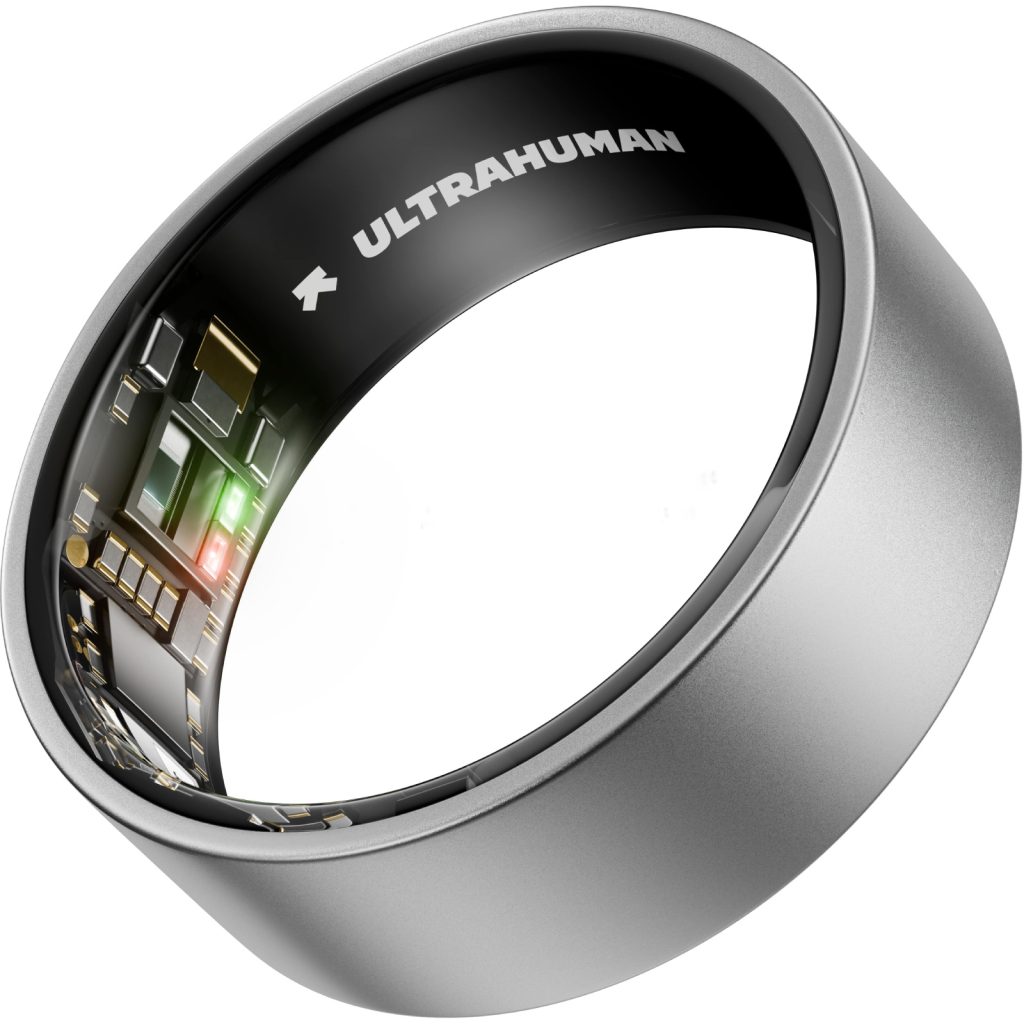
The Ultrahuman Ring Air is the smart ring for people who hate subscriptions. At $349 with no monthly fee, you get titanium construction, strong sleep and recovery tracking, and the category’s most proactive coaching — circadian rhythm guidance, caffeine windows, and stimulant timing that tells you when to have coffee, not just that you slept badly. The battery (up to 6 days) and app polish trail the leaders slightly, but the price-to-freedom ratio is the best in the business. In a category where the best-known product taxes you monthly for your own data, the Ring Air’s pitch is refreshingly simple: pay once, own your insights.
This is a research-based review. We have not tested the Ultrahuman Ring Air hands-on; every fact below comes from the manufacturer’s published specs, pricing, and independent reporting. Prices and specs checked September 30, 2026.
Key specs
| Spec | Ultrahuman Ring Air |
|---|---|
| Price | $349 |
| Subscription | None for the core experience |
| Material | Titanium |
| Sizes | 5–14 (free sizing kit recommended) |
| Dimensions | 2.4mm thick; 2.4–3.6g |
| Battery | Up to 6 days |
| Water resistance | 100m |
| Sensors | PPG (heart rate, HRV, SpO2), medical-grade skin temperature, 6-axis motion sensor |
| Tracking | Sleep Index, Movement Index, Recovery Score, Power Index, circadian rhythm, caffeine window, cycle tracking, AFib detection, 100+ workout modes plus custom |
| Compatibility | iOS and Android; syncs with Apple Health and Google Health Connect |
| Colors | Raw Titanium, Aster Black, Matte Grey, Bionic Gold, Space Silver |
Price and availability
The Ring Air sells for $349 direct from Ultrahuman and on Amazon, with a free sizing kit available before you commit. Five finishes are standard at the same price — no $499 gold tier like Oura. There is no subscription for the core experience, which makes the three-year cost a flat $349 against roughly $560 for an Oura Ring 4. One caveat from independent coverage: some advanced heart-health features (such as AFib detection) have been reported as paid add-ons via Ultrahuman’s PowerPlugs system — confirm what’s included before you buy.
The cost comparison deserves to be explicit, because it’s the whole argument. Three years of the Oura Ring 4 at its $349 base price plus membership: about $560. Three years of the Ring Air: $349. That’s a $210 gap that buys you the Oura’s more validated sleep staging and a more polished app — or, if you choose Ultrahuman, a lighter ring, proactive caffeine and circadian coaching Oura doesn’t offer, and no monthly bill. There’s no wrong answer, but there’s no ambiguity about which one is cheaper to own.
What it’s good at
- Zero subscription. The defining feature. Every insight, every score, every day — no monthly meter running on your own biometrics.
- Proactive coaching. The circadian rhythm tracking and caffeine window (“have your last coffee by 2:40 PM”) turn the ring into an advisor, not just a dashboard. Reviewers call it the most actionable coaching in the category.
- Light and thin. At 2.4–3.6g and 2.4mm thick it’s the lightest and slimmest of the big three — the ring you forget fastest.
- Sleep and HRV depth. Detailed HRV tracking, a granular Power Index, and sleep analysis that independent comparisons rate close to Oura’s — strong for a subscription-free device.
- Cross-platform. Works with iPhone and Android alike, syncing to Apple Health and Google Health Connect. No ecosystem lock-in, unlike the Galaxy Ring.
- Workout coverage. 100+ workout modes plus custom entries, with semi-automatic detection. Not a watch replacement, but broader than Samsung’s walk/run-only auto-detect.
Where it falls short
- Battery. Up to 6 days officially, with independent comparisons measuring closer to 4 in real use — the weakest of the three flagship rings.
- App polish. The app is data-dense and proactive, which fans love and newcomers can find overwhelming. Oura’s presentation is more refined for beginners.
- Sleep staging nuance. Consumer testing finds broadly similar measurements to Oura with some disagreement over sleep stages, and expect one to two weeks of baseline-building before the recovery scores feel personalized. Oura’s algorithms remain the most validated.
- Upsell pressure. Multiple reviews note the app pushes paid add-ons and upsells. The core is free; the edges try to sell you things.
- No built-in data export. At least one long-term review flags the lack of data export for sharing with a coach or doctor — a real limitation for a health device.
Who should buy it
Buy the Ring Air if you want premium sleep, recovery, and HRV tracking with no subscription, on either iPhone or Android. It’s the biohacker’s pick: circadian guidance, caffeine timing, and metabolic nudges for people who want their ring to tell them what to do, not just what happened. Shift workers, frequent travelers fighting jet lag, and anyone optimizing energy across the day will get the most from the circadian features. Couples and training partners can even compare recovery trends — the app makes sharing readouts straightforward.
Who should skip it
Skip it if you want the absolute most validated sleep algorithms (Oura), the most beginner-friendly app (Oura again), Samsung-ecosystem integration (Galaxy Ring), or the longest battery (RingConn Gen 2/Air). Also skip if you need data export for medical use — that’s currently missing. And if you’re sensitive to upsells, know that the app will nudge you toward paid PowerPlugs; the core experience is complete without them, but the nudges are real.
Verdict
The Ultrahuman Ring Air is the smart ring we’d recommend to the most people in 2026: $349, no subscription, genuinely useful proactive coaching, and tracking that stands up to the very best. It gives up a little battery and polish to Oura, but at this price the trade is an easy one to make. but it gives up nothing that matters more than the $210+ it saves you. The subscription-free champion — and the ring to buy if you’d rather own your health data than rent access to it. For first-time smart ring buyers especially, it’s the lowest-risk way into the category: no monthly fee means no sunk-cost pressure if you decide rings aren’t for you. Charge it while you shower twice a week and you’ll never think about the battery at all.
Rating: 4.2/5
FAQ
Does the Ultrahuman Ring Air require a subscription?
No. The $349 purchase covers the core experience with no recurring fee. Some advanced add-ons (reportedly including certain heart-health features) may be sold separately as PowerPlugs — confirm current terms on Ultrahuman’s site.
How long does the battery last, and is it comfortable for sleep?
Ultrahuman rates it at up to 6 days; independent comparisons measured about 4 days in typical use. Expect to charge once or twice a week. Comfort is a strong point: at 2.4–3.6g and 2.4mm thin it’s the lightest of the flagship rings, and reviewers say they forget they’re wearing it overnight. As with all smart rings, get the free sizing kit first — a snug fit is what makes the optical sensors accurate.
Does it work with iPhone?
Yes — the Ring Air works with both iOS and Android, and syncs with Apple Health and Google Health Connect.
How does it compare to the Oura Ring 4?
Core tracking is comparable, with Oura slightly ahead on sleep-staging validation and app polish. The Ring Air wins decisively on cost of ownership (no subscription), weight, and proactive coaching like caffeine timing.
Where to buy
As an Amazon Associate we earn from qualifying purchases.