
Quick verdict
The short answer
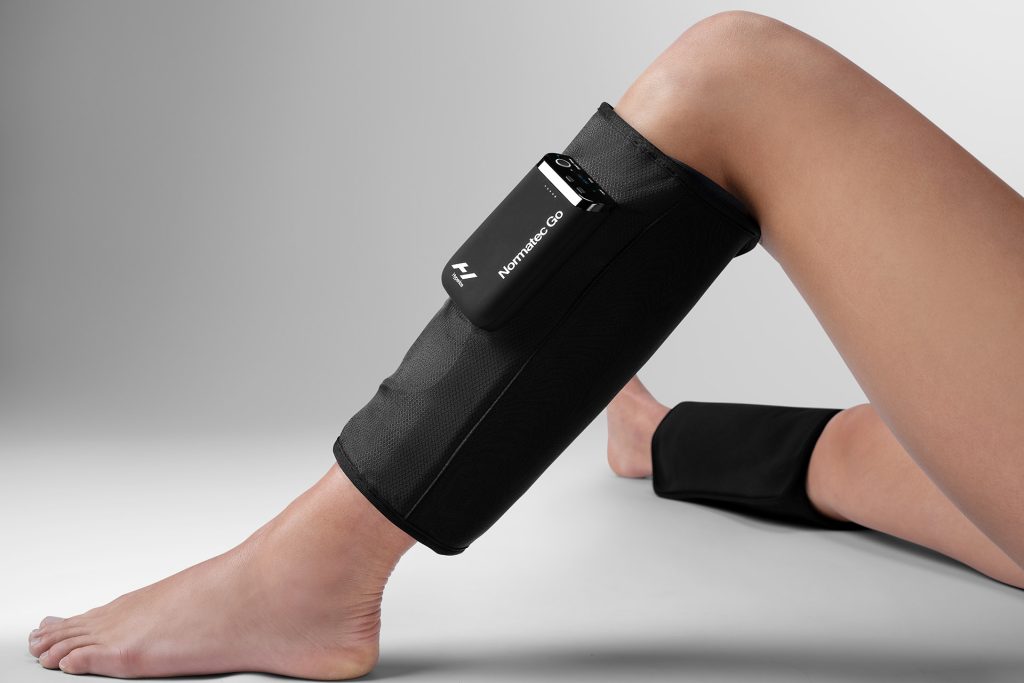
The Normatec Go is Hyperice’s genius miniaturization of its famous compression boots: a pair of self-contained calf sleeves that deliver dynamic air compression anywhere — no hoses, no control unit, no wall outlet. At $379 it’s a fraction of the full-leg Normatec system, genuinely portable (TSA approved, 1.2 lbs per sleeve), and surprisingly effective for lower-leg recovery. The catch is scope: it only treats calves, so runners with wrecked quads or glutes will still want the full system. For travelers, desk workers, and anyone whose recovery bottleneck is the lower leg, it’s the most practical compression device we’ve researched.
This is a research-based review. We have not tested the Normatec Go hands-on; every fact below comes from the manufacturer’s published specs, pricing, and independent reporting. Prices and specs checked September 30, 2026.
Key specs
| Spec | Hyperice Normatec Go |
|---|---|
| Coverage | Calves only (pair of wearable sleeves) |
| Compression | 3 zones of overlapping gapless 360° dynamic air compression; 7 intensity levels |
| Sync | HyperSync technology synchronizes both sleeves (or use individually) |
| Battery | Up to 3 hours per charge, per unit |
| Weight | 1.2 lbs per unit |
| Controls | On-device buttons + color display panel; Bluetooth to Hyperice app |
| Travel | TSA approved for carry-on; no hoses or control unit |
| What’s included | 2 Normatec Go units, dual USB charger, 2 USB cables |
Price and availability
The Normatec Go sells for $379 at Best Buy, Hyperice, and specialty recovery retailers. That positions it well below the full-leg Normatec systems (which run into four figures) while staying premium versus generic compression sleeves. It’s widely in stock as of late 2026. Confirm pricing at your retailer — Hyperice runs periodic promotions.
What it’s good at
- Real Normatec compression, no tether. The Go uses the same dynamic air compression science as the full system — sequential pulsing that pushes blood flow upward — minus the hoses and control box. Reviewers describe the calf squeeze as legitimately powerful, competitive with professional-grade equipment.
- Truly portable recovery. This is the whole thesis: slip the sleeves on at your desk, in an airport, on the couch. At 1.2 lbs per sleeve with a 3-hour battery and no external unit, it’s the only serious compression system you can use while standing at a standing desk or walking around the house.
- Targeted at the “second heart.” Hyperice’s framing has a physiological point: the calf muscle pump is a major driver of venous return. For runners, cyclists, nurses, and anyone on their feet all day, focused calf compression addresses the exact tissue that swells and aches.
- Thoughtful, independent controls. Each sleeve has its own buttons and color display, the HyperSync feature keeps both legs pulsing in unison, and 7 intensity levels give real range from gentle flush to deep squeeze. Bluetooth app control is a bonus, not a requirement.
- Travel-friendly by design. TSA approved, USB charging, compact enough to live in a backpack. For athletes who travel to races, this replaces the “skip recovery for a week” problem.
Where it falls short
- Calves only — that’s the deal. Quads, hamstrings, glutes, and feet get nothing. If your sport wrecks your thighs (cycling, squats, soccer), the Go solves half your problem and the full-leg system is what you actually want.
- Compression, not massage. Some owners wish for more varied intensity patterns — it’s rhythmic squeezing, not the targeted kneading of a massage gun. It complements a Hypervolt; it doesn’t replace one.
- Sizing and fit matter. The sleeves wrap the calf, so very large or very small calves may get uneven compression. Check Hyperice’s sizing guidance before ordering.
- $379 for a single body part. It’s fairly priced against full Normatec systems, but it’s still a lot for sleeves that only do calves — especially when a good massage gun covers your whole body for the same money.
Who should buy it
Runners and triathletes whose limiting factor is calf fatigue and swelling. Frequent flyers who want recovery in transit. Desk workers with heavy, achy lower legs. Existing Normatec owners who want a portable complement to their full-leg system. Athletes rehabbing calf or Achilles issues (with their physio’s guidance).
Who should skip it
Anyone whose recovery needs are quad/hamstring/glute-dominant — save for the full-leg system. Budget buyers who’d get more coverage per dollar from a massage gun. People who dislike the sensation of tight compression (try before you buy if possible).
Setup and living with it
Charge both sleeves over USB, install the Hyperice app (optional — the on-device buttons and color displays work standalone), and slip them on. HyperSync pairs the two units so they pulse in unison; you can also run each sleeve independently if only one calf needs attention. Seven intensity levels are adjusted on the sleeve itself, which owners appreciate — no digging for a phone mid-session.
In practice, the Normatec Go shines in 15–30 minute sessions: post-run flushes, long desk days, or evening recovery on the couch. The 3-hour battery covers roughly a week of daily sessions before recharging, and the sleeves are light enough (1.2 lbs each) to wear while moving around the house — something no tethered system allows. Travelers report it fitting easily in a carry-on alongside a laptop. Maintenance is minimal: wipe down the interior fabric, air them out after sweaty sessions, and keep the USB charging cables handy. The main fit consideration is calf circumference — check Hyperice’s sizing guidance, since the wrap needs good contact for even compression.
Alternatives worth considering
The full Normatec 3 leg system is the obvious step-up: complete leg coverage (and optional hip/arm attachments) with more power, at a price well into four figures — the right call if quads and hamstrings are your problem areas. The Hypervolt 2 Pro ($349) takes a different approach entirely: targeted percussion massage for the whole body at the same price, and many athletes own both (massage gun for knots, compression for flush). Budget buyers can look at generic air-compression leg massagers in the $100–$200 range, though they lack Hyperice’s sequential-pulse pattern and build quality. And for pure circulation on long flights, medical-grade graduated compression socks ($30–$60) remain the cheapest effective option. The Go’s niche is specific: pro-grade compression that leaves the house with you.
Verdict
The Normatec Go is a niche product executed brilliantly: it does one thing — portable calf compression — with pro-grade quality. Know that it’s a specialist, not a generalist, and it’s an easy buy. 4.4/5
FAQ
How is the Normatec Go different from full Normatec boots?
The Go is a pair of self-contained calf sleeves with no hoses or control unit; the full Normatec system covers the entire leg (and other attachments) via a separate control unit, with more power and coverage at a much higher price.
How long does the battery last?
Up to 3 hours per charge per sleeve — many sessions between charges. It charges over USB.
Can I use just one sleeve?
Yes. HyperSync synchronizes the pair, but each unit works independently with its own controls.
Is it TSA approved?
Yes, the Normatec Go is approved for carry-on, making it practical for travel recovery.
How long and how often should I use it?
Hyperice’s guided routines typically run 15–30 minutes. Most athletes use it after hard sessions or at the end of long days on their feet; daily use is fine since it’s non-invasive compression rather than deep tissue work. Start at a lower intensity (levels 1–3) and work up — level 7 is genuinely intense and not where beginners should start.
Where to buy
As an Amazon Associate we earn from qualifying purchases.