
Best Sleep & Health Tech 2026: Smarter Rest and Recovery
Good health starts with good sleep, and this year’s sleep and health tech makes both easier to measure and improve. After reviewing the specs and feature sets of seven standout devices, our overall winner is the Withings Body Scan — nothing else packs a 6-lead ECG, segmental body composition, and vascular age tracking into a single bathroom-floor device. The sleep gadgets on this list solve everyday problems too, from noisy apartments to phones that have hijacked your mornings.
Our picks at a glance
| Product | Standout feature | Best for | Link |
|---|---|---|---|
| Withings Body Scan | 6-lead ECG with AFib detection | Health-optimizers wanting clinical-grade data | Check price |
| Loftie Alarm Clock | Two-phase gentle wake, no subscription | Breaking the phone-alarm habit | Check price |
| Withings Sleep | Under-mattress tracking, zero wearables | Sleep data without wearing anything | Check price |
| Hatch Rest+ | Time-to-rise toddler training | Parents, from newborn to preschool | Check price |
| Yogasleep Dohm Uno | Real fan-based white noise | Purists who hate digital loops | Check price |
| Wyze Smart Scale X | Heart-rate tracking at a budget price | Value seekers wanting full metrics | Check price |
| Dreamegg D11 | 21 sounds in a pocket-size portable | Travelers and nurseries on a budget | Check price |
1. Withings Body Scan — Best overall
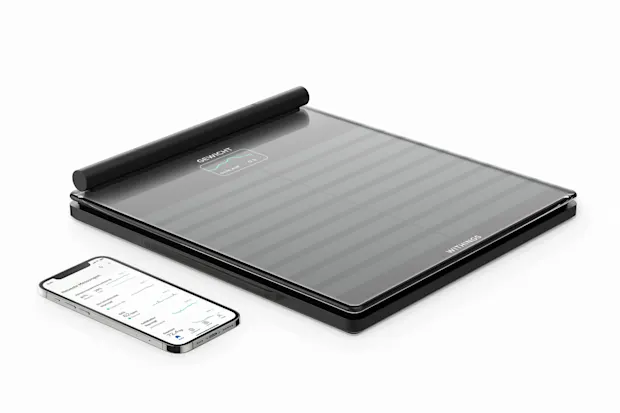
The Withings Body Scan is less a scale than a health station. Segmental body composition measures fat and muscle across your arms, legs, and trunk — revealing imbalances a single number never could — while a 6-lead ECG screens for atrial fibrillation in a 30-second standing measurement, with results you can share as a PDF with your doctor. Vascular Age estimates arterial health, and standing heart rate plus EDA nerve-activity scoring round out a cardiovascular picture no other home device offers. A color screen shows results without your phone, the rechargeable battery lasts 12 months, multi-user recognition keeps households separate, and dedicated pregnancy, baby, and athlete modes adapt the readings. This is premium hardware at a premium price, aimed squarely at health-serious buyers who want clinic-level insight at home. As always with screening features, the ECG flags patterns to discuss with a doctor — it is not a diagnosis.
- Pro: Segmental composition, 6-lead ECG with AFib detection, vascular age — unmatched depth.
- Pro: Color screen, 12-month battery, multi-user recognition.
- Pro: Pregnancy, baby, and athlete modes; shareable ECG reports.
- Con: Premium pricing — the most expensive scale most people will consider.
- Con: Bioimpedance readings are estimates; track trends, not single snapshots.
2. Loftie Alarm Clock — Best for better mornings
The Loftie attacks the most common sleep problem of all: the phone on the nightstand. Its signature two-phase alarm starts with a gentle, gradually intensifying sound before the main alarm, easing you out of lighter sleep instead of jolting you from deep sleep. Over 100 sleep sounds — white noise, nature recordings, meditations, breathwork — come free forever with no subscription, which is increasingly rare. You set it up once in the app, then the clock runs fully independent of your phone, and Blackout Mode kills every LED for total darkness. A night light and Bluetooth speaker round out the package. It is not for heavy sleepers who need a sonic boom, and initial setup does require the app — but for anyone trying to reclaim phone-free mornings, this is the most thoughtful alarm clock of the smartphone era.
- Pro: Two-phase gentle alarm avoids the cortisol spike of sudden alarms.
- Pro: 100+ sleep sounds free with no subscription required.
- Pro: Fully phone-independent after setup; Blackout Mode for light-sensitive sleepers.
- Con: Too gentle for very heavy sleepers.
- Con: Speaker is casual-quality — fine for podcasts, not critical listening.
3. Withings Sleep — Best tracker for non-wearers
The biggest reason sleep tracking fails is simple: people will not wear the tracker. Withings Sleep solves that by sliding under the mattress — a thin pad that tracks sleep cycles (deep, light, REM), snoring, heart rate, and breathing disturbances with zero effort after a one-time setup. There is nothing to charge, wear, or remember. Each morning the Health Mate app delivers a Sleep Score with long-term trends and coaching insights, and IFTTT integration turns your bed into a presence sensor — dimming lights when you get into bed, for example. Accuracy is trend-grade rather than clinical, and thick mattresses or restless partners can affect readings, but for data-curious sleepers who refuse wristbands and rings, this is the most effortless tracker available.
- Pro: Zero-effort tracking — no wearable, no charging, ever.
- Pro: Sleep cycles, snore detection, heart rate, breathing-disturbance flagging.
- Pro: Daily Sleep Score with trends plus IFTTT smart-home triggers.
- Con: Less precise than clinical sleep studies; treat as a trend tool.
- Con: Requires Wi-Fi and the Withings ecosystem; needs a few nights to calibrate.
4. Hatch Rest+ — Best for parents
The Hatch Rest+ is the rare nursery gadget that stays useful for years. It starts as a baby sound machine (18+ sounds) and dimmable night light for nighttime feeds, then grows into a toddler sleep trainer: program a time-to-rise light that stays red while it is still night and turns green when it is okay to get up. Parents control everything from the app without entering the room, the clock display matures into a proper toddler room clock, and an 8-hour backup battery makes it portable for travel and grandparents’ houses. It costs more than a basic sound machine, and it is not a monitor — there is no camera or breathing tracking — but as a long-term investment in family sleep, few devices earn their keep this consistently.
- Pro: Sound machine, night light, and time-to-rise trainer in one device.
- Pro: Parent app control adjusts sound and light without entering the room.
- Pro: Grows with the child from newborn white noise to preschool mornings.
- Con: Premium price versus basic sound machines.
- Con: Not a baby monitor — no camera or breathing tracking.
5. Yogasleep Dohm Uno — Best natural white noise
Since 1962, the Yogasleep Dohm has done white noise the honest way: it is an actual fan inside an acoustic housing, producing genuine rushing air instead of a digital recording. That matters because recorded noise loops, and sensitive sleepers subconsciously detect the repetition; real fan noise has no loop point and no digital artifacts. Adjustable vents tune the tone from deep rumble to brighter hiss, the single dial keeps operation dead simple — no app, no buttons, no Wi-Fi — and it is hand-assembled in the USA with a reputation for decade-plus durability. There are no nature sounds, lullabies, or timers, and it needs an outlet. But for purists who grew up sleeping with a fan running, nothing digital quite reproduces the feeling.
- Pro: Real fan-based noise — no loops, no digital artifacts.
- Pro: Adjustable tone and volume via acoustic vents; one-dial simplicity.
- Pro: Legendary durability; hand-assembled in the USA.
- Con: Only white/pink noise — no variety, timers, or smart features.
- Con: Requires an outlet; it moves air, which is not for everyone.
6. Wyze Smart Scale X — Best value smart scale
The Wyze Smart Scale X is the value champion of this list: a smart scale that measures 13 body composition metrics plus heart rate — a feature usually reserved for models costing several times more. The ITO-coated glass hides all electrodes for a seamless look, the 400lb capacity accommodates more users, and baby/pet mode tracks little ones by subtraction. Multi-user recognition keeps household data separate, the Wyze app charts clean trend graphs, and the battery lasts up to 22 months. For households that want the data without the premium, this is the smartest buy on the list.
- Pro: Heart-rate measurement plus 13 body composition metrics at a budget price.
- Pro: Baby/pet mode, multi-user recognition, seamless ITO glass design.
- Pro: Up to 22-month battery life.
- Con: Bioimpedance accuracy is trend-grade, not lab-grade.
- Con: Full features require the Wyze app and ecosystem.
7. Dreamegg D11 — Best budget sound machine
The Dreamegg D11 is the value pick for portable white noise: 21 soothing sounds — white noise, fan sounds, lullabies, nature ambience — packed into a 3.4-inch rechargeable unit with a clip for strollers, diaper bags, and travel. A sleep timer, child lock, adjustable night light, and multiple volume levels cover the parent-friendly essentials, and USB recharging ends the battery-buying habit. Sound quality is good for the price but not premium, and there is no app or smart features — this is a simple device that does its job. It is a nursery staple and a travel lifesaver for maintaining nap routines away from home, and a genuinely great gift.
- Pro: 21 sounds plus night light at a budget-friendly price.
- Pro: USB rechargeable; compact 3.4-inch travel size with clip.
- Pro: Child lock and sleep timer are genuinely parent-friendly.
- Con: Small-speaker sound quality has its limits at high volume.
- Con: No app, no smart features, fixed sound library.
Frequently asked questions
Which sleep gadget gives the most health insight?
The Withings Body Scan and Withings Sleep cover different territory: the Body Scan gives cardiovascular and body-composition data (ECG, vascular age, segmental muscle/fat), while the Sleep pad tracks nightly sleep architecture (cycles, snoring, heart rate, breathing disturbances). Together they paint a full recovery picture, but each is a strong standalone pick for its domain.
Do I need a subscription for any of these?
Not for the core features of anything on this list. The Loftie’s 100+ sound library is free forever, the Withings devices work without paid plans, and the Dohm and Dreamegg are one-time purchases with no app at all. Some brands offer optional premium content add-ons, but nothing essential is locked behind a subscription.
Can smart scales really detect heart problems?
The Withings Body Scan’s 6-lead ECG is cleared to screen for signs of atrial fibrillation, and the Wyze Scale X measures standing heart rate as a wellness metric. Both are screening or wellness features — useful for flagging patterns to discuss with a doctor, not substitutes for clinical diagnosis. Any concerning result deserves a medical professional.
What is the best sound machine for a baby’s nursery?
For a permanent nursery setup, the Hatch Rest+ wins: it grows from newborn white noise into a toddler time-to-rise trainer and has an 8-hour battery for travel. For travel or a second location, the pocket-size Dreamegg D11 is the budget-friendly companion.
As an Amazon Associate we earn from qualifying purchases.