
Kaya AI Review 2026: Amber, the Procurement Agent for Owner-Furnished Equipment
Updated November 14, 2026 – Tested Intelligence
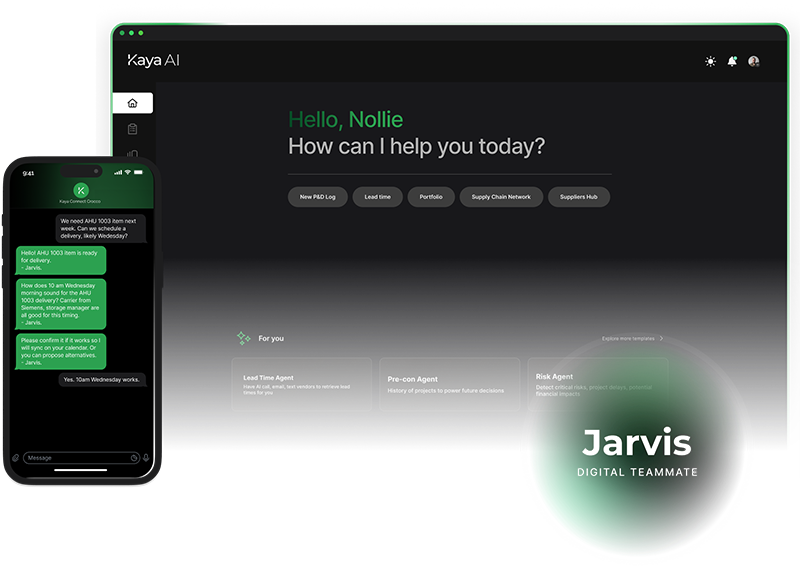
Quick verdict: Kaya AI is a supply-chain platform built for one narrow, expensive problem: owner-furnished equipment on mission-critical jobs. Its AI agent, Amber, drafts RFPs, levels bids, tracks that equipment from order to install and books last-mile deliveries, so a late switchgear lineup shows up as a schedule risk early instead of a surprise. Pricing is not public, and the focus is deliberately narrow – if your pain is ordinary contractor-bought materials, the procurement tools we have already covered, such as Kojo, are the closer fit.
What it is
Kaya AI launched out of stealth in January 2025 with $5.3 million in pre-seed funding led by 53 Stations, Suffolk Technologies and Soma Capital, as ENR reported. It was built for data centers, hospitals and advanced manufacturing plants – projects where the owner buys major equipment directly (switchgear, generators, transformers, cooling units) and the contractor has to receive, stage and install it on a date the whole schedule leans on.
The platform connects three jobs that usually live apart: procurement in one tool, equipment tracking in email threads, and delivery coordination by phone. Amber works across all three, drawing on drawings, specs, submittals, RFIs, supplier quotes, schedules and equipment lead times to chase vendors, flag risk and answer status questions. Directory listings for the platform describe integrations with Procore and Oracle Primavera P6, and named users include Turner Construction and Suffolk Construction.
The head-to-head point that matters is against Kojo, our existing procurement pick. Kojo works the contractor-bought side: materials a trade contractor orders for its own work. Kaya works the owner-furnished side: OFCI gear the owner purchased, tracked from order to install. They solve different halves of the same headache, and a mission-critical GC could plausibly run both. What Kaya does not do is general project management, estimating or field reporting – it is a supply-chain specialist.
On results, be careful with the headline numbers. Suffolk reported that on one project Kaya cut a three-month procurement process to one week, improved lead-time accuracy by 90% and cut procurement tracking time by 80%. Those are vendor- and investor-reported figures from Suffolk’s BOOST accelerator deployment, not independently verified benchmarks – treat them as a promising pilot result, not a promise.
Key features
- Amber AI agent: follows up with vendors, flags schedule risk and answers project-status questions across procurement, tracking and delivery
- RFP drafting and revision inside the platform, pulled from specs and past awards, with changes tracked as they happen
- Automated bid leveling: bids compared side by side on cost, scope, schedule and risk, with explainable recommendations
- OFCI management: owner-furnished equipment tracked from order to install, with risk flagged before it becomes a delay
- Last-mile delivery calendar: partners request delivery slots and the AI handles scheduling, conflicts and follow-ups
- Smart timelines and inbox: timelines rebuild automatically as submittals, bids and deliveries move, and RFIs and vendor replies land in one inbox sorted by urgency; submittals link to the procurement log by drag and drop
Pricing
Pricing is not public. Kaya publishes no tiers, no per-seat figure and no self-serve trial on its site – the route in is a sales conversation. That is normal for a platform sold to owners and large GCs on mission-critical programmes, but it means there is no honest way to budget for Kaya from public information, and any directory that lists a Kaya price is guessing. Confirm in writing what an implementation covers before you sign: this is a workflow change for procurement, project controls and field receiving, not a plug-in.
Who it’s for
Owners, developers and general contractors building data centers, life-science plants, hospitals and advanced manufacturing facilities, where a handful of owner-furnished packages carry the schedule. Procurement and project-controls teams who spend their week chasing lead times by email and phone get the most from Amber doing the chasing.
Who should skip it
Contractors whose buying is conventional materials procurement – lumber, fixtures, Division 10 odds and ends – will find Kaya aimed over their heads; Kojo or SubBase fit that work better. Skip it too if you need published pricing or a self-serve start, and if your projects have little or no owner-furnished equipment: without OFCI packages to track, there is not much left for the platform to do.
Pros
- Built for the highest-stakes procurement in construction: long-lead, owner-furnished equipment
- One system across RFPs, bid leveling, equipment tracking and delivery booking – no re-entry between tools
- Agent does the follow-up work (vendor chasing, conflict handling) instead of only reporting status
- Credible early adopters: Turner and Suffolk are named users, and Suffolk backed the company through its accelerator
Cons
- No public pricing and no self-serve trial – a sales process before you can even budget
- Deliberately narrow: mission-critical and OFCI-focused, so most general commercial work is out of scope
- Young company: launched from stealth in 2025, so long-term track record is still being written
- Headline time-saving figures are vendor- and investor-reported, not independently verified
FAQ
What does Kaya AI’s Amber actually do?
Amber is Kaya’s AI agent for the supply chain. It helps draft and revise RFPs, levels bids on cost, scope, schedule and risk, tracks owner-furnished equipment from order to install, follows up with vendors, flags lead-time risk and coordinates last-mile delivery bookings through a shared calendar.
How much does Kaya AI cost?
Pricing is not public. Kaya lists no plans or per-seat prices, so the only real figure comes from a sales quote scoped to your programme.
How is Kaya AI different from Kojo?
Kojo procures materials the contractor buys for its own work. Kaya tracks equipment the owner buys (OFCI) – switchgear, generators, transformers and cooling plant – from order through delivery to installation, and coordinates the deliveries. Different side of the purchase order, different tool.
Bottom line
Kaya AI is the specialist to shortlist when owner-furnished, long-lead equipment decides whether your mission-critical job finishes on time. It will not run your project, price your work or manage ordinary material buys – and at unpublished, enterprise-style pricing, it should not have to. If OFCI chasing is your bottleneck, book the demo and make the vendor prove the lead-time claims on one of your own packages.