
Genesis AI has raised a $500 million Series A round to deploy robots built around one bet: that dexterous hands, trained on data from sensor-equipped gloves worn by real workers, are the missing piece in physical AI. Why it matters: it is one of the largest early rounds in humanoid robotics, and Genesis is spending it on owning the whole stack — data, model and robot — rather than selling software to other robot makers.
November 17, 2026
What happened?
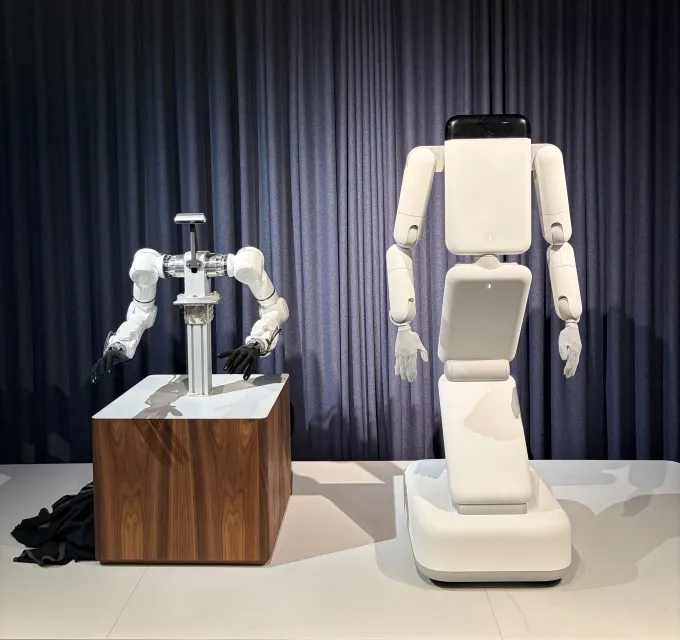
Genesis AI announced a $500 million Series A led by Khosla Ventures, Premji Invest and Eclipse. The company was cofounded in 2024 by CEO Zhou Xian and president Théophile Gervet, who met as graduate students in a Carnegie Mellon University lab, and it previously announced a $105 million seed round in July 2025. Its flagship is Eno, a humanoid robot designed to look more like a friendly appliance than a metal skeleton.
How does Genesis train its robots?
The strategy is vertical integration: Genesis generates the bulk of its own training data, develops its own generative AI model, and designs and builds its own humanoid robot in concert. The data comes from force-sensing gloves and headset cameras worn by more than 100 real workers around the world. The robots wear the same sensor-equipped gloves, and their hands are designed to mimic the proportions of human hands — fidelity Xian credits for the robots’ ability at tasks like sorting and wire manipulation. The company has also invested heavily in simulation to multiply that real-world data.
What can the robots actually do?
In a demonstration for TechCrunch at its Silicon Valley facility, Genesis’s model ran a pair of off-the-shelf robotic arms through a full packing workflow: picking up two small cardboard boxes, scanning them, placing them in a larger box, folding it closed, taping it shut, and peeling a label off a printer strip and applying it. A second run was less clean — the robot fumbled a box and struggled to peel the tiny label. Genesis has built 30 to 40 Enos, says the design of the mass-produced version is finalized, has chosen a mass-manufacturing contractor to start work next year in the U.S., and is piloting the machine with a handful of undisclosed customers. Xian was candid about the bottleneck: the dexterous hands can currently operate for only a few weeks of regular work before they need to be replaced.
Why it matters
Robotics has seen big rounds before, but Genesis’s pitch is specific: model architecture, in Xian’s estimate, contributes maybe 10% of the final result — the rest is training infrastructure, data infrastructure and data quality. If he is right, the glove fleet is the real asset, and $500 million buys a lot of gloved human hours. The honest caveats are in the story itself: the flagship robot was not ready to demonstrate for TechCrunch, the demo arms fumbled on a repeat run, and the hands wear out in weeks. Our take: this is a well-funded execution bet, not a proven product — the pilot customers and next year’s manufacturing start will tell us more than the round size. Everything AI, tested, applies to robots too.
Frequently asked questions
How much did Genesis AI raise?
$500 million in a Series A round led by Khosla Ventures, Premji Invest and Eclipse, announced November 17, 2026. The company raised a $105 million seed round in July 2025.
What is Eno?
Eno is Genesis AI’s flagship humanoid robot. The company says it has built 30 to 40 of them, has finalized the design of the mass-produced version, and is piloting the machine with a handful of undisclosed customers.
Why do Genesis’s robots wear gloves?
The sensor-equipped gloves capture force data from more than 100 human workers worldwide, and the robots wear the same gloves so the training data matches what the robot’s hands — shaped to mimic human proportions — can feel and do.
Sources: TechCrunch