
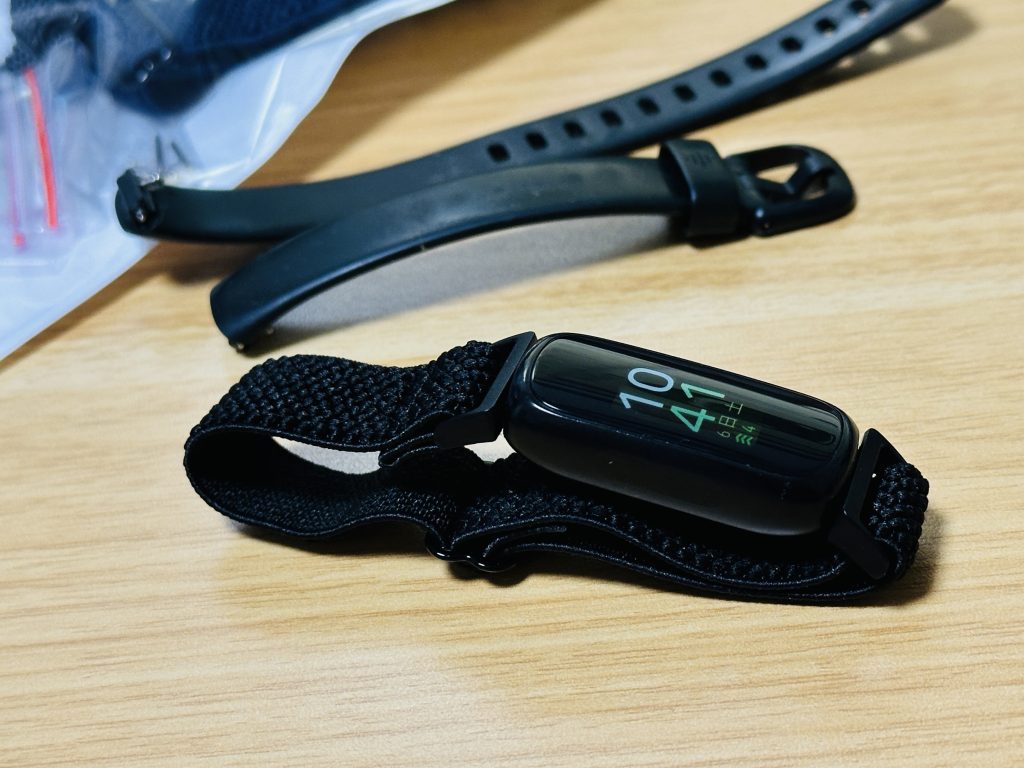
Quick verdict
The Fitbit Inspire 3 is the entry-level tracker done right: a ten-day battery, the full Fitbit health suite (heart rate, SpO2, skin temperature, sleep score), and a slim comfortable band — at the lowest price in the Fitbit lineup. It is the tracker for beginners, gift buyers, and anyone who wants reliable basics without complexity. For first-time trackers, it is the safest buy in fitness.
Key features
The ten-day battery is the headline — charge it roughly monthly and forget about it. The full Fitbit health suite is included: 24/7 heart rate, SpO2, skin temperature variation, stress management score, and the detailed sleep score with sleep stages. The slim band is genuinely comfortable for 24/7 wear, including sleep.
Forty-plus exercise modes with automatic workout detection cover the basics without complexity. Connected GPS uses your phone for outdoor route tracking. A six-month Fitbit Premium trial unlocks deeper insights, guided programs, and the daily readiness score. The color touchscreen is bright and readable for a band.
The simplicity is the feature. The Inspire 3 does not try to be a smartwatch — no app store, no payments, no voice assistant competing for attention. It tracks, it scores, it nudges. For beginners overwhelmed by feature lists, that restraint is a virtue. And the ten-day battery removes the single biggest friction of wearable ownership: charging.
Who it’s for
First-time tracker buyers, gift givers, and anyone who wants reliable health basics in the simplest possible package. It suits sleep trackers who want comfort and long battery, walkers and casual exercisers, and budget buyers who want the Fitbit ecosystem cheaply. If you are new to wearables, start here.
What to watch out for
Connected GPS only — outdoor runs need your phone along. No ECG or contactless payments. Deepest insights require Fitbit Premium after the trial. The small screen is glance-only. And if you outgrow it, the upgrade path is the Charge 6 or a smartwatch — know that going in.
Knowing when to step up to the Charge 6 is useful. If you run outdoors without your phone, the Charge 6’s built-in GPS is the upgrade that matters. If heart-health monitoring is the priority, its ECG and irregular rhythm notifications justify the jump. But if your routine is gym sessions, walks, and sleep tracking with your phone nearby, the Inspire 3 covers the essentials and its ten-day battery beats the Charge 6’s seven. Buy the band that matches your routine, not the spec sheet.
Pros and cons
Pros:
- Ten-day battery — charge monthly-ish
- Full Fitbit health suite: HR, SpO2, skin temp, sleep score
- Extremely light and comfortable for sleep
- Six-month Premium trial included
- Lowest price in the Fitbit lineup
Cons:
- Connected GPS only — needs your phone
- No ECG or contactless payments
- Deepest insights require Premium subscription
FAQs
How long does the Inspire 3 battery last?
Fitbit rates it at up to ten days — among the longest in any mainstream tracker.
Does it have GPS?
Connected GPS only: it uses your phone’s GPS for outdoor route tracking, so the phone must come along on runs.
Does it track sleep?
Yes — sleep stages, sleep score, and the monthly sleep profile are all included.
Is Fitbit Premium included?
A six-month Premium trial is included with new units; the subscription continues at the standard rate afterward unless cancelled.
Can I swim with it?
Yes — it is water resistant to 50 meters, so swimming and showers are fine.
Price and availability
The Fitbit Inspire 3 (Midnight Zen/Black) is available on Amazon. Check price on Amazon
As an Amazon Associate we earn from qualifying purchases.