
Quick verdict

The short answer
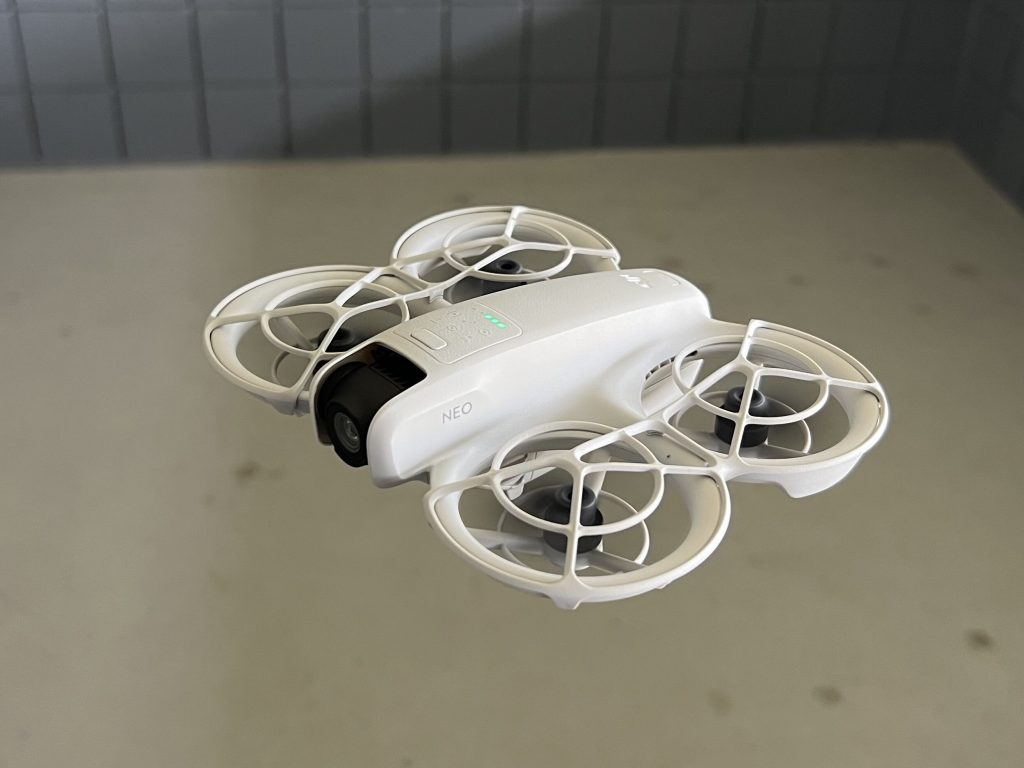
The DJI Neo is the cheapest way into DJI’s ecosystem and the simplest drone the company has ever made: 135 grams, 4K/30fps stabilized video, palm takeoffs and landings, and no controller required — you can launch it from your hand, command it by voice, or steer it from your phone. For casual creators who want selfies, follow-me clips, and QuickShot cinematic moves with zero learning curve, it is a genuinely delightful $199 gadget. Just understand what it is not: there is no obstacle avoidance, real-world flight time lands in the low-to-mid teens per battery, and the camera tops out at 4K/30fps. The Neo 2 (released November 2025 at $399) now exists for anyone who wants omnidirectional sensing and 4K/60 — but at twice the price.
This is a research-based review. We have not tested the DJI Neo hands-on; every fact below comes from the manufacturer’s published specs, pricing, and independent reporting. Prices and specs checked September 30, 2026.
Key specs
| Spec | Detail |
|---|---|
| Takeoff weight | 135 g |
| Camera sensor | 1/2-inch CMOS, 12 MP |
| Max video | 4K/30fps with RockSteady electronic stabilization |
| Gimbal | Single-axis mechanical gimbal + RockSteady EIS |
| Max flight time | Up to 18 minutes rated (real-world ~12–15 min) |
| Storage | 22 GB internal |
| Control | Controller-free (palm launch, voice commands, DJI Fly app); optional RC-N3 remote |
| Tracking | AI subject tracking; QuickShots (Dronie, Circle, Spiral, Boomerang and more) |
| Obstacle sensing | Downward sensor only — no forward/backward/side sensing |
| Wind resistance | Level 4 |
| Safety | Full-coverage propeller guards |
Price and availability
The DJI Neo launched at $199 for the base drone and $289 for the Fly More-style three-battery combo. As of 2026, pricing has drifted downward: outlets reported the three-battery combo at $219 in spring 2026, and Amazon ran a $139 sale in September 2026 (since expired). Confirm the current price on the DJI store or authorized retailers before buying — at these prices it is routinely the cheapest DJI drone available, and refurbished units appear regularly. The newer DJI Neo 2 ($399, launched November 2025) sits above it in the lineup with 4K/60fps video and omnidirectional obstacle sensing.
What it’s good at
- Zero learning curve. Palm launch, voice commands, and one-tap QuickShots mean you can be airborne and filming within two minutes of unboxing. There is genuinely nothing to learn.
- No controller needed. Unlike every other camera drone, the base Neo needs no remote at all — your hand, your voice, or your phone is the controller. An optional RC-N3 adds range and manual modes later.
- Pocketable and regulation-free. At 135 g it is well under the FAA’s 250 g recreational registration threshold, and it is small enough to live in a jacket pocket or purse.
- Usable 4K footage. 4K/30fps with RockSteady stabilization and a single-axis gimbal produces genuinely usable video — not a toy-grade feed.
- AI tracking that works. Subject tracking and automated QuickShot moves (Dronie, Circle, Spiral, Boomerang) deliver cinematic-looking clips with one tap.
- Safe around people. Full-coverage propeller guards make it one of the least intimidating drones to fly near yourself and others.
Where it falls short
- No obstacle avoidance. The only sensor points downward. The Neo will not stop itself from flying into a tree, wall, or person — keep flight paths clear.
- Short real-world battery life. DJI’s 18-minute rating assumes ideal conditions; reviewers consistently report 12–15 minutes with wind, GPS, and recording. Spare batteries are close to mandatory.
- 4K/30fps max. No 4K/60, no meaningful slow motion, and a small 1/2-inch sensor — low light is not its strong suit.
- Limited range and wind handling. Level 4 wind resistance and a 135 g airframe mean breezy days are a no-go; it is a calm-weather, close-range drone.
- 22GB storage, no card slot. Storage fills up fast at 4K; you must offload via the DJI Fly app or USB-C regularly.
Who should buy it
First-time drone pilots, casual creators, hikers, and families who want fun selfies and follow-me clips with zero setup. It is also a great “second drone” for owners of bigger DJI aircraft who want something pocketable for quick shots. At $139–$199 on sale, it is an impulse buy that actually delivers.
Who should skip it
Anyone who needs obstacle avoidance, long-range flying, or professional video modes — you will outgrow the Neo quickly and should consider the Mini 4K or Mini 4 Pro instead. And if 4K/60 and omnidirectional sensing matter to you, the Neo 2 is worth the step up.
How it compares
The Neo’s competition is mostly its own siblings. The Neo 2 ($399) doubles the price but adds 4K/60fps video, omnidirectional obstacle sensing, and better wind handling — worth it if the Neo feels limiting. The Mini 4K ($299) is the next step up for image quality and range, with a 3-axis gimbal and a real controller in the box, but it loses the palm-launch simplicity. HoverAir’s original X1 ($349) is the closest rival: a similar hands-free caged concept, but the Neo is cheaper and backed by DJI’s mature app ecosystem. Honestly, at $139–$199 on sale, the Neo competes less with other drones and more with a nice dinner out — it’s an impulse buy that happens to fly.
Verdict
The Neo is not trying to be a serious camera drone, and that is its charm: it is a $199 pocketable flying camera that makes aerial selfies and follow-me clips effortless. The lack of obstacle avoidance and short battery life are real limits, but nothing else this cheap and this easy exists. 4.2/5
FAQ
Can the Neo follow me while I run or cycle?
Yes — AI subject tracking follows you as you move, which is the Neo’s signature trick. Keep expectations modest: it tracks best at walking-to-jogging pace in calm, open areas, and the 135 g airframe doesn’t love wind. Faster action calls for the HoverAir X1 Pro.
Is the DJI Neo a good first drone for a teenager?
It’s one of the best options: palm launching, propeller guards, and one-tap automated shots remove the intimidation factor, and the $199 price softens the crash-risk math. That said, it’s still an aircraft — supervise younger pilots, keep it away from people and roads, and check your local rules together before the first flight.
Does the DJI Neo need a remote controller?
No. It launches from your palm and can be controlled by voice commands or the DJI Fly app on your phone. The optional RC-N3 remote adds longer range and manual flight modes if you want them later.
Do I need to register the DJI Neo?
Not for recreational flying in the US — at 135 g it is well under the FAA’s 250 g threshold and exempt from Remote ID. Check local rules if you travel.
DJI Neo vs Neo 2 — which should I buy?
The Neo 2 ($399) adds 4K/60fps video, omnidirectional obstacle sensing, and better wind handling. Buy the Neo 2 if you want a more capable drone; buy the original Neo if you want the cheapest, simplest flying camera DJI makes.
How long does the Neo’s battery actually last?
DJI rates it at 18 minutes, but real-world flights with wind and recording typically land at 12–15 minutes. The three-battery combo is the practical way to buy it.
Where to buy
As an Amazon Associate we earn from qualifying purchases.