
Quick verdict
The short answer
The Oura Ring 4 remains the benchmark smart ring in 2026 — the most validated sleep and recovery tracking you can wear on a finger, in a titanium ring that disappears into your day. The hardware is excellent: recessed sensors, 5–8 day battery, sizes 4–15. The catch is the math: $349–$499 for the ring plus a $5.99/month (or $69.99/year) membership that the full experience requires. Over three years that’s roughly $560 before any sale discounts. If you want the best sleep data and don’t mind a subscription, nothing beats it. If the subscription offends you, the Ultrahuman Ring Air and Samsung Galaxy Ring exist for a reason — and both are credible enough now that “best” depends on your priorities, not just the spec sheet.
This is a research-based review. We have not tested the Oura Ring 4 hands-on; every fact below comes from the manufacturer’s published specs, pricing, and independent reporting. Prices and specs checked November 11, 2026.
Key specs
| Spec | Oura Ring 4 |
|---|---|
| Price | $349 (Silver) to $499 (Gold / Rose Gold), by finish |
| Subscription | Oura Membership: $5.99/month or $69.99/year (first month free); required for full features |
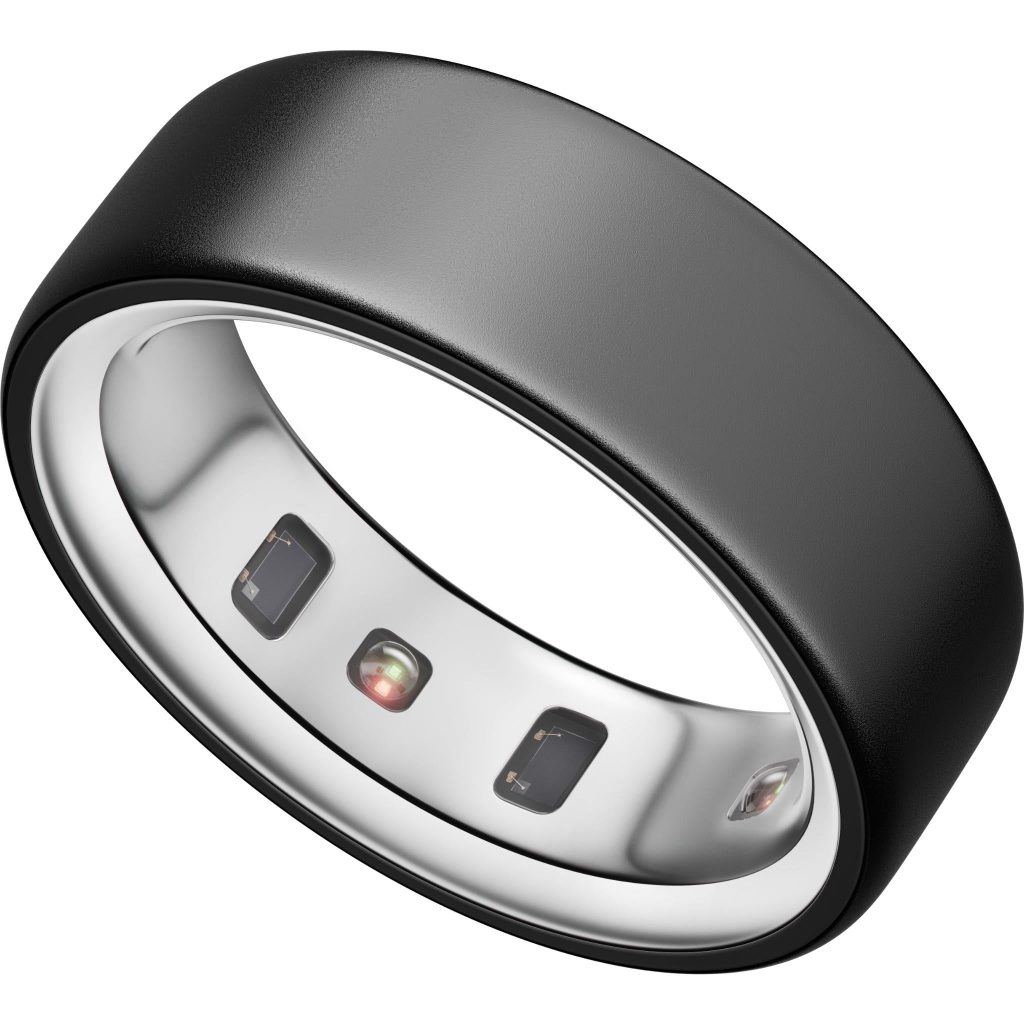
| Material | Titanium, seamless interior with recessed sensors |
| Sizes | Whole sizes 4–15 (US); free sizing kit before purchase |
| Dimensions | 7.90mm wide, 2.88mm thick |
| Weight | 3.3–5.2g depending on size |
| Battery | 5–8 days; full charge in 20–80 minutes |
| Water resistance | 100m |
| Sensors | Smart Sensing: 18 PPG signal pathways; SpO2 (red + IR LEDs), 24/7 heart rate and HRV (green + IR), skin temperature, accelerometer |
| Tracking | Sleep Score and stages, Readiness, daytime stress, resilience, 40+ auto-detected activities, Cardiovascular Age, Cardio Capacity (VO2 max estimate), cycle insights |
| Compatibility | iOS and Android; syncs with Apple Health, Strava, and 40+ apps |
Price and availability
The Oura Ring 4 lists from $349 (Silver) up to $499 (Gold and Rose Gold); Black, Brushed Silver, and Stealth sit in between. It is widely available — Oura’s own store, Amazon, Best Buy, Target — and frequently discounted: Prime Day 2026 saw it as low as $226. The membership is the real pricing story: $5.99/month or $69.99/year, with the first month free, and it’s effectively required to see your data. Factor roughly $210 in membership fees into a three-year ownership cost. Note the Oura Ring 5 launched May 28, 2026 at $399 with a slimmer design (6.09mm wide, 2.28mm thick vs 7.90mm / 2.88mm here) — the Ring 4 is now the value play, especially on sale. One sizing gotcha most coverage omits: the Ring 5 only comes in sizes 6–13, so if you wear a size 4, 5, 14 or 15, the Ring 4 is your only current Oura option. See our Oura Ring 5 review for the full comparison.
A word on sizing, because it matters more here than with most gadgets: Oura’s sizes run differently from standard ring sizes, and the company ships a free sizing kit you’re meant to wear for a day before ordering. Reviewers consistently say this step is non-negotiable — a ring that’s slightly loose gives noisy heart-rate data, and a slightly tight one won’t come off after a workout. Order the kit, wear the sizer for 24 hours, then buy. The ring itself is FSA/HSA eligible in the US, which softens the price for anyone with a flexible spending account.
What it’s good at
- Sleep tracking. Across independent comparisons, Oura’s sleep staging and sleep-score interpretation are the most validated in the ring category. If better sleep is the goal, this is the ring reviewers point to first.
- Readiness and recovery framing. The Readiness score, daytime stress tracking, and resilience metrics turn raw biometrics into a daily “how hard should I push” answer. Long-term wearers describe it as genuinely habit-changing for sleep, alcohol, and burnout.
- Sensor accuracy. The Ring 4’s Smart Sensing uses 18 signal pathways and recessed sensors that stay flush against the finger, improving readings when the ring rotates. Oura claims 120% better SpO2 signal quality than Gen 3.
- Comfort and design. All titanium, 3.3–5.2g, no bumps inside the band, six finishes. Reviewers consistently say they forget they’re wearing it — the whole point of a ring.
- Ecosystem. 40+ integrations including Apple Health and Strava, FSA/HSA eligibility, and a mature app with years of algorithm refinement. The platform is the moat.
- Battery. 5–8 days with fast top-up charging means you charge weekly, not nightly — and unlike a watch, charging doesn’t cost you sleep data.
Where it falls short
- The subscription. $5.99/month forever, on top of a $349+ ring, for data your own body generated. It’s the single biggest reason people choose competitors, and the math only gets worse the longer you own it.
- No real-time feedback. There’s no screen, no vibration, no live heart-rate during workouts. It’s a trends device, not a training device.
- Not a fitness tracker replacement. Workout detection covers 40+ activities automatically, but live stats, GPS, and coaching belong to watches. Gym-focused buyers should temper expectations.
- Battery degradation. Like all small batteries, capacity fades over years — long-term wearers report the Gen 3 needing daily charges eventually. The Ring 4 starts at 5–8 days; plan for less in year three.
- Oura Ring 5 exists. The newer model is 40% smaller by volume with a longer 6–9 day battery and new health features. The Ring 4 is the deal, not the flagship.
Who should buy it
Buy the Oura Ring 4 if your priority is sleep, recovery, stress, and long-term health trends — biohackers, professionals managing burnout, athletes who want recovery data without a watch at night. It’s at its best on sale (watch for $250–$300) and if you value the most mature algorithms in the category. New parents, shift workers, and anyone whose sleep is under siege tend to become the most devoted users — for a bed-based alternative, compare the Eight Sleep Pod 5 — the ring turns vague exhaustion into specific, fixable patterns.
Who should skip it
Skip it if you refuse subscriptions (the Ultrahuman Ring Air gives you the core experience with no monthly fee), want live workout stats with GPS, or you’re a Samsung phone owner who’d benefit from the Galaxy Ring’s ecosystem integration. And if you want the latest hardware rather than the best deal, that’s the Oura Ring 5. Budget buyers should also look at the RingConn Gen 2 Air — around $199–$299 with no subscription and a 10–12 day battery — though its app and algorithms aren’t at Oura’s level.
Verdict
The Oura Ring 4 is still the best smart ring for sleep and recovery, with the most trusted algorithms and the most comfortable hardware. But in 2026 it’s no longer the obvious default: subscription-free rivals have closed the gap, and its own successor exists. Buy it on sale for the sleep data; skip it if the $5.99/month bothers you, because it will bother you every month.
Rating: 4.4/5
FAQ
Do I need the Oura subscription?
Effectively, yes. The Oura Membership ($5.99/month or $69.99/year, first month free) unlocks the full experience — Sleep, Readiness, and most insights. Without it, the ring’s value is severely limited.
How accurate is the Oura Ring 4’s sleep tracking?
It’s widely considered the most validated consumer sleep tracker in ring form, with advanced staging that reviewers consistently rank above Samsung’s and roughly on par with or ahead of Ultrahuman’s. It’s still a wellness device, not medical equipment.
Is the Oura Ring 4 waterproof?
Yes — it’s water-resistant to 100 meters, so swimming and showering are fine.
Should I buy the Ring 4 or the Ring 5?
The Ring 5 ($399) is slimmer with a 6–9 day battery and new features like blood pressure signals. The Ring 4 is the better value, especially discounted to $250–$300, and its core sleep and recovery tracking is nearly identical.
Where to buy
As an Amazon Associate we earn from qualifying purchases.