
Quick verdict
The short answer
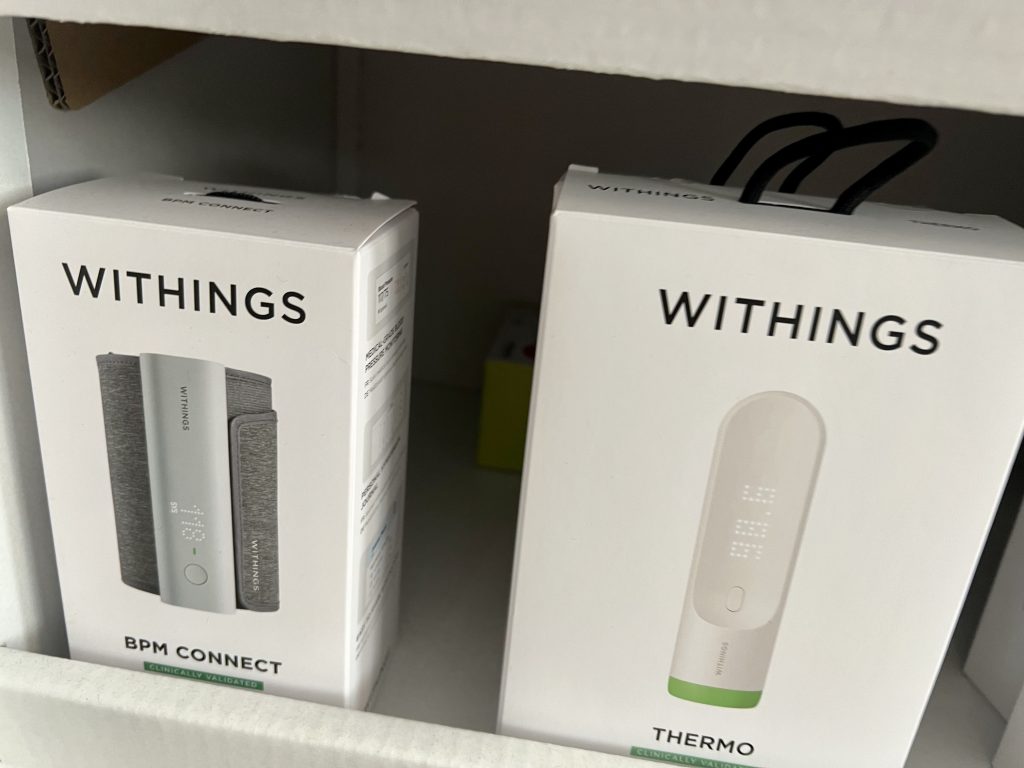
The Withings BPM Connect is the easiest blood pressure monitor to actually use consistently: a soft, self-contained arm cuff with a built-in LED display that shows color-coded results instantly, then syncs them over Wi-Fi to your phone with zero button-pressing. At around $129.95 it’s FDA-cleared, clinically validated, and free of subscriptions — the rare health device where the tech disappears into the habit. If your doctor has ever asked you to track your blood pressure at home, this is the one to get.
This is a research-based review. We have not tested the Withings BPM Connect hands-on; every fact below comes from the manufacturer’s published specs, pricing, and independent reporting. Prices and specs checked September 30, 2026.
Key specs
| Spec | Withings BPM Connect |
|---|---|
| Measurements | Systolic and diastolic blood pressure + heart rate |
| Accuracy | FDA-cleared; clinically validated; listed on validated-device databases |
| Display | Built-in LED matrix with instant color-coded feedback (green/amber/red) |
| Cuff | Upper-arm, adjustable 22–42 cm (9–17 in) |
| Connectivity | Wi-Fi + Bluetooth; auto-sync to Withings app (iOS/Android) |
| Battery | Rechargeable; up to 6 months per charge (micro-USB) |
| Storage | Unlimited cloud history; holds 8 readings offline until synced |
| Size / weight | 60 × 55 × 155 mm; 250 g |
| Extra | FSA/HSA eligible; email reports to your doctor from the app; 2-year warranty |
Price and availability
The BPM Connect lists at $129.95 at withings.com and major retailers (an older Apple-store listing showed $99.95, and street prices move — confirm at checkout). There is no subscription and the app is free, so the purchase price is the whole cost. It’s FSA/HSA eligible in the US, which effectively discounts it for many buyers. Availability is wide and stable in 2026.
What it’s good at
- Frictionless enough to build a habit. Wrap the cuff, press one button, read your numbers on the cuff itself in color-coded green/amber/red. Then put it down — Wi-Fi syncs the reading to your phone automatically. Home BP monitoring fails when it’s a chore; the BPM Connect removes every excuse, and that’s its real medical value.
- Validated accuracy you can trust. It’s FDA-cleared and appears on validated-device listings — the two checkboxes cardiologists actually care about. Upper-arm measurement remains the clinical standard, and independent testing consistently shows arm cuffs outperform wrist monitors for home accuracy.
- Results where you need them. The on-cuff LED gives instant feedback without fishing for your phone, while the app builds long-term trend charts you can email to your doctor as a PDF report. That loop — measure, trend, share — is exactly what hypertension management requires.
- Months between charges. A 6-month battery life on a rechargeable cell means you’ll charge it twice a year. One fewer dead-device excuse.
- Thoughtful hardware. The soft fabric cuff adjusts from 22–42 cm to fit most arms comfortably, the whole unit weighs 250 g, and multi-user households can share it with individual app profiles.
Where it falls short
- No ECG or AFib detection. Withings’ newer BPM Vision adds a 30-second ECG; the Connect is BP + heart rate only. If arrhythmia screening matters to you, the step-up model exists (at a higher price).
- Micro-USB in 2026. The charging port is micro-USB rather than USB-C — a small annoyance on an otherwise modern device, and one more cable to keep.
- Wi-Fi setup can be finicky. Like most smart-home health devices, initial Wi-Fi pairing occasionally frustrates; once configured, syncing is automatic and reliable.
- Technique still matters. No device fixes bad form: cuff at heart level, feet flat, five minutes of rest, no talking during the reading. The BPM Connect makes measuring easy, but accurate measuring is still on you.
Who should buy it
Anyone whose doctor asked them to monitor blood pressure at home — hypertension patients, the hypertension-curious with family history, and pregnant people tracking BP (with their OB’s guidance). Data-sharers who want clean trend reports for appointments. Smart-home health builders already using Withings scales or watches.
Who should skip it
People who need ECG/AFib screening built in (consider the Withings BPM Vision). Strict budget buyers — validated non-connected monitors like the Omron 3 Series run ~$40 and measure just as accurately if you log readings manually. Wrist-cuff devotees (though upper-arm is more accurate).
Setup and living with it
Unwrap the cuff, plug in the micro-USB cable for a first charge (about 2 hours to full), install the Withings app, and pair over Bluetooth or Wi-Fi. The first measurement walks you through cuff placement — upper arm, roughly at heart level, with the artery marker aligned. That five-minute guided setup matters: technique is the single biggest variable in home BP accuracy, and Withings’ onboarding covers the essentials (rest five minutes, feet flat, don’t talk during the reading).
Daily use is the BPM Connect’s strong suit: one button, one reading, instant color-coded feedback on the cuff. Owners report the 6-month battery claim holds up in practice, so charging is a twice-a-year event. The app builds trend charts automatically and lets you add context notes (morning vs. evening, pre/post medication), which doctors consistently say makes home readings more useful. Multi-user households can share one device with separate app profiles. The main ownership friction is the micro-USB port — keep the included cable somewhere you’ll find it in six months — and the occasional Wi-Fi re-pairing after router changes.
Alternatives worth considering
The Withings BPM Vision is the step-up: it adds a 30-second ECG for AFib detection alongside blood pressure, at a higher price — the pick if arrhythmia screening matters to you. Omron Platinum (~$100) is the classic validated alternative with Bluetooth app syncing and a wide-range cuff, from the brand most doctors default to. The Omron 3 Series / Bronze (~$40) measures just as accurately with no connectivity at all — ideal if you’ll log readings in a notebook or spreadsheet. What the BPM Connect uniquely offers in this group is the combination of Wi-Fi auto-sync (no phone needed at measurement time), on-cuff color-coded feedback, and a design you’ll actually leave on the counter. Choose on connectivity and habit-fit, not accuracy — all the validated options measure well.
Verdict
The BPM Connect nails the brief: clinical-grade accuracy wrapped in a device so easy you’ll actually use it twice a day. It’s not the cheapest validated monitor, but it’s the one most likely to still be in use six months later — and consistency is what makes home BP data valuable. 4.4/5
FAQ
Is the Withings BPM Connect FDA approved?
It’s FDA-cleared and clinically validated, and appears on validated blood-pressure-device listings — the standard markers of a trustworthy home monitor.
Does it need my phone nearby to work?
No. It displays results on the cuff itself, stores up to 8 readings offline, and syncs automatically over Wi-Fi or Bluetooth when available.
Can multiple people use one BPM Connect?
Yes — the Withings app supports multiple user profiles, so household members can share the device and keep separate histories.
How do I share readings with my doctor?
The Withings app generates trend reports you can email directly to your healthcare provider.
How do I get the most accurate readings?
Follow the standard protocol: sit quietly for five minutes before measuring, back supported, feet flat and uncrossed, cuff on bare upper arm at heart level, and stay silent and still during the reading. Take two or three readings a minute apart and average the later ones — the first is often higher. Consistent technique matters more than which validated device you buy.
Where to buy
As an Amazon Associate we earn from qualifying purchases.