
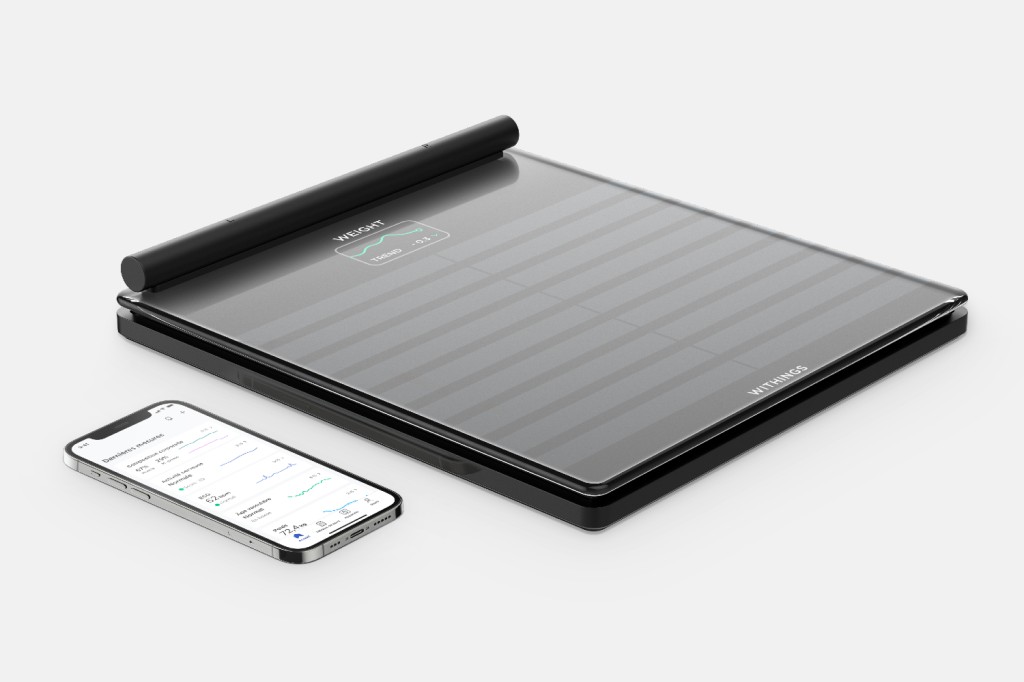
Quick verdict
The Withings Body Scan goes far beyond weight: segmental body composition, a 6-lead ECG with AFib detection, vascular age, and nerve-activity scoring, all on a color screen with a 12-month battery. It is the most advanced home health station you can buy. If you want clinical-grade insight without clinic visits, nothing else comes close.
Key features of the Withings Body Scan
Segmental body composition breaks down fat and muscle by body region — arms, legs, trunk — revealing imbalances that whole-body readings miss. Athletes and rehab patients get genuinely actionable data about left-right symmetry.
The 6-lead ECG detects atrial fibrillation from a 30-second standing measurement, with results shareable as PDFs for your doctor. Vascular Age estimates arterial health, standing heart rate and EDA (electrodermal activity) scores round out a cardiovascular picture no other scale offers.
Practical wins: a color screen shows results without the phone, the rechargeable battery lasts 12 months, multi-user recognition keeps families separate, and dedicated pregnancy, baby, and athlete modes adapt the measurements.
Who the Withings Body Scan is for
Health-optimizers tracking more than weight: fitness enthusiasts monitoring muscle symmetry, heart-health-conscious adults wanting regular AFib screening, and anyone managing cardiovascular risk factors with their doctor. Households where several people will use it get the most value from multi-user support.
It is overkill for casual weigh-ins — a basic smart scale serves those users for far less.
What to watch out for
This is a premium device at a premium price — the most expensive scale most people will ever consider. The ECG is a screening tool, not a diagnosis; abnormal results need a doctor, and the anxiety of false positives is real for some users.
As with all bioimpedance scales, body-composition readings are estimates influenced by hydration — track trends, not single readings. And the full experience lives in Withings’ Health Mate ecosystem; data portability to other platforms varies.
Withings Body Scan pros and cons
- Pro: Segmental composition, 6-lead ECG with AFib detection, vascular age.
- Pro: Color screen, 12-month battery, multi-user.
- Pro: Pregnancy, baby, and athlete modes.
- Pro: Shareable ECG reports for your doctor.
- Con: Premium price — the priciest scale in its class.
- Con: ECG is screening, not diagnosis; false positives cause worry.
- Con: Bioimpedance estimates vary with hydration — trends matter, not snapshots.
Withings Body Scan FAQs
Can it really detect AFib?
Its 6-lead ECG is cleared to detect signs of atrial fibrillation during a 30-second measurement. It is an FDA-cleared screening feature, but any concerning result should be confirmed by a medical professional — it does not replace clinical ECG.
What is segmental body composition?
Instead of one whole-body fat/muscle number, the scale measures arms, legs, and trunk separately using multiple electrodes including the retractable handle. This reveals imbalances — e.g., one leg carrying more muscle — that single-number scales hide.
How accurate is the body fat measurement?
Bioimpedance estimates correlate well with lab methods for tracking trends, but absolute numbers vary with hydration, meals, and time of day. Weigh consistently (same time, same conditions) and watch the trend lines.
Does it work for multiple people?
Yes — automatic user recognition supports whole households, each with private data in their own Health Mate account. Pregnancy, baby (with a parent holding the infant), and athlete modes adapt per user.
Is it worth it over a basic smart scale?
For weight and basic body-fat tracking, no — a $50 scale suffices. The Body Scan earns its premium for users who specifically want ECG screening, segmental analysis, and vascular age data at home.
Price and availability
As an Amazon Associate we earn from qualifying purchases.