
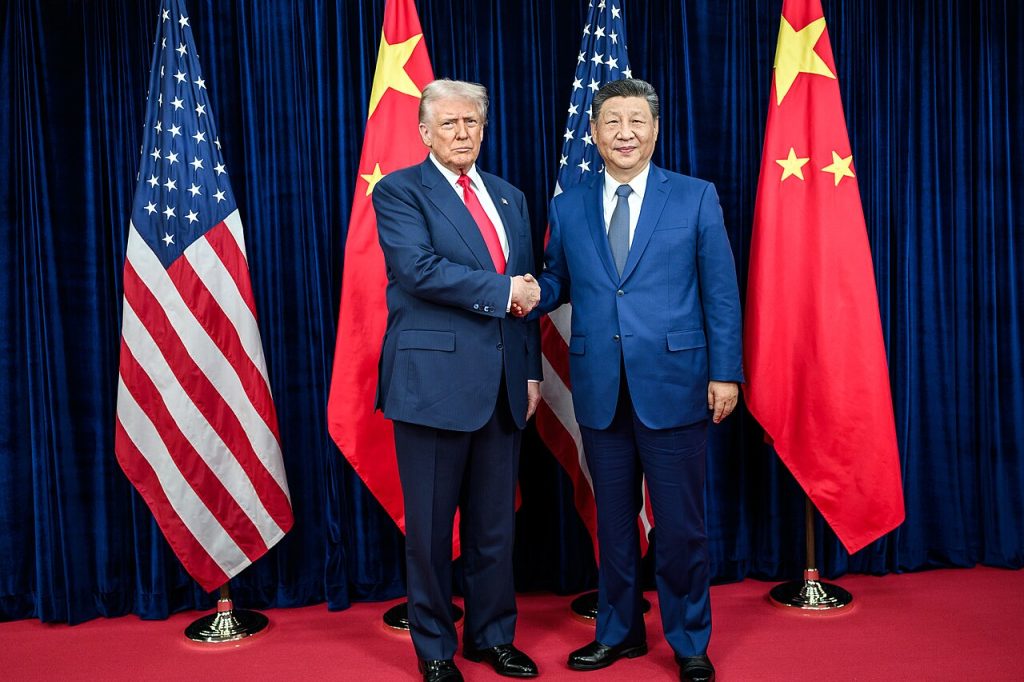
What happened: President Donald Trump and Chinese President Xi Jinping agreed during their meeting in Shenzhen that humans must always be involved in military decisions that use artificial intelligence — and that AI should never be allowed to launch a major military action on its own. Treasury Secretary Scott Bessent disclosed the agreement on CNBC on Friday, November 20, after returning from Trump’s trip to Asia, calling it one of the major achievements of the visit. Why it matters: it is a rare point of stated agreement between the two countries competing hardest for AI supremacy, drawn exactly where the stakes are highest.
Washington / Shenzhen — November 20, 2026
What was agreed in Shenzhen
Bessent said the two leaders agreed that humans should always be involved in any military decision that AI systems feed into, and that the technology — which he referred to by the administration’s preferred term, “super intelligence” — should not be allowed to act autonomously for major military actions. “There’s nothing to do with competition when it says that both sides agree that no major military operation should be launched without a human being involved,” he said.
Bessent stressed that the understanding on military use, which he said includes human involvement and other safeguards, would not be affected by the two countries’ wider competition for AI supremacy. He also argued that US AI labs need to keep their technological lead, describing that lead as the best defense against Chinese AI models he said are being used in cyberattacks.
What did not come up — and the chip line that held
Two things did not move at the meeting. Bessent said the spying allegations involving former Nvidia CEO Jensen Huang and a Chinese national did not come up in the Trump-Xi bilateral meeting at all. And on chips, he said Nvidia’s second-tier H200 remained the most advanced chip China could purchase with licenses, after Trump took what Bessent called a “very firm line.” He added that the Commerce Department had taken further steps on Monday to restrict China’s access to advanced AI chips, including through overseas data centers, and noted a “paucity of orders” from Chinese buyers for the H200 as they try to build out their own chip stack.
Why it matters
Agreements like this one are words, not verification regimes — nothing in Bessent’s account describes inspections, enforcement, or even a written text. But the words still matter. The US and China have now both put their leaders’ names to the same basic rule: a human stays in the loop for military decisions, and no major operation starts without one. For everyone building or buying AI systems, that is the line both superpowers say they will not cross, even while they race each other everywhere else. Everything AI, tested — and on this point, at least, both sides say the test ends with a person.
Frequently asked questions
What exactly did Trump and Xi agree on?
According to Treasury Secretary Scott Bessent, the two leaders agreed that humans should always be involved in military decisions that use AI, and that AI should not be allowed to be autonomous for major military actions — no major military operation should be launched without a human being involved.
Where and when was this agreement reached?
At Trump’s meeting with Xi in Shenzhen, China, during his trip to Asia. Bessent described it on CNBC on Friday, November 20, 2026, after returning from the trip.
Did the Nvidia/Huang spying allegations come up?
No. Bessent said the allegations involving former Nvidia CEO Jensen Huang did not come up in the bilateral meeting.
Did the meeting change US chip policy toward China?
Not according to Bessent. He said the H200 remains the most advanced Nvidia chip China can buy with licenses, and pointed to further Commerce Department restrictions announced Monday on China’s access to advanced chips, including via overseas data centers.
Sources: Reuters, CNBC (via Reuters and investinglive)