
Quick verdict
Tekla PowerFab Review 2026: Fabrication Management From Estimate to Erection Delivery
Updated October 16, 2026 – Tested Intelligence
Quick verdict: Tekla PowerFab is the management system half of the Tekla world: a full MIS for steel fabricators covering estimating, project management, production control, inventory, purchasing and shipping, with piece status visible from bid to site delivery. It grew out of FabSuite, North America’s best-known steel MIS, and it shows – this is software for running a steel business, not drawing one. Pricing is not public. If your shop’s problem is knowing where every assembly is, this is the benchmark.
What it is
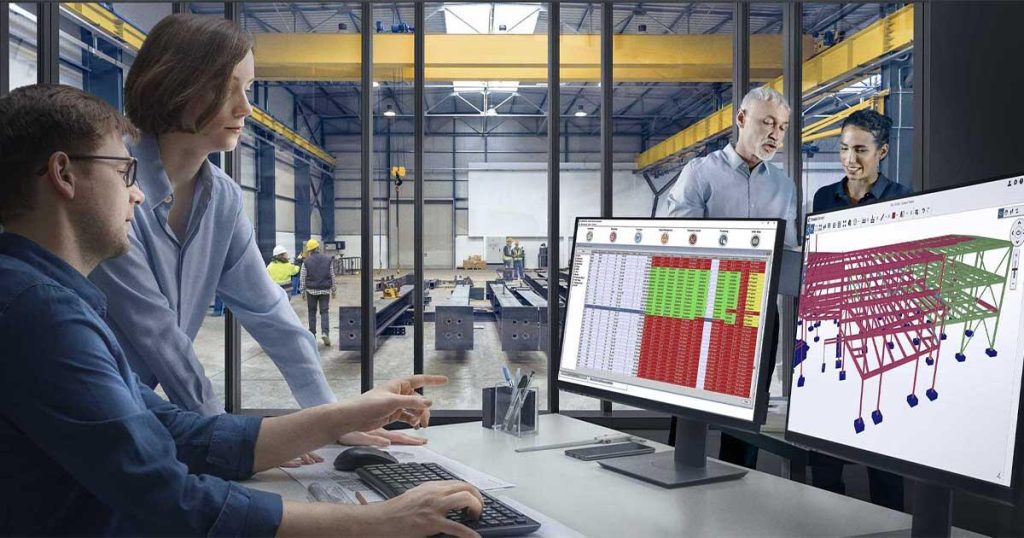
Tekla PowerFab, from Trimble, is a suite for managing steel fabrication. Its core is Tekla EPM – the former FabSuite system, which Trimble acquired in 2018 and rebranded – combined with Tekla Structures for model work, the PowerFab Go mobile app, and Trimble Connect for sharing. Modern Steel Construction covered the launch as the industry’s next-generation steel MIS, and AISC lists PowerFab among the providers implementing its steelXML purchasing standard.
For ironworkers and erectors, the relevant thread is continuity of information. The estimate is built from the model, production is planned against the same data, shipping loads are assembled from production status, and project teams can see the status of components at every stage, from model-based estimating to site delivery. The 2025i release added a production planner that can split work packages across weeks and locations and forecast future packages, plus integrations with ProjectSight for RFIs and submittals, and with Viewpoint Vista for real-time job cost tracking.
Key features
- Estimating module with model-based estimating workflows and supplier pricing data
- Production control and the 2025i production planner: split work packages across weeks and shops, forecast capacity
- Combining (advance bill) and material optimisation to cut waste before purchasing
- Inventory and purchasing tracking material across all jobs, with steelXML electronic purchasing (per AISC)
- Project management with scheduling and estimate-versus-actual cost tracking
- Tekla PowerFab Go: paperless shop floor – drawings and cut lists on tablets, heat numbers, QA inspections, production and shipping status
- Integrations with ProjectSight (RFIs, submittals, drawings) and Viewpoint Vista (job costs)
Pricing
Pricing is not public. Trimble sells PowerFab by quote, configured by modules and users. Third-party directories list starting figures (GetApp shows $8,000), but treat those as directory-sourced and unverified – the only number that counts is the Trimble quote for your module mix. Budget for implementation and training on top of licences.
Who it’s for
Fabricators and fabricator-erectors running enough simultaneous jobs that spreadsheets and whiteboards stop telling the truth – especially shops already detailing in Tekla Structures, where the model-to-management link is native. Trimble’s case study of AISC-certified fabricator-erector All Things Metal in Phoenix credits the connected Tekla workflow with supporting a threefold growth in the business.
Who should skip it
Pure erection subs who don’t fabricate: PowerFab’s centre of gravity is the shop, and if you don’t estimate, buy steel or run production, most modules sit idle. Small shops with a handful of jobs a year should also think hard – the system rewards volume and process discipline.
Pros
- The deepest steel-specific MIS pedigree in North America – it is FabSuite’s successor
- One data flow from estimate to shipping load; piece status visible at every stage
- Paperless shop floor through PowerFab Go, with QA and heat-number capture at the workface
- Model-based estimating ties bids to the geometry the shop will build
Cons
- No public pricing; quote-based, and directories’ figures are unverified
- Implementation is a real project: data, processes and habits all have to move
- Fullest value arrives inside the Tekla/Trimble ecosystem; mixed-tool shops integrate rather than plug in
FAQ
Is Tekla PowerFab the same as FabSuite?
It is FabSuite’s successor. Trimble acquired FabSuite in 2018 and rebranded it as Tekla PowerFab, building the suite around its core (Tekla EPM) with Tekla Structures, PowerFab Go and Trimble Connect.
Can erectors use PowerFab, or is it shop-only?
Its centre is fabrication management, but shipping and delivery status are part of the system – loads are built from production status, and field teams can view and record production and shipping status through PowerFab Go. Fabricator-erectors use it across both sides of the business.
How much does Tekla PowerFab cost?
Pricing is not public; it is quoted by module and user count. A third-party directory (GetApp) lists an $8,000 starting price, but that figure is directory-sourced, not a Trimble list price.
Bottom line
PowerFab is what a steel shop buys when the bottleneck stops being drawing and starts being coordination: which assemblies are cut, coated, loaded and delivered, and what the job is costing. It is a serious system with a serious rollout, priced in private – and for fabricator-erectors at volume, it is the one your competition is most likely already running.