
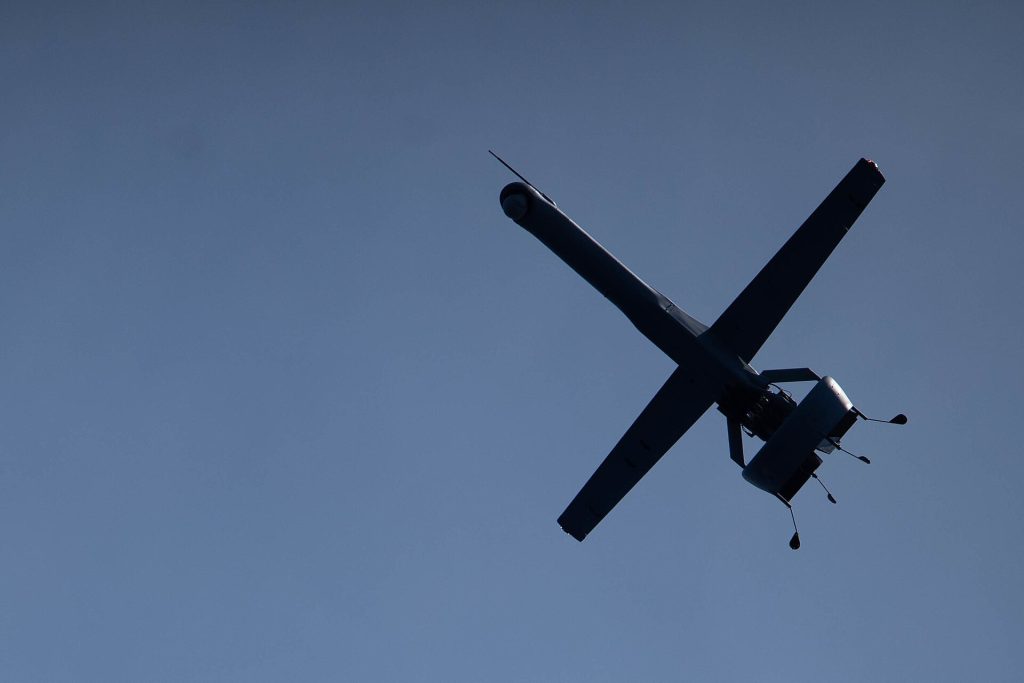
Shield AI has agreed to acquire radar maker Echodyne in a deal valued at $5.3 billion, and is raising $2.5 billion to fund it at a $28.8 billion post-money valuation. Why it matters: the deal pairs Shield’s autonomous aircraft and AI pilot software with the sensors that detect incoming drones, building a single company that can both sense a threat and respond to it.
November 5, 2026
What happened
Shield announced on November 5 that it has entered into a definitive agreement to acquire Echodyne Corp., the Kirkland, Washington-based radar company. Of the $5.3 billion transaction value, $4.8 billion will be paid and issued at closing, with up to an additional $500 million contingent on Echodyne meeting agreed performance targets. The acquisition is expected to close in early 2027, subject to regulatory approvals and other customary closing conditions.
To support the deal, Shield is raising $2.5 billion: $1 billion in Series H funding at a $28.8 billion post-money valuation, a $1 billion structured equity investment from funds managed by Blackstone, and $500 million in debt financing led by JPMorgan Chase Bank as sole arranger. The Series H is co-led by Disruptive and Innovation X Capital, with participation from Advent, JPMorganChase’s Security and Resiliency Initiative investment group, Snowpoint Ventures, Apandion, Center15 Capital and others.
What Echodyne brings
Echodyne designs compact, solid-state radars built on its patented MESA (Metamaterials Electronically Scanned Array) technology. Its radars are built into hundreds of counter-drone and security systems used by defense, government and commercial customers in more than 40 countries, and they cue interceptors, remote weapon stations, lasers and microwave systems toward incoming drones. In September, Echodyne received a contract with a $250 million ceiling from the Pentagon’s Joint Interagency Task Force 401 to supply counter-drone radar to U.S. and allied forces. The company recently opened an 86,350-square-foot manufacturing facility in Washington — a $40 million investment that can produce about 30,000 radars per year.
Echodyne’s team will remain in place, its MESA radars will stay available as standalone products, and CEO Eben Frankenberg will report directly to Shield CEO Gary Steele. Shield said both companies expect triple-digit revenue growth this fiscal year.
Why it matters
Shield, founded in 2015, built its name on Hivemind autonomy software and the V-BAT and X-BAT autonomous aircraft. Autonomy is only as good as what the aircraft can perceive, and counter-drone defense starts with detection. Buying Echodyne gives Shield an in-house sensing layer for its Mission Systems business instead of relying on outside radar suppliers — and a commercial customer base in airports, stadiums and public safety that softens its dependence on military contracts. The price of that breadth is scale and leverage: a $28.8 billion valuation, $2.5 billion in new financing and a large integration, all resting on both companies delivering the triple-digit growth they are projecting.
Frequently asked questions
How much is Shield AI paying for Echodyne?
The transaction is valued at $5.3 billion: $4.8 billion paid and issued at closing, plus up to $500 million more if Echodyne meets agreed performance targets.
When will the Shield–Echodyne deal close?
The companies expect it to close in early 2027, subject to regulatory approvals and customary closing conditions.
What does Echodyne make?
Compact, solid-state radars using its MESA technology, used mainly to detect and track drones for defense, government and commercial customers in more than 40 countries.
Sources: Shield AI announcement via PR Newswire; Breaking Defense