
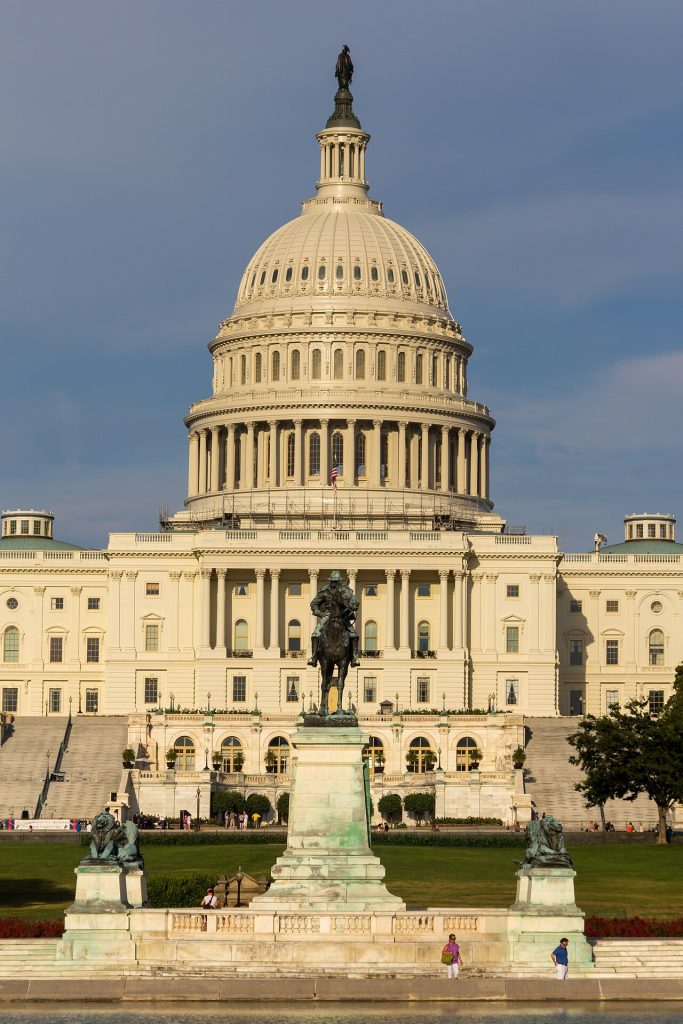
The U.S. Senate passed the Bipartisan American Affordability and Jobs Act on Thursday, November 19, by a 62-33 vote — the most significant energy permitting overhaul in years, and one with a direct price tag for the AI industry: data centers would have to pay the full cost of connecting to the grid instead of passing it on to households. The bill now heads to the House of Representatives. Why it matters: the cost of powering AI is becoming a political fight, and this is the first time Congress has voted to send the bill to the industry building the data centers.
Washington, D.C. — November 19, 2026
What happened
The Bipartisan American Affordability and Jobs Act (BAAJA) passed the Senate 62-33 on Thursday. Reuters called it Congress’ most significant effort in years to ease the permitting bottlenecks blamed for rising energy costs. The bill was introduced in September by Senators Shelley Moore Capito (R-W.Va.), Mike Lee (R-Utah), Sheldon Whitehouse (D-R.I.) and Martin Heinrich (D-N.M.), and it speeds up federal environmental reviews for power plants, transmission lines, mines and data centers.
The bill now goes to the Republican-controlled House. President Donald Trump has said he will sign it if it passes, but the window is tight: if both chambers do not adopt it, the legislation would have to be reintroduced when the 120th Congress takes over in January.
What it means for data centers
Under the bill, data center developers would pay more for grid access — covering the full cost of the transmission upgrades their projects need rather than spreading those costs across all ratepayers. An independent analysis cited by Senator Heinrich’s office, from Grid Strategies, estimates data centers would contribute approximately $55 billion toward transmission costs over the next decade, roughly $35 billion more than under current policy.
The same set of analyses projects household electricity prices 3-5 percent lower, saving households an estimated $50-$78 a year by 2040 (Rhodium Group), and up to 105,600 trades and manufacturing jobs supported through 2040 (Employ America). Those are projections from the bill’s backers, not guarantees.
The pushback
Not everyone is sold. Senator Jeff Merkley of Oregon said the bill would “put the pedal to the floor” on data center development, and tribal groups argued it infringes on treaty rights and endangers sacred sites. The environmental group Oil Change International called it a “fossil fuel giveaway,” and 17 Democratic state attorneys general sought revisions to protect laws such as the National Environmental Policy Act and the Clean Water Act. The politics are live: dozens of local data center moratoriums passed at city and county level in this month’s midterm elections.
Why it matters
For anyone following the AI buildout, this is the moment the electricity argument moved from town halls to the Senate floor — and the industry did not entirely lose. Data centers get faster permits, which the hyperscalers badly want; in exchange, they pay their own way on the grid. If the House passes the same deal, “who pays for AI’s power” stops being a local zoning fight and becomes settled federal policy. That is the everything-AI-tested angle: the technology’s real-world footprint now has a line item, and it is addressed to the companies building it.
Frequently asked questions
Is the data center bill law yet?
No. It has passed the Senate 62-33 and must still pass the House of Representatives before going to the President, who has said he will sign it.
How much more would data centers pay?
An analysis by Grid Strategies, cited by the bill’s sponsors, estimates about $55 billion toward transmission costs over the next decade — about $35 billion more than they would pay under current policy.
Will it lower my electricity bill?
That is the sponsors’ claim: the Rhodium Group projects prices 3-5 percent lower by 2040, worth roughly $50-$78 per household per year. It is an estimate, not a promise.
Sources: Reuters, USA Today, Associated Press, Office of Senator Martin Heinrich, Consumer Reports