
Quick verdict
Scite.ai Review 2026: The Citation Checker That Shows Its Work
TL;DR: Scite.ai is an AI research platform whose Smart Citations classify every citation as supporting, contrasting, or merely mentioning a paper — so you can see whether the literature actually backs a claim before you cite it. Plans run $20–$50/month (billed annually) with a 7-day trial, and there’s no real free tier for the core product. Best for grad students, academics, and anyone writing literature reviews; overkill for casual research, where free tools suffice.
What Scite.ai actually does
Scite is an AI-powered citation analysis platform built for academic research. Its signature feature is Smart Citations: instead of a raw citation count, Scite shows the context in which each paper was cited and uses natural language processing to classify each citation as supporting, contrasting, or mentioning the original work. You can see at a glance whether a finding has held up, been challenged, or merely been name-dropped.
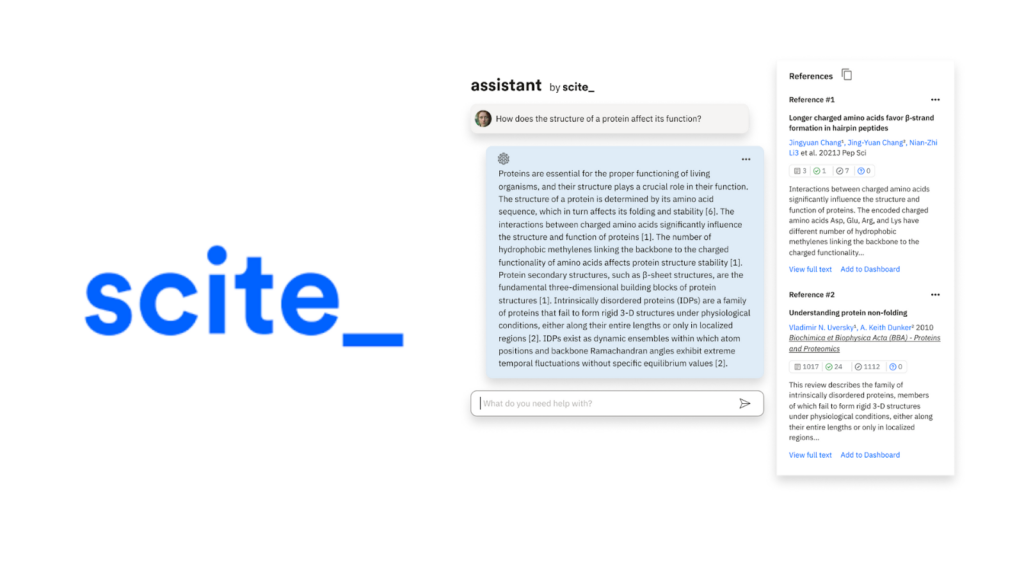
Around that core, Scite layers an AI research assistant that answers questions with cited sources, a literature search across its indexed papers, collections and dashboards for tracking a field (with alerts when new citing papers appear), and a reference checker where you upload your manuscript PDF and it flags retracted references, editorial notices, and papers with substantial contrasting citations. Pro adds API access and patent, clinical-trial, and grant datasets. It’s used by universities, publishers, and research-driven companies, and it’s won industry awards for the citation product.
Scite.ai pricing in 2026
Prices checked Oct 8, 2026 (per a September 2026 review of Scite’s current plans). Basic and Pro include a 7-day trial — note that the pricing page auto-enrolls you in the subscription after the trial unless you cancel first:
| Plan | Price | Key inclusions |
|---|---|---|
| Connect | $0 | 25 MCP credits/month; no Scite Assistant or Search access — not the core product |
| Basic | $20/month, billed annually | Assistant, Search, Smart Citation reports, collections up to 1,000 papers, alerts, dashboards |
| Pro | $50/month, billed annually | Basic features + API access, 2,500 MCP credits, collections to 10,000 papers, patent/clinical-trial/grant datasets |
| Team / Enterprise | Custom | Organizational licensing, administration, expanded access |
Scite describes a discount process for students and academics tied to institutional purchases — check with your university library before paying full price, since many institutions already license it.
Pros and cons
Pros:
- Smart Citations show whether the literature supports or contradicts a paper — no other tool does this as well
- Reference checker flags retracted and editorially-noticed papers in your manuscript before submission
- Every claim traces back to a cited paper, reducing hallucination risk vs. general chatbots
- Collections, alerts, and dashboards make it a genuine literature-monitoring system
- Used and licensed by real universities and publishers — institutional credibility
- Pro tier’s patent, clinical-trial, and grant datasets serve deep research workflows
Cons:
- No real free tier for the core product — the free Connect plan is MCP-only
- $20/month floor is steep for students paying out of pocket
- Narrow academic focus — useless outside research contexts
- Some metrics (like its USI journal scores) are non-standard and not widely recognized
- Slower than generative AI tools; it verifies rather than brainstorms
- Doesn’t replace reproducible searches in discipline-specific databases
- 7-day trial auto-enrolls into a paid subscription — set a reminder to cancel
Where it falls short
Scite’s precision is also its boundary. It is a citation-intelligence tool, not a general research assistant: it won’t brainstorm, write, or explore outside the peer-reviewed literature, and its dataset is smaller than the open web. The pricing has no middle ground for individuals — $20/month billed annually or nothing — which prices out undergraduates and casual researchers who’d benefit most from the reference checker. And while the supporting/contrasting classification is the product’s crown jewel, it’s still NLP applied to citation contexts: always spot-check the underlying papers for claims that matter, exactly as Scite itself recommends.
Who it’s for
Scite is built for PhD students and academics writing literature reviews, theses, or journal submissions; researchers in fast-moving fields (medicine, AI, climate) where findings get challenged quickly; and policy, healthcare, or legal researchers where one wrong citation has real consequences. It’s not for casual research (Perplexity or Google Scholar is free), for undergraduates on a budget (check your library’s institutional access first), or for anyone who needs writing and brainstorming help rather than citation verification.
Verdict
If citations are load-bearing in your work, Scite is the most trustworthy $20/month in research software: the supporting/contrasting view and the retraction checker catch exactly the mistakes that are embarrassing in academia and dangerous elsewhere. Start with the 7-day trial on a real manuscript, and check whether your institution already pays for it before you do.
Frequently asked questions
How much does Scite.ai cost?
Basic is $20/month and Pro is $50/month, both billed annually, with a 7-day trial. The free Connect plan offers only 25 MCP credits per month with no Assistant or Search access. Team and Enterprise pricing is custom.
What are Smart Citations?
Scite’s core feature: instead of just counting citations, it shows the context of each citation and classifies it as supporting, contrasting, or mentioning the original paper — so you can see whether later research agreed with or challenged a finding.
Is Scite.ai free for students?
There’s no free tier for the core product, but Scite describes a student/academic discount process tied to institutional purchases. Many universities license Scite, so check your library first.
Scite vs Elicit: which is better for literature reviews?
Different strengths. Elicit finds relevant papers and extracts takeaways without perfect keywords; Scite verifies what the literature says about papers you’ve found. Many researchers use Elicit for discovery and Scite for validation.