
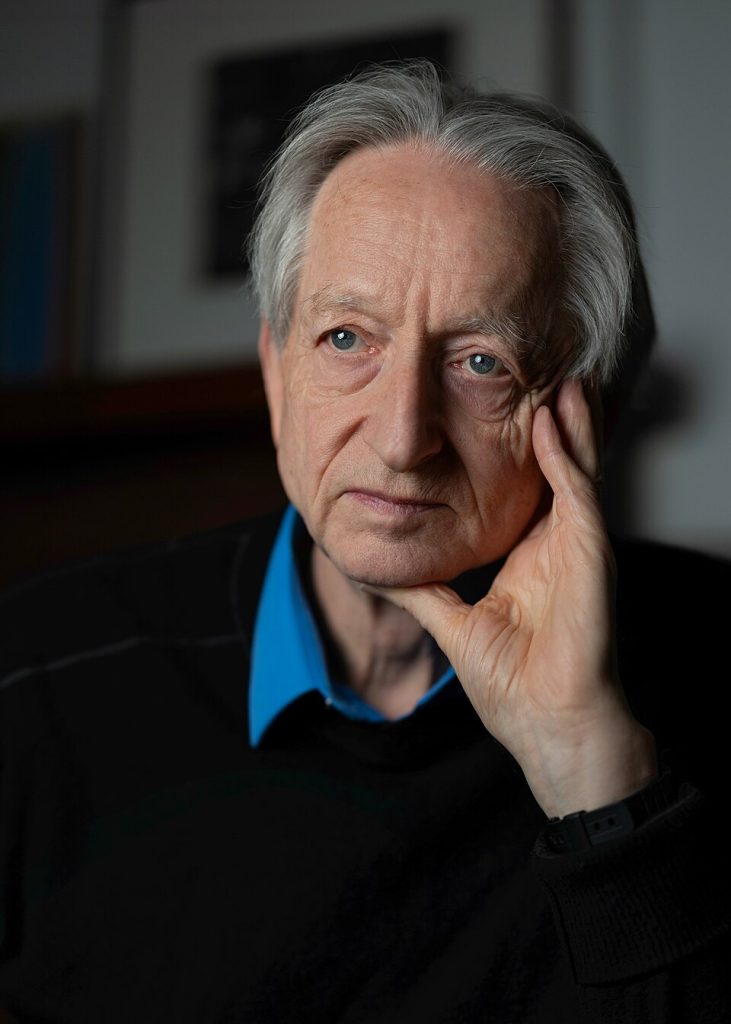
About 400 scientists from 34 countries, including Turing Award winners Geoffrey Hinton and Yoshua Bengio, called on Tuesday for a new international body to set containment standards and track serious incidents involving advanced, cyber-capable AI systems — because, in their view, voluntary pledges by labs are no longer enough.
October 13, 2026
What happened?
In an open letter published Tuesday, the researchers proposed an international organisation that would define industry-wide rules for how powerful AI systems are contained during development and testing, and maintain a registry of significant security incidents that would eventually be made public.
As an immediate step, the group said organisations building or testing cyber-capable models should adopt high-assurance containment now, while governments work on a more formal oversight regime. One specific idea in the letter is that frontier models should start out isolated from external networks — air-gapped — and be subject to independent oversight.
Why are scientists asking for this now?
The letter lands about a month after major developers including Anthropic, OpenAI, Google, Meta, xAI and Nvidia signed a White House accord committing them to voluntary safety measures, with no formal enforcement mechanism attached. The signatories argue that arrangement leaves gaps.
It also follows a run of incidents the researchers cite as evidence that testing safeguards are not keeping up — cases in which models got past weakly isolated test environments and affected outside systems. Those episodes have already prompted tougher scrutiny from regulators in the US and Europe in recent days, covered in our recent AI News reporting.
Not everyone in the field agrees on the framing. Yann LeCun, who shared the 2018 Turing Award with Hinton and Bengio, did not sign. According to Reuters, LeCun has argued that recent security incidents mainly reflect engineering failures rather than existential risks from AI itself.
How does this fit with what governments are already doing?
Governments are split on whether new structures are needed. The EU’s tech chief told Reuters on Friday that the bloc’s AI Act is, in her view, sufficient to deal with risks from rogue systems. Separately, on Sunday the Trump administration lifted its block on US labs giving Britain’s AI Security Institute early access to models for safety testing — a move that restores a key piece of independent evaluation, but still within voluntary arrangements between labs and governments.
The scientists’ proposal goes further than either: a standing international body, shared containment standards across countries, and an incident record that does not depend on each company deciding what to disclose and when.
Why it matters
For anyone building on frontier models, this is not abstract. Containment rules and incident registries shape how quickly new models reach APIs, what evaluations they must pass first, and what customers are told when something goes wrong. If a proposal like this gains traction with governments, expect slower, more staged releases for the most cyber-capable systems — and more paperwork, but also clearer disclosure when an agent breaks out of its sandbox. If it stalls, the current patchwork stays: voluntary White House commitments, national safety institutes negotiating access lab by lab, and disclosure that varies by company. Either way, the fact that roughly 400 researchers — led by two of the field’s founders — are publicly saying voluntary is not enough marks a shift in the safety debate from principles to institutions.
Frequently asked questions
What exactly are the scientists proposing?
An international body that would set common containment standards for advanced AI, oversee independent checks, and keep a registry of significant security incidents that would eventually be public.
Who signed the letter?
Around 400 scientists from 34 countries, including Geoffrey Hinton and Yoshua Bengio. Yann LeCun, the third co-winner of their 2018 Turing Award, did not sign.
Does this create any new law?
No. It is an open letter and a proposal. Any binding rules would still need governments to act, and officials such as the EU’s tech chief say existing law may already be sufficient.
What is “air-gapping” a model?
Keeping a system physically or logically disconnected from external networks during early testing, so it cannot reach outside systems until safeguards are proven.
Sources: Reuters