
Quick verdict
Panasonic Bead Eye M Review 2026: AI Post-Weld Inspection That Scans the Bead in 3D
Updated November 18, 2026 – Tested Intelligence
Quick verdict: Panasonic’s Bead Eye M, unveiled at EuroBLECH on October 20, 2026, bolts automated inspection onto the company’s TAWERS robot welding cells: a 3D scan of every finished bead, AI evaluation of its shape, and an objective OK/not OK decision against numerical thresholds instead of a tired inspector’s eyeball. It answers the consistency and traceability problem in post-weld inspection — but only inside Panasonic’s own robot ecosystem, and only for what a camera can see on the surface. Pricing is not public.
What it is
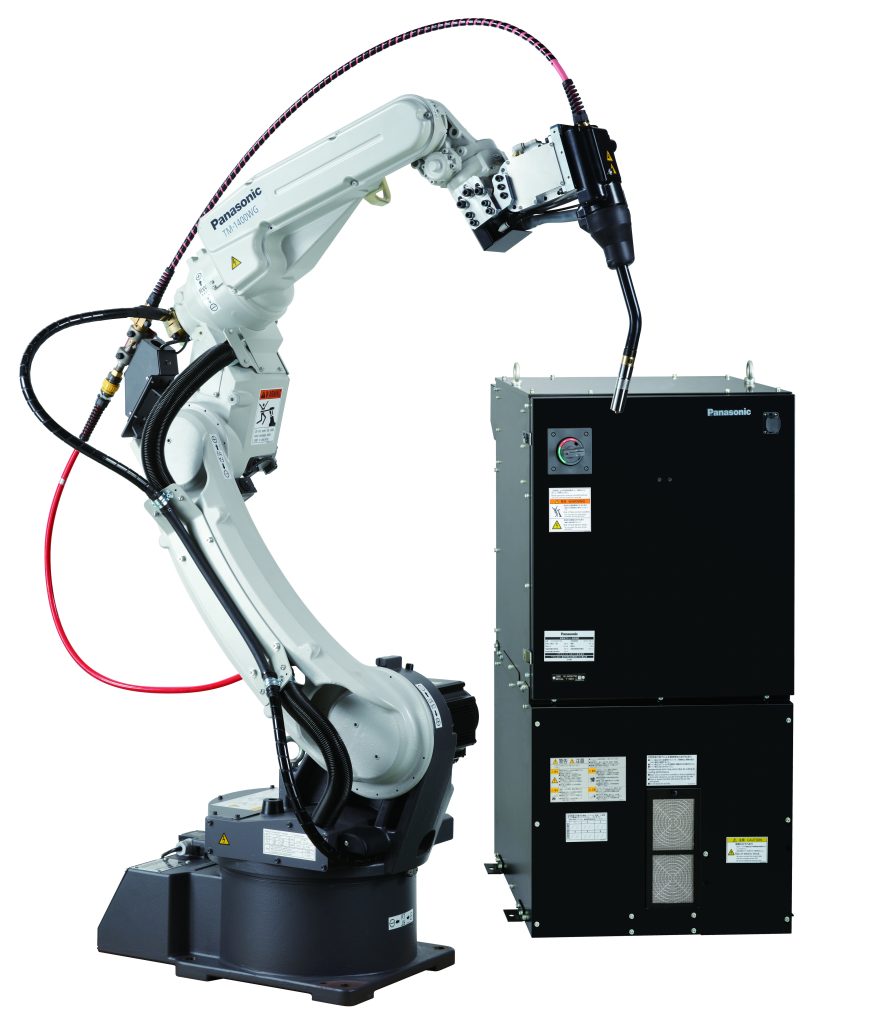
Bead Eye M is a post-weld inspection solution for Panasonic’s TAWERS arc welding robot systems — the platform where one controller runs the robot, the wire feeding and the welding power source together. Announced by Panasonic Connect Europe on October 20, 2026 and demonstrated live at EuroBLECH 2026, it adds the inspection stage to that same cell: after welding, the system 3D-scans the bead, evaluates the seam shape with AI, and flags the defects a visual inspector hunts for — pits, spatter, blowholes and undercuts. Every result is stored digitally, so a fabricator gets a traceable inspection record per seam rather than a tick on a paper traveller. Business and trade press coverage of the launch (including Enterprise Times’ October 26, 2026 roundup) described the same pitch: 3D scanning plus AI for an objective pass/fail, aimed at inspection fatigue and operator-to-operator variation.
Key features
- 3D bead scanning: the finished seam is scanned in three dimensions and its geometry evaluated, not just photographed
- AI defect detection: pits, spatter, blowholes and undercuts identified from the scan, per Panasonic’s launch announcement
- Objective OK/not OK decisions: numerical thresholds applied to each weld, with inspection criteria configurable for individual welds
- Digital inspection records: results stored for quality management and traceability instead of handwritten notes
- Automated setup: bead detection and inspection parameters set automatically — Panasonic says this cuts manual configuration effort by approximately 90 percent
- Fast deployment: the full setup, from robot teaching to AI inspection running, is completed within an hour, per the vendor
- TAWERS integration: sits inside Panasonic’s integrated robot, wire-feed and power-source control concept, alongside the G4 Robot Controller and Weld Navigation Plus software
Pricing
Pricing is not public. Panasonic’s launch material publishes no price, licence model or per-cell figure; Bead Eye M is sold as part of a TAWERS robot welding installation through Panasonic and its integrators, so the number arrives inside a cell quote. Budget accordingly: this is capital equipment attached to a robotic welding system, not a subscription a shop can start on a card.
What the launch announcement doesn’t make obvious: Bead Eye M is an expansion of Panasonic’s own TAWERS concept — the release frames it as one stage in a Panasonic cell. It is not a brand-agnostic inspection camera you can hang over an existing robot cell from another maker; shops that do not weld with Panasonic robots are buying into a cell, not an add-on. The second limit is in the defect list itself: pits, spatter, blowholes and undercuts are surface findings from a scan of bead shape. A scan cannot see lack of fusion or cracking below the surface, so the ultrasonic and other NDT your procedures require does not go away — Bead Eye M replaces the visual stage, not the volumetric one.
Who it’s for
Steel fabrication shops already running — or already speccing — Panasonic TAWERS robotic welding cells, where post-weld visual inspection is a bottleneck or a consistency problem: work for customers who demand documented, traceable inspection per seam, and lines where adding inspection headcount is harder than adding a scan. If your welds already come off a Panasonic robot and your quality arguments start with “the inspector thought it looked fine,” this is aimed at you.
Who should skip it
Shops welding manually or running another robot brand: the inspection is tied to the TAWERS platform, with no retrofit path onto existing cells. Shops whose quality risk is subsurface still need their NDT program regardless — and our Xiris WeldStudio Tracker review covers in-process seam monitoring, a different job from post-weld inspection. Small fab shops without a robot cell have nothing to attach it to: solve the welding automation question first.
Pros
- Objective, threshold-based OK/not OK replaces inspector-to-inspector variation on visual weld checks
- Every inspected seam leaves a stored digital record — traceability without a paperwork chase
- Light setup by inspection-system standards: automated bead detection and thresholds, teaching-to-inspection within an hour (vendor figures)
- Inspection criteria configurable per weld, which suits high-mix fabrication
- Closes the loop inside one vendor’s cell: teaching, welding and inspection on the same TAWERS platform
Cons
- Panasonic TAWERS cells only — no use to shops running other robot brands or manual welding
- Surface defects only: a 3D bead scan cannot detect subsurface fusion or cracking, so NDT requirements stand
- No public pricing, and it rides on a robot-cell purchase rather than standing alone
- Brand new: launched October 20, 2026, so no installed-base track record or independent accuracy data yet
- The headline setup figures (about 90 percent less configuration, one-hour setup) are Panasonic’s own launch claims
FAQ
What defects can Bead Eye M detect?
The four Panasonic names at launch: pits, spatter, blowholes and undercuts, identified by evaluating the weld seam’s shape from a 3D scan. Those are surface and geometry findings; defects below the bead surface are outside what a scan of the finished seam can see, so code-required volumetric inspection still applies.
Does Bead Eye M work with non-Panasonic welding robots?
Not as presented. Panasonic introduced it as an expansion of its TAWERS concept, demonstrated with the G4 Robot Controller and Weld Navigation Plus software, and the launch material describes no third-party robot support. Treat it as a Panasonic-cell feature.
How much does Bead Eye M cost?
Pricing is not public. Panasonic published no list price or per-cell figure at launch, and the system is quoted as part of a TAWERS installation. Get the inspection stage itemised in the cell quote so you can see what the AI inspection adds over the welding cell alone.
Bottom line
Bead Eye M is the inspection stage Panasonic TAWERS users were missing: the robot welds, the scanner reads the bead in 3D, and the AI returns the same OK/not OK call at 4 p.m. that it returned at 8 a.m., with a stored record to prove it. Buy it as part of a Panasonic cell decision, not as an inspection product in isolation — and keep your NDT program, because the defects this system cannot see are exactly the ones hiding under the bead.