
Quick verdict
Outrider Review 2026: Autonomous Yard Trucks That Move Trailers Without a Driver
Updated October 13, 2026 – Tested Intelligence
Quick verdict: Outrider is the most complete attempt yet to automate the whole distribution yard, not just the driving: its electric trucks find, hitch, move and park trailers, and a robotic arm connects the trailer lines. The AI evidence is strong and the safety case has had outside review. It is an enterprise subscription system, pricing not public.
What it is
Outrider, based in Golden, Colorado, focuses exclusively on autonomous yard operations. Its system combines self-driving electric yard trucks, cloud management software and site support. The trucks work the space between warehouse doors and public road: locating trailers, hitching and unhitching, backing them onto dock doors and parking spots, and tracking where every trailer is.
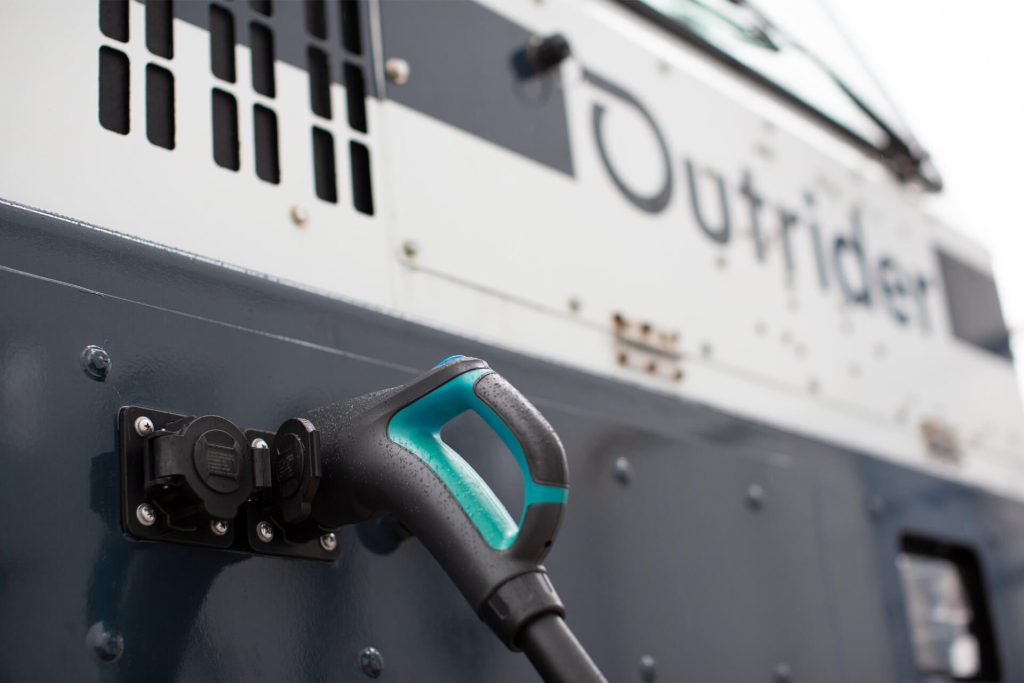
The detail that sets it apart is TrailerConnect, a robotic arm connecting and disconnecting trailer brake and electric lines – the step that normally sends a driver climbing down on every move. Outrider says it works with no modifications to trailers. The system also tracks trailer inventory in real time, monitors truck charge status, and integrates with yard, warehouse and transportation management systems.
This is not a concept vehicle. Outrider says the system runs in daily operations at Georgia-Pacific, and moves can be dispatched and monitored on site or remotely, without teleoperation. For spotters, the pitch is a move off the yard’s most repetitive, exposed seat – in all weathers, around reversing semis – into dispatch and oversight.
Key features
- Autonomous electric trucks that locate, hitch, move, back and park trailers in mixed-traffic yards
- AI-powered perception on NVIDIA DRIVE hardware, using lidar, radar and cameras for 360-degree awareness
- Proprietary deep-learning models trained on millions of data points from customer yards
- TrailerConnect robotic arm, described by Outrider as patented deep-learning based technology, for trailer lines
- Real-time trailer inventory tracking with no additional yard infrastructure
- Safety system: 14 mechanisms addressing over 200,000 yard hazards (vendor figures)
Pricing
Pricing is not public. Outrider offers the system as a subscription including the autonomy stack, management software, inventory tracking and 24/7 support, priced as an enterprise deployment, not per truck. No amount is published, so a number requires a scoping conversation based on yard, truck count and volume. Budget it against driver labour, turn time and detention costs, not a truck’s price alone.
Who it’s for
Large distribution centres, manufacturing and intermodal yards running high trailer-move volumes around the clock – the Fortune 500-scale yards Outrider built its data and safety case on. It fits operations where driver turnover, slow turns and poor trailer visibility are measurable costs, with a plan to run electric trucks. Construction logistics yards are the closest fit here.
Who should skip it
Small yards, occasional trailer moves and any operation needing one truck and a driver it already trusts. This is a system deployment – trucks, software, safety process and support – not an add-on for a spotter truck. Also skip it if your yard cannot standardise around electric platforms, since the system is designed for electric trucks.
Pros
- Automates the full trailer move, including hitching and line connection
- Deep-learning perception trained specifically on real yard data
- Removes drivers from a hazard-exposed job in logistics
- Safety approach reviewed externally, not just vendor-asserted
- Subscription bundles autonomy, software, tracking and support
Cons
- No public pricing; enterprise subscription
- Built for large, high-volume yards – overkill for small sites
- Designed around electric platforms, not your diesel fleet
- Driverless operation rolled out with select customers first
FAQ
What does TÜV SÜD’s review actually mean?
TÜV SÜD conducted a preliminary assessment of Outrider’s functional safety approach against its Autonomous Vehicle Conformity Framework and determined it was aligned with its requirements. That is an outside review of the method, starting from ISO 26262 and ISO 21448 – not a blanket certification of every deployment.
Does TrailerConnect need modified trailers?
No. Outrider says TrailerConnect connects and disconnects brake and electric lines with no modifications to trailers, using deep learning to locate the connections.
How much does Outrider cost?
Pricing is not public. It is sold as a subscription covering autonomy, software, tracking and support, quoted per deployment.
Bottom line
Outrider is what yard automation looks like when a company refuses to stop at the driving: perception, hitching, lines, inventory and safety in one system. If your yard moves trailers all day and cannot keep spotters, it is the benchmark to scope against – eyes open on enterprise pricing and an electric-only platform.