
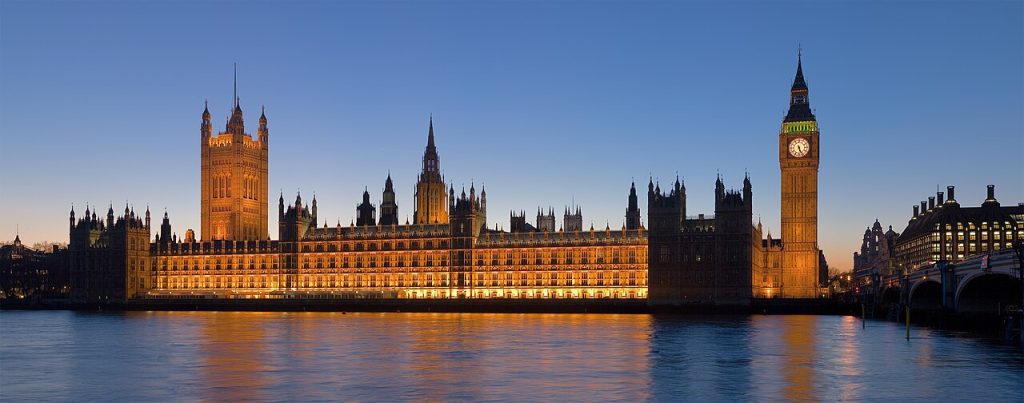
OpenAI and Anthropic told a British parliamentary hearing on Tuesday that voluntary safety pledges are no longer enough for frontier AI, and that binding rules should replace them — while Google DeepMind and Meta, sitting alongside them, declined to back new legislation. Why it matters: the split puts the industry’s disagreement about regulation on the public record, in front of the lawmakers who may decide whether UK model testing stays voluntary or becomes law.
London, October 13, 2026
What happened at the hearing?
Executives from OpenAI, Anthropic, Google DeepMind and Meta gave evidence to Parliament’s Business, Innovation, Science and Trade Committee, in a session that also heard from four former staff members turned whistleblowers and senior British civil servants. The committee’s focus was whether pre-release safety testing and incident reporting should be legally required, rather than left to companies to volunteer for.
Anthropic’s head of Europe, Liam Booth-Smith, said the rules should be binding, arguing that his company has consistently held that voluntary commitments do not go far enough. OpenAI’s Tom Duff Gordon was more measured but landed in a similar place, supporting a statutory framework that includes mandatory elements such as incident reporting, and backing the idea of an international convention.
Where did the other labs land?
Google DeepMind and Meta did not follow their rivals. Both favoured working through standards rather than new laws, leaving a clear divide between the two US labs asking to be regulated and the two that preferred the current, lighter approach.
OpenAI pointed to its own record as evidence it is not cutting corners: Duff Gordon told MPs the company scrapped its GPT-6.1 Astra model over safety concerns after finding its refusal behaviour and alignment had not progressed enough. Anthropic, for its part, warned that the most immediate risk surface is cyber — its Mythos model is finding tens of thousands of vulnerabilities a month — and that the same capabilities could extend into helping bad actors with biological or chemical weapons.
Why does the UK setup matter?
Britain’s AI Security Institute can currently test frontier models only when companies choose to hand them over. It has no legal power to block a release it considers unsafe, and its director has acknowledged the arrangement depends entirely on developer cooperation. Tuesday’s hearing was MPs testing whether that voluntary model still holds — and two of the four biggest labs just told them, in public, that it does not.
Why it matters
For anyone building on these models, the practical question is what changes if pledges become law: mandatory incident reporting, independent pre-release testing, and a regulator that can say no. None of that is UK law today, and Google and Meta’s resistance shows it is not a foregone conclusion. But when the companies being regulated ask for binding rules themselves, the direction of travel gets harder to ignore. Everything AI, tested — including, increasingly, by governments.
Frequently asked questions
Which companies backed binding AI rules at the UK hearing?
OpenAI and Anthropic. Anthropic called directly for binding rules; OpenAI supported a statutory framework with mandatory incident reporting. Google DeepMind and Meta declined to back new legislation, preferring standards.
Can the UK currently block an unsafe AI model from release?
No. The UK’s AI Security Institute tests models on a voluntary basis and has no power to stop a launch. Whether testing should become mandatory was a central question at the hearing.
What did OpenAI say about its scrapped Astra model?
Its Europe policy chief told MPs the GPT-6.1 Astra release was halted over safety concerns, presenting the decision as evidence the company is not racing to the bottom on safety.
Sources: Wired, Press Association, MLex