
Quick verdict
Mitsubishi GX-F ADVANCED Review 2026: Maisart AI Fiber Lasers That Adjust the Cut in Real Time
Updated November 17, 2026 – Tested Intelligence
Quick verdict: The GX-F ADVANCED series — sold in its current flagship form as the GX-F ADVANCED PLUS — is Mitsubishi Electric’s AI-enabled 2D fiber laser line for sheet metal shops, sold and serviced in North America by MC Machinery Systems. Its Maisart artificial neural network watches and listens to the cut with audio and light sensors and adjusts parameters in real time, while an AI nozzle monitor, a zoom head and a gas-reduction system attack the setup time, consumable waste and nitrogen bill that eat a laser’s margin. It is serious capital equipment: pricing is not public, and the warranty is split — five years on oscillator parts, two years on the machine.
What it is
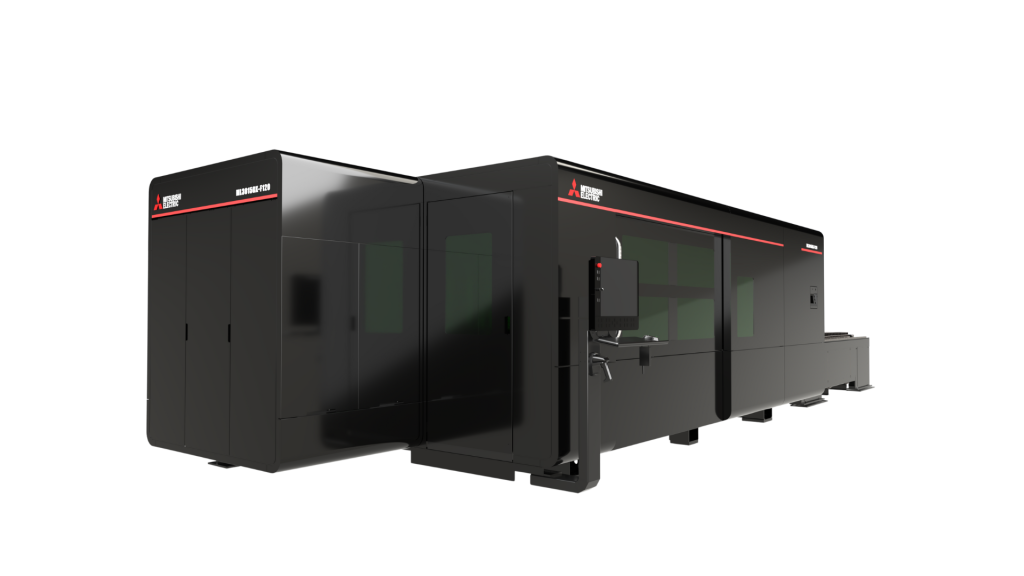
The GX-F ADVANCED is a two-dimensional fiber laser cutting system designed by Mitsubishi engineers and built entirely with Mitsubishi components, which MC Machinery describes as a single source for service and support. The current PLUS series comes in two platforms: the ML 3015, with a 122-inch X stroke, and the ML 4020, with a 161.41-inch X stroke; the vendor’s product page lists oscillator output options from 4 kW to 20 kW across the series. The design goal, stated plainly by the vendor, is less operator input: with experienced laser operators hard to hire, the machine is meant to monitor its own cut quality and correct itself. Trade coverage shows it working that way in production — FF Journal profiled Lasernut, a contract fabricator running a 10 kW GX-F ADVANCED around the clock and reporting a 25 percent production increase after installing it.
Key features
- Maisart AI process monitoring: Mitsubishi’s proprietary artificial neural network uses audio and light sensors to monitor the cut in real time and automatically adjust parameters to restore or improve cutting performance
- AI Diagnosis and Dynamic Focus Control: when suboptimal processing is detected the machine corrects its parameters; under optimal conditions it raises processing speed, and focus position is adjusted by AI to keep processing stable
- AI Nozzle Monitor: a camera system judges nozzle condition and lifetime from images; a worn nozzle is swapped automatically by the 21-position nozzle changer, and the same camera drives automatic nozzle centering with no operator intervention
- Advanced Gas Reduction (AGR): a family of nozzle and process technologies — AGR-N2 cuts nitrogen use by up to 75 percent, AGR-MIX blends roughly 95 percent nitrogen with 5 percent oxygen in the nozzle for up to a further 50 percent reduction over AGR-N2, AGR-O2 Boost claims double standard oxygen cutting speed, and AGR-AIR cuts select materials with low-pressure air
- Mitsubishi Zoom Head: automatically changes beam size, shape and focal point per material and thickness, so operators do not swap lenses between plate thicknesses
- High Peak Piercing: piercing time reduced by up to 60 percent, with 25 mm mild steel pierced in 0.8 seconds per the vendor
- Direct Sense height control with automatic collision avoidance, plus Mel’s Eye plasma, burn and burst detection
- Augmented Reality Plus nesting: overhead cameras build a top-view image of the actual sheet for drop cuts, part rotation and part-in-part nesting on remnants
- M800 control: 19-inch touchscreen with job scheduling, runtime estimation, real-time electrical and assist-gas consumption tracking, and Remote360 remote monitoring with predictive maintenance
Pricing
Pricing is not public. MC Machinery sells the GX-F ADVANCED through quotes, demos and scheduled test cuts rather than a published price list, and the total will depend on platform, oscillator power, and how much loading, storage and sorting automation is attached. Treat any machine price quoted in a forum or listing as a one-off configuration figure, not a rate card.
What the quote doesn’t make obvious: the warranty and monitoring terms in Mitsubishi’s own brochure are split three ways. The oscillator carries a five-year warranty on parts only; the machine itself carries a two-year warranty covering parts and labor; and Remote360 machine monitoring is included for two years — so ask what Remote360 costs from year three, and price the AGR system completely, because the brochure states that a low-pressure air compressor system is central to all AGR technologies. The gas savings are real only after that compressor is in the budget.
Who it’s for
Sheet metal fabricators and laser job shops running enough volume that cut stability, pierce time and nitrogen consumption are line items, not rounding errors — especially shops that cannot staff every shift with a veteran laser operator. The AI monitoring, automatic nozzle changing and centering, and automation-ready design are aimed at keeping the machine cutting unattended or lightly attended, and the all-Mitsubishi build suits buyers who want one vendor accountable for oscillator, control, head and service.
Who should skip it
Small shops cutting a few sheets a day will not recover a machine of this class: the ML 3015 weighs 20,723 pounds and the ML 4020 weighs 29,843 pounds, before automation towers. Shops whose work is mostly thick plate, tube, or 3D cutting need a different machine category entirely. And if your current laser’s problem is quoting or nesting office work rather than cut time and uptime, software reviewed elsewhere in this section will move the number for a fraction of the capital.
Pros
- AI that acts on the cut itself — parameters, focus and nozzles — not just a dashboard alert
- AGR gas-reduction family attacks nitrogen cost, one of the biggest running costs in laser cutting
- Single-source Mitsubishi build with a five-year oscillator parts warranty
- Augmented Reality Plus nesting makes remnant and part-in-part work practical at the control
- Automation-ready with configurations the vendor says can take 30 percent less floor space than typical laser automation setups
Cons
- No public pricing — every figure requires a quote for a specific configuration
- Warranty is split: five-year oscillator parts only, two-year machine parts and labor
- Remote360 monitoring is included for two years; the cost after that is a quote question
- AGR savings depend on a low-pressure air compressor system that is part of the real installed cost
- Capital footprint: heavy machine, floor space, power and gas infrastructure required
FAQ
What does the AI on the GX-F ADVANCED actually do?
Three jobs, per the vendor’s brochure. Maisart AI process monitoring uses audio and light sensors to watch the cut and adjust parameters in real time — correcting suboptimal processing and speeding up when conditions are optimal. The AI Nozzle Monitor images the nozzle, judges its condition, and triggers an automatic change and re-centering when needed. Dynamic Focus Control adjusts focus position by AI to keep processing stable.
How much does a GX-F ADVANCED cost?
Pricing is not public. MC Machinery sells by quote after a demo or test cut, and the price moves with platform (ML 3015 or ML 4020), oscillator power, and attached automation. Budget beyond the machine for installation, gas supply, the low-pressure air compressor the AGR system is built around, and Remote360 monitoring after its included two years.
How much nitrogen does AGR really save?
The vendor rates AGR-N2 at up to 75 percent less nitrogen consumption while producing oxide-free parts, and AGR-MIX at up to an additional 50 percent reduction over AGR-N2 on mild steel. Those are vendor figures under their test conditions — the honest way to test them is MC Machinery’s own offer: schedule a test cut on your material and measure gas use on your parts.
Bottom line
The GX-F ADVANCED earns its place on a sheet metal shop’s shortlist because its AI is mechanical, not decorative: it listens to the cut, corrects parameters, watches its own nozzle and manages focus, while AGR goes after the nitrogen bill and the zoom head removes lens-change setup. Go in clear-eyed — no public price, a split warranty, a two-year included window on Remote360, and a compressor behind the gas savings — get those numbers in the quote, and this is one of the most self-managing fiber lasers a fabricator can buy.