
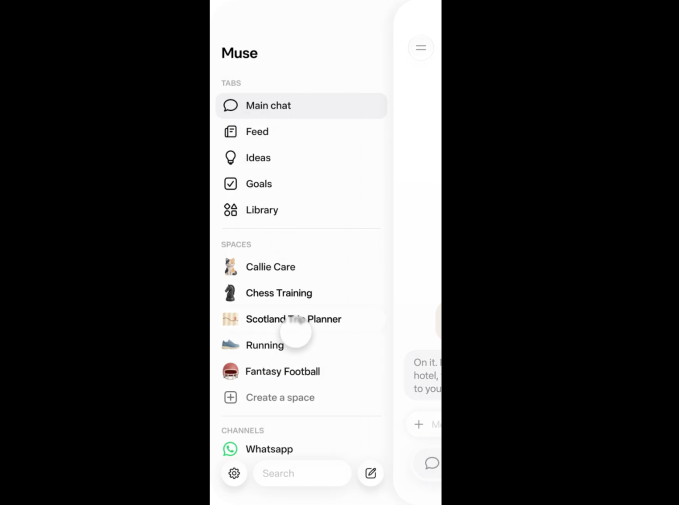
Meta has launched Spaces for its Muse AI agents: describe what you need in chat, and Muse builds a dedicated workspace for it — a tracker, a planner, or a project board that keeps itself up to date from your connected apps. Why it matters: the personal-agent race is moving past the chat box, toward agents that build and maintain little tools around your goals.
November 6, 2026
What happened
Meta launched Spaces on Friday, November 6 — a new way to communicate and collaborate with its Muse agents. Spaces are topic-focused breakout conversations that Meta calls “custom experiences.” They live in the sidebar of the Muse interface; clicking one opens the conversation where Muse works toward that particular goal on your behalf. Meta’s examples include planning a vacation, collecting recipes for a family event, a holiday gift tracker, a wedding planner, and a space for DIY projects.
How Spaces work
“Describe an idea in chat, and Muse builds a space for you, whether that’s a tracker, a planner or a project board,” Meta says. Spaces can be integrated with third-party apps and information: “Connect the apps you use, and your spaces keep themselves up to date in the background, so new concert dates, price changes, or savings progress show up without you having to ask,” the company says. Mark Zuckerberg posted about the feature on X on Friday: “Playing around with spaces in Muse lately — tell Muse what you need and it builds it. I’ve made a BBQ game, an event tracker, and a home control dashboard. Excited to see what you build.”
Meta’s second Muse feature in two days
Spaces is the second new Muse feature Meta has debuted this week: on Thursday it rolled out Muse Voice to all U.S. users, adding real-time voice and video chat with the agent’s animated avatar. The push has an audience to build on — during Meta’s October earnings call, Zuckerberg said its Muse agents had 10 million users in the U.S. and Canada, less than two months after the agents debuted. Meta is competing with other personable agents, including OpenAI’s Dots and SpaceXAI’s Grokbot, and its strategy is visibly different: less raw chat, more built things that persist and update themselves.
Why it matters
For users, Spaces solve a real annoyance of chat-based agents: one endless conversation where every project, list, and plan blurs together. Giving each goal its own workspace — one that pulls in fresh prices, dates, and progress on its own — is closer to how people actually organize work. For the industry, it is another step in the same direction as this week’s other agent launches: the interface is becoming the product, and the winners will be the agents that maintain useful, living workspaces rather than the ones that merely answer questions. The open question is depth — how far a Space can reach into connected apps, and what it does with that access, is something users will learn by using it.
Frequently asked questions
What are Spaces in Meta’s Muse?
Spaces are topic-focused workspaces inside Muse — one per goal or project. You describe an idea in chat, and Muse builds a tracker, planner, or project board for it in the sidebar.
Do Spaces update themselves?
Yes, if you connect the apps you use. Meta says spaces keep themselves up to date in the background, so concert dates, price changes, or savings progress appear without you asking.
How many people use Muse agents?
Mark Zuckerberg said on Meta’s October earnings call that Muse agents had 10 million users in the U.S. and Canada, less than two months after they debuted.
Sources: TechCrunch (reporting Meta’s launch, November 6, 2026).