
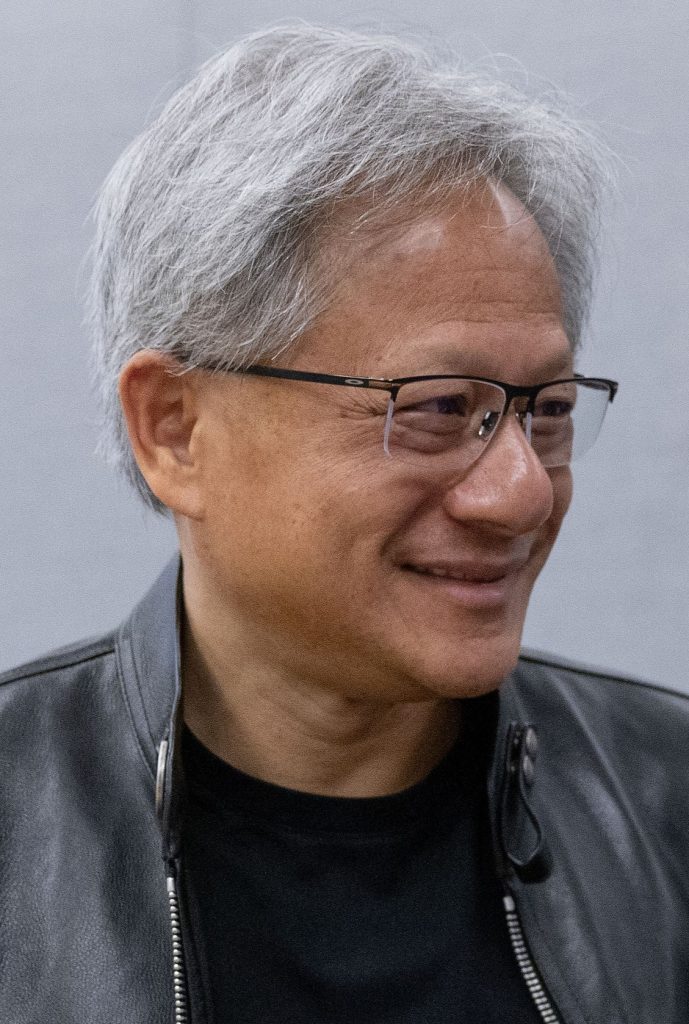
Jensen Huang has resigned as Nvidia’s president and chief executive, effective immediately, ending the 33-year run of the co-founder who built the company into the center of the AI boom. Why it matters: there has never been an Nvidia without Huang, and the company now has to find a permanent leader while its chips, investments and lobbying shape nearly every major AI buildout.
November 12, 2026
What happened
Nvidia announced on Thursday, November 12, that Huang had resigned as president, chief executive and a member of the board, effective immediately. In a regulatory filing, the company said its board accepted his resignation on Wednesday. Chief Financial Officer Colette Kress, who is also an executive vice president, takes over as interim CEO while the board searches for a permanent successor, and she will continue to serve as CFO in the meantime. The board is considering internal and external candidates.
The board also appointed Harvey C. Jones as its first-ever chair. Jones, a managing partner of Square Wave Ventures and a former CEO of Synopsys, has served on Nvidia’s board since 1993 and is expected to play a central role in the CEO search. In the announcement, Jones said Kress had helped lead Nvidia through extraordinary growth and that the board expects operations, customer commitments and the product roadmap to continue without interruption.
How it came to this
The resignation follows an extraordinary week. On Sunday, November 8, Nvidia’s board said it was opening an independent investigation into reports that Huang had been the target of a foreign intelligence effort, after reporting about his relationship with a woman U.S. officials believe to be a Chinese spy. Huang admitted on Sunday to an extramarital affair, without naming the other party, and apologized to his family and colleagues. Nvidia initially said it had confidence in Huang and no reason to believe national security or company secrets were compromised.
That position reversed within days. After the New York Times reported an additional affair involving an executive who reported to Huang, the board met on Wednesday night to consider removing him, according to CNN and Reuters reporting. Nvidia’s announcement on Thursday gave no reason for the resignation and included no comment from Huang; the company thanked him and described his contributions as profound and immeasurable.
The market reaction
Nvidia’s shares fell more than 10% in pre-market trading on Thursday and were down nearly 12% in early trading, according to TechCrunch, which calculated the stock had fallen by as much as 19% since Friday — a market-value loss of more than $855 billion. Shares of companies tied to Nvidia’s spending also dropped on Thursday, including CoreWeave and Nebius. Reuters separately reported that lawmakers in Washington are pushing for tougher restrictions on AI chip sales to China in the wake of the resignation, and that Chinese AI firms are rushing to secure Nvidia-powered capacity outside China before rules tighten.
Why it matters
Huang founded Nvidia in 1993 and led it ever since, turning a graphics-chip maker into the supplier the entire AI industry depends on. He ran an unusually flat company — around 60 direct reports, by TechCrunch’s count — with no heir apparent and no succession plan, and he holds roughly 3.5% of the shares with no supervoting rights. Beyond chips, Nvidia under Huang became one of the AI boom’s biggest financiers, reporting $99 billion in investments and another $25 billion in commitments at the end of its second quarter. The first public test of the transition comes quickly: Nvidia reports quarterly earnings on Tuesday. For everyone buying GPUs, funding data centers or waiting on export rules, who replaces Huang — and how fast — is now one of the biggest open questions in AI.
Frequently asked questions
Who is running Nvidia now?
Colette Kress, Nvidia’s chief financial officer and an executive vice president, is interim CEO. She continues as CFO while the board searches for a permanent successor among internal and external candidates.
When did Jensen Huang’s resignation take effect?
Immediately. Nvidia said its board accepted the resignation on Wednesday, November 11, and announced it on Thursday, November 12. Huang also left the board.
Why did Jensen Huang resign?
Nvidia’s announcement gave no reason. The resignation came days after the board opened an independent investigation into reports he had been targeted by a foreign intelligence effort, after he admitted an extramarital affair, and after further reporting about a relationship with a company executive; the board met Wednesday night to weigh his removal, according to CNN and Reuters.
Sources: TechCrunch, CNN, Reuters, The Wall Street Journal