
Quick verdict
DJI Flip Review 2026: The Beginner-Friendly Drone With Built-In Safety
The DJI Flip is the rare drone that takes off from your palm and wraps its propellers in full-coverage guards. With a 48MP camera, 4K/60 HDR video, and AI tracking, it is built for new pilots and vloggers who want cinematic shots without the learning curve. It is one of the easiest quality drones to start with.
Key features of the DJI Flip
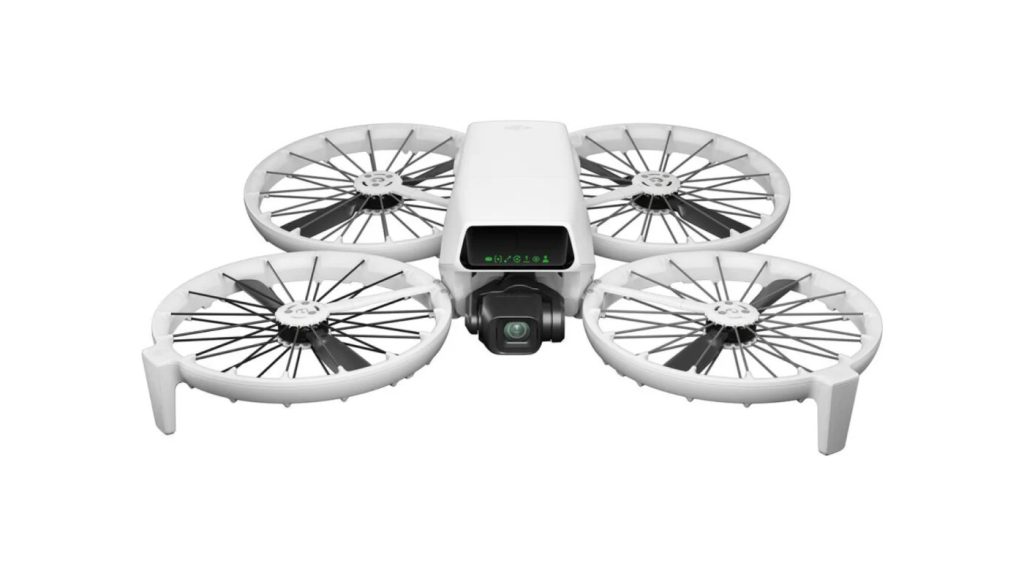
The Flip’s defining feature is its full-coverage propeller guard design. Unlike most camera drones where exposed props are a hazard near people, the Flip can be flown close to subjects with far less risk. Combined with palm takeoff — it launches straight from your hand with no controller required — it is clearly aimed at solo creators and travel vloggers.
The camera is no afterthought: a 48MP 1/1.3-inch CMOS sensor shooting 4K/60fps HDR with 10-bit D-Log M color, stabilized by a 3-axis mechanical gimbal. D-Log M gives you flat footage with real grading headroom, which is unusual generosity at this level.
AI features include subject tracking and MasterShots, DJI’s automated cinematic sequence mode that plans, films, and edits a set of moves into a short clip. Flight time is around 31 minutes, transmission reaches up to 13km on DJI’s O4 system, and forward/downward obstacle sensing adds a basic safety net.
Who the DJI Flip is for
First-time drone buyers should put the Flip at the top of their list. The guard design directly addresses the biggest fear new pilots have — hurting someone or breaking the drone — and palm launch removes the intimidation of a full controller setup.
It also suits vloggers and social creators who want drone-style establishing shots and follow-me footage without carrying a full kit. At under 249g, it keeps the same registration advantages as the Mini line.
What to watch out for
The guard structure adds bulk and weight budget that could otherwise go to a bigger sensor or longer battery. The Flip’s obstacle sensing is forward and downward only — there is no side or backward sensing, so lateral moves while tracking a subject deserve caution.
It is also worth remembering that propeller guards reduce risk, they do not eliminate it. Responsible flying near people still matters, and local rules about flying over crowds apply regardless of the drone’s design.
DJI Flip pros and cons
- Pro: Full-coverage prop guards make it the safest-feeling DJI drone near people.
- Pro: Palm takeoff and AI modes make cinematic footage genuinely easy.
- Pro: 48MP sensor, 4K/60 HDR, and 10-bit D-Log M punch above the beginner label.
- Pro: Sub-249g weight keeps registration simple.
- Con: No side or rear obstacle sensing.
- Con: Guards trade some performance for safety.
- Con: 13km transmission is shorter than DJI’s flagship systems (still far beyond visual line of sight).
DJI Flip FAQs
Can the DJI Flip really take off from your hand?
Yes. Palm takeoff is one of its signature features — the Flip can launch from and land back on your open palm without a remote controller, using its AI flight modes and the DJI Fly app.
Is the DJI Flip safe to fly near people?
Safer than a typical exposed-prop drone, thanks to the full propeller guards. But “safer” is not “risk-free,” and aviation rules about flying over people still apply. Always check local regulations.
What is MasterShots?
An automated mode where the Flip performs a sequence of cinematic camera moves around a subject and compiles them into a short edited clip. It is designed for creators who want polished footage with zero piloting skill.
Does the Flip need FAA registration?
At under 249g, it is exempt from FAA registration for recreational use in the US. Commercial use has different requirements regardless of weight.
How good is the camera for the price?
Very good for a beginner-oriented drone: 4K/60 HDR with a 3-axis gimbal and 10-bit D-Log M color gives you footage that grades well and holds up on social platforms and YouTube.
Price and availability
As an Amazon Associate we earn from qualifying purchases.