
Quick verdict
Boon Review 2026: An AI Preconstruction Agent That Reads Drawings and Specs Together
Updated October 26, 2026 – Tested Intelligence
Quick verdict: Boon (Boon Agent, at getboon.ai) is an AI teammate for preconstruction teams: it reads a bid package’s drawings and specifications together, surfaces possible conflicts and scope gaps with the source sheet or section cited, and drafts RFIs and bid notes for an estimator to approve. It is unusually honest about accuracy, publishing task-level scores including its weakest ones. The catch is the same honesty in reverse: some detection tasks are still weak enough that every output needs a real estimator’s check.
What it is
Boon is a construction AI company founded in the San Francisco Bay Area in 2023, originally known for AI agents in logistics before focusing its public offer on construction preconstruction. Its current product, Boon Agent, is pitched as “the intelligence layer for construction”: AI agents that run preconstruction workflows from blueprint to bid inside tools teams already use.
The workflow is review-first: Boon organizes a bid package, compares plan sheets against spec sections, and presents findings as drafts with source references – nothing is sent until an estimator verifies and approves it. Boon also offers concrete takeoff (slabs, footings, rebar across a full set) and bid leveling for quotes in mixed formats such as Excel and PDF.
Key features
- Drawing/spec cross-checking, citing the sheet or section beside each possible conflict
- Scope gap surfacing, with context for an estimator to confirm or dismiss
- Draft RFIs, scope notes, bid summaries and go/no-go summaries – estimator approval required before sharing
- Published accuracy page: task-level F1 benchmarks by trade, including known failure modes
- Concrete takeoff across a full drawing set, including scanned PDFs
- Bid leveling: subcontractor bids normalized into a side-by-side scope comparison
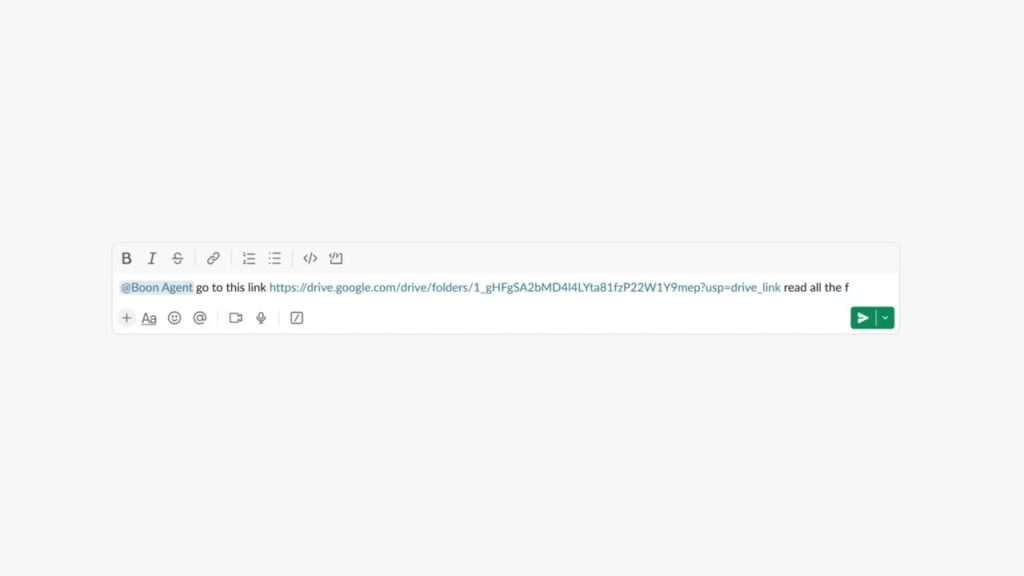
- Connected tools: works with Slack, Microsoft Teams, Procore, Autodesk Construction Cloud, BuildingConnected and DESTINI Estimator
- Security posture: SOC 2 controls, SSO and role-based access, and a stated policy of no training on customer files
Pricing
Boon publishes a simple entry price: Boon Agent starts at $375 one-time for 5M tokens. Founding members – the first 1,000 estimators – get 100,000 free tokens. Self-serve signup is offered on Boon’s site. Token pricing means real cost depends on how many plan sets you run, so model token burn on a real bid package before a wider rollout. There is no published per-seat price.
Who it’s for
General contractors and subcontractors whose estimators lose days reading spec books and cross-checking drawings by hand – across electrical, mechanical, HVAC, structural steel and concrete trades, per Boon. It fits where the bottleneck is review volume before bid day, while there is still time to price the answer.
Who should skip it
Teams wanting a takeoff number they can bid without review. Boon’s own published scores say why: electrical device detection sits at F1 0.64, flex duct detection at 0.72 and end-to-end wall-type work around 0.72. Boon is also a preconstruction tool only – it does not run the job after award, so project management, field and accounting still live elsewhere.
Pros
- Every finding carries a source reference an estimator can open and check
- Accuracy is published by task and trade, including the weak tasks and failure modes
- Human approval is built into the workflow, not bolted on
- Connects to Procore, Autodesk Construction Cloud, BuildingConnected and DESTINI Estimator
- Low-friction entry: a published $375 starting price and a guided walkthrough on your own drawings
Cons
- Weak published scores on some tasks (electrical devices F1 0.64) mean outputs are starting points, not answers
- Token pricing makes long-term cost harder to forecast than a flat seat price
- Known failure modes include wrong-schedule selection on multi-schedule sheets
- Preconstruction only – no field, project management or financial modules
FAQ
Is Boon a takeoff tool or a review tool?
Both. Boon Agent focuses on preconstruction review – comparing drawings and specs, surfacing gaps, drafting RFIs – while separate products handle concrete takeoff and bid leveling. Accuracy is published by task and trade, not as one blanket score.
How accurate is Boon, in its own numbers?
Boon publishes production F1 scores against human-annotated ground truth: ceiling segmentation 0.997, steel beam detection 0.93-0.95, door detection 0.88, ductwork 0.85, HVAC fittings 0.84, flex duct 0.72 and electrical device detection 0.64.
Does Boon send RFIs or commit scope on its own?
No, by design. Boon prepares drafts; an estimator verifies the cited sources, edits and approves before anything is shared or used to commit scope.
Bottom line
Boon is worth a walkthrough for preconstruction teams drowning in plan sets, because it does the reading and cross-checking while keeping the estimator as the decision-maker – and because it publishes the accuracy evidence, good and bad, that most vendors hide. Budget for review time on every output, especially electrical, and test it on one real bid package before you trust it near bid day.