
Quick verdict
AssetWatch Review 2026: AI Predictive Maintenance With a Human Expert Behind Every Alert
Updated November 13, 2026 – Tested Intelligence
Quick verdict: AssetWatch is predictive maintenance sold as a finished service, not a software project: wireless vibration and temperature sensors, cellular connectivity, AI that screens for more than 100 failure risks, and a dedicated U.S.-based Cat II+ Condition Monitoring Engineer who validates every finding before it reaches your team. It suits maintenance technicians in plants with no in-house vibration analyst. The trade-off is pricing opacity — ongoing subscription pricing is not public, and the value depends on acting on the recommendations you are handed.
What it is
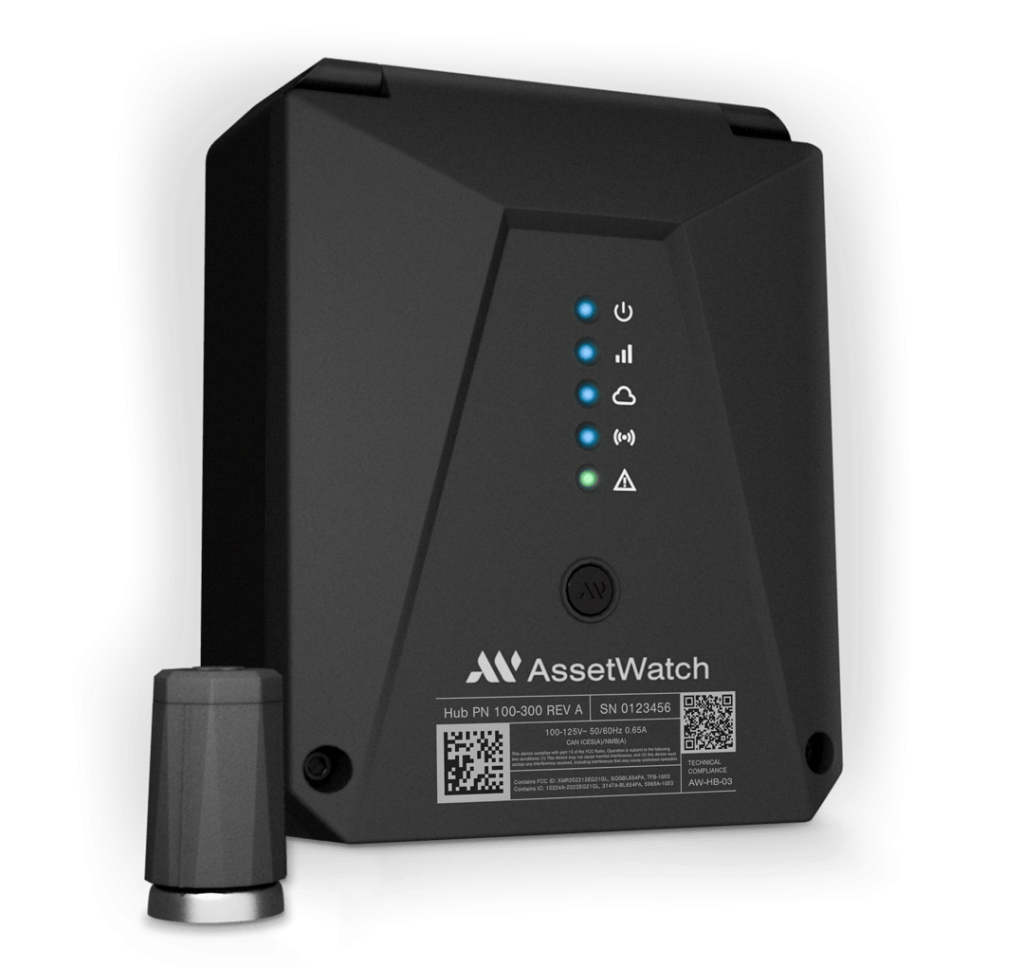
AssetWatch is a condition-monitoring service for rotating equipment — motors, pumps, fans, blowers, gearboxes and compressors. AssetWatch’s own field technicians install wireless sensors on site, typically live in one to two days according to the vendor, and readings stream over a cellular hub, so no plant Wi-Fi or IT integration is needed. The cloud software analyzes vibration and temperature data, with electrical monitoring and oil analysis available in the same program, and prioritizes issues by severity.
The AI is the screening layer, not the final word. AssetWatch says its software detects more than 100 failure risks, and then a dedicated Condition Monitoring Engineer (CME) — a named reliability engineer assigned to your facility — validates the finding, explains the trend in plain language, and pushes step-by-step corrective actions directly into your CMMS or its own mobile app, where technicians track alerts, confirm repairs and document outcomes. That human-validation step is the product’s answer to alert fatigue, the failure mode that kills most monitoring programs.
What the pricing page doesn’t make obvious is what the $199 trial actually includes. On the vendor’s own trial terms, the 30-day trial covers on-site installation of up to 200 sensors — a $10K value by the vendor’s own accounting — plus 24/7 monitoring, unlimited user licenses on web and mobile, and the dedicated CME. In other words, the trial is a real deployment on real assets, not a demo account, which is exactly why it is the right way to judge this service: on your worst pump, not on a sales call.
Key features
- AI fault detection: cloud analytics screen vibration and temperature data for 100+ failure risks and rank findings by severity
- Human validation: a dedicated, U.S.-based Cat II+ certified Condition Monitoring Engineer reviews alerts and issues prescriptive corrective actions
- Done-for-you installation: AssetWatch field technicians install sensors on site, live in 1–2 days, with no CapEx and no burden on your maintenance team
- Cellular connectivity: sensors stream via a cellular hub, so there is no IT integration or plant network work required
- CMMS delivery: validated recommendations are pushed directly to your CMMS, and a unified app lets technicians track alerts and document repairs in real time
- Broader monitoring in one program: vibration and temperature at the core, with electrical monitoring and oil analysis alongside
- Unlimited users: software licenses are unlimited across web and mobile within the subscription
Pricing
Pricing is not public for the ongoing subscription. AssetWatch describes its model as one subscription covering sensors, installation, connectivity, software and expert analysis, with simplified pricing based on the total number of sensors and no CapEx or upfront costs. The one hard public number is the trial: $199 for a 30-day, risk-free pilot including installation of up to 200 sensors, as detailed above. As a directory figure only, an AWS Marketplace listing reported in a 2026 predictive-maintenance comparison prices a 50-sensor end-to-end service at $25,000 for a 12-month contract — treat that as a budgeting anchor from a marketplace listing, not a quote, and get your own per-sensor figure in writing before committing.
Who it’s for
Maintenance technicians, reliability leads and plant managers in manufacturing — food and beverage, building products, metals and similar plants — whose critical rotating assets are unmonitored because nobody on staff is a vibration analyst. It fits best when the bottleneck is expertise and installation labor, not software: AssetWatch supplies both. Independent condition-monitoring roundups consistently place it in exactly that lane: sensors, platform and a dedicated analyst in one subscription for plants without in-house specialists.
Who should skip it
Plants that already employ certified vibration analysts and own their sensor infrastructure will pay for a service layer they do not need — a software-only platform such as Augury, Tractian or Senseye, all covered by Tested Intelligence for maintenance technicians, may fit better. Very small shops with only a handful of critical assets should also do the maths: a route-based program or a simpler CMMS-led approach can be cheaper than a managed per-sensor subscription. And if your team cannot act on alerts — no wrench time, no parts, no authority to schedule a repair — no monitoring service will save you; fix that first.
Pros
- Human-validated AI: a named Cat II+ engineer checks findings before your team is asked to act
- Installation, hardware and connectivity are included — no CapEx, no IT project, live in days
- The $199 trial is a real deployment on up to 200 sensors, so evidence comes before commitment
- Unlimited user licenses remove the per-seat penalty for involving the whole shop
- Recommendations land in your CMMS and app as actions, not as a chart someone must interpret
Cons
- Ongoing subscription pricing is not public — budgeting requires a sales conversation
- Value depends on your team acting on recommendations; ignored alerts prevent nothing
- Electrical and oil analysis sit alongside the core vibration program, so confirm what your quote includes
- A managed service is a recurring operating cost that grows with sensor count
- Plants with in-house analysts pay for expertise they already have
FAQ
What does AssetWatch’s AI actually do?
It analyzes continuous vibration and temperature data (with electrical and oil data in the same platform) to detect more than 100 failure risks and rank them by severity. A dedicated Condition Monitoring Engineer then validates the finding and sends prescriptive corrective actions to your CMMS or the AssetWatch app.
How much does AssetWatch cost?
Ongoing pricing is not public; the vendor prices by total sensor count in one subscription with no CapEx. The published entry point is a $199, 30-day trial that includes on-site installation of up to 200 sensors, 24/7 monitoring and a dedicated engineer. A marketplace listing reported elsewhere put a 50-sensor, 12-month service at $25,000 — a directory figure, not a quote.
How is AssetWatch different from Augury or Tractian?
All three monitor machine health with sensors and AI. AssetWatch’s distinction is the service wrap: its own technicians install everything, connectivity is cellular with no IT work, and a named Cat II+ engineer validates alerts and owns the recommendations, rather than your team interpreting a dashboard alone.
Bottom line
AssetWatch is the predictive-maintenance pick for maintenance teams who need the analyst as much as the algorithm. Its AI screens widely, its engineers keep alerts credible, and its trial puts up to 200 sensors on your equipment for $199 before you commit. Just go in clear-eyed: the ongoing price is a quote, the bill scales with sensors, and the return only appears when technicians act on what the system finds.