
Quick verdict
The short answer
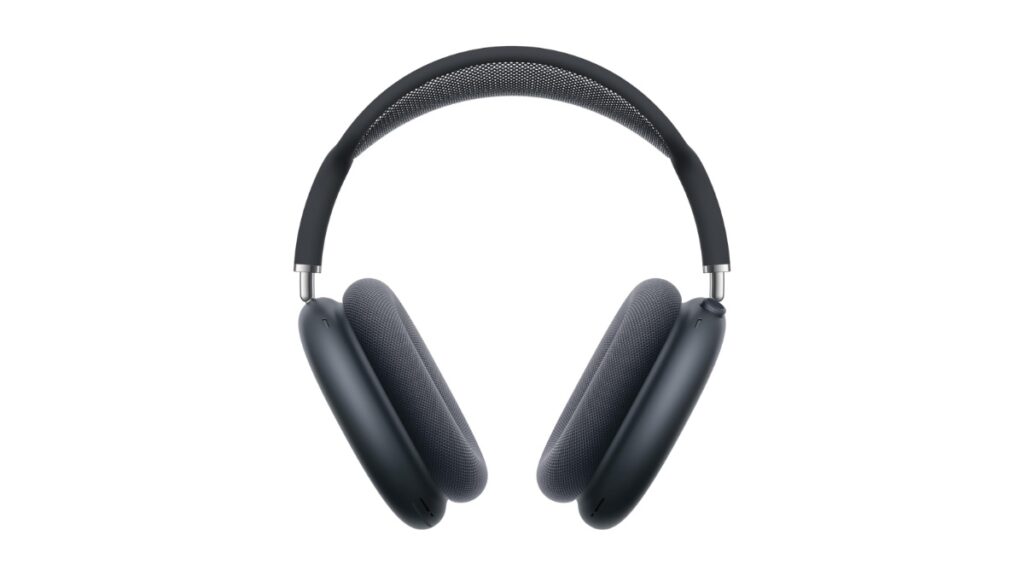
The AirPods Max (USB-C version) are Apple’s luxury over-ear headphones: a 2020 design refreshed with USB-C charging in 2024, now priced at $549. They remain the most premium-feeling headphones you can buy — aluminum earcups, a knit-mesh canopy headband, and the excellent Digital Crown for volume — with strong ANC, best-in-class Transparency mode, and Personalized Spatial Audio that iPhone users love. Street prices have dipped to $399–$429 at retailers like Amazon, B&H, and Woot, which is the only price at which they make sense.
Here’s the complication: Apple launched the AirPods Max 2 in spring 2026 — same $549 price, same iconic design, but with the H2 chip, up to 1.5x stronger ANC, Adaptive Audio, Conversation Awareness, Live Translation, and Bluetooth 5.3. That makes the original USB-C model a tough sell at full price. Buy the original only at a deep discount ($400 or less), and double-check which model is in your cart — retailers now sell both side by side, and the listings look nearly identical.
The honest framing: the original AirPods Max were always a luxury product first and a spec-sheet product second. In 2026, that luxury positioning still holds — nothing feels like them — but the technology inside is now two generations behind Apple’s own lineup. At $399 they’re an indulgence you can justify; at $549 they’re a mistake the Max 2 exists to prevent.
This is a research-based review. We have not tested the AirPods Max (USB-C version) hands-on; every fact below comes from the manufacturer’s published specs, pricing, and independent reporting. Prices and specs checked September 30, 2026.
Key specs
| Chip | Apple H1 (each earcup) |
| Driver | 40 mm Apple-designed dynamic driver |
| Noise cancellation | Active Noise Cancellation; Transparency mode; Personalized Spatial Audio with dynamic head tracking |
| Battery life | Up to 20 hours (ANC or Transparency on); 5 minutes ≈ 1.5 hours playback |
| Charging | USB-C |
| Bluetooth / codecs | Bluetooth 5.0; AAC, SBC |
| Wired | Lossless audio via USB-C cable (sold separately) |
| Weight | 385 g (headphones); Smart Case 134.5 g |
| Microphones | 9 total (8 for ANC, 3 for voice — 2 shared) |
| Water resistance | None (no IP rating) |
| Extras | Digital Crown volume control, wear/position detection, automatic Apple-device switching, Find My |
Price and availability
Apple lists the AirPods Max (USB-C) at $549 in Midnight, Starlight, Blue, Purple, and Orange. But the street price is far lower: Amazon has sold them for $399, B&H at $429, and Woot around $400 for new units. At $399–$429 they’re expensive but defensible for Apple loyalists who love the design; at $549 they’re not — the AirPods Max 2 costs the same and is better in nearly every measurable way.
Buyer beware: since spring 2026, retailers list both the original USB-C model and the AirPods Max 2, often with confusingly similar titles. The Max 2 (H2 chip, stronger ANC, Adaptive Audio, Live Translation, Bluetooth 5.3, ~386 g) is the one to buy at $549. Only choose the original if it’s substantially cheaper — $400 or less — and verify the model number and chip in the listing before checkout. When in doubt, the presence of “Live Translation” or “H2” in the specs means it’s the Max 2.
What it’s good at
- Superb build quality: Machined aluminum earcups, a stainless-steel frame, and the knit canopy feel and look more luxurious than any plastic rival — these are as much industrial design objects as headphones, and the materials have aged gracefully since 2020.
- Excellent Transparency mode: Widely rated the most natural-sounding transparency of any headphone — you can hold conversations and hear announcements without removing them, with none of the hollow processed quality rivals exhibit.
- Great Spatial Audio: Personalized Spatial Audio with dynamic head tracking is a genuine delight for movies on iPhone/iPad/Mac, creating a convincing out-of-head soundstage that makes the Max a superb travel cinema.
- Digital Crown: Precise, tactile volume control with a satisfying click beats every touch-slider and swipe gesture in the category — small detail, daily pleasure.
- Apple ecosystem: Automatic switching between Apple devices, headphone accommodations for hearing profiles, and Find My integration work exactly as iPhone users expect — no app required, no friction.
- Lossless wired option: The USB-C version supports lossless audio (up to 24-bit/48 kHz) over a wired USB-C connection — a meaningful upgrade over the Lightning original for wired listeners.
Where it falls short
- The Max 2 exists at the same price: H2 chip, up to 1.5x stronger ANC, Adaptive Audio, Conversation Awareness, Live Translation, Bluetooth 5.3 — the 2026 model outclasses the original in every measurable way while costing the same $549. There is no reason to pay full price for the old one.
- Heavy with weak battery: 385 g is roughly 50% heavier than Sony/Bose flagships, which can cause neck fatigue on long days — and the 20-hour battery is the shortest in the flagship class (Sony and Bose offer 30). Heavy and short-lived is a rough combination.
- Dated wireless tech: Bluetooth 5.0, no true multipoint (Apple auto-switch instead), AAC-only with no LDAC or aptX — the 2020-era connectivity stack shows its age, especially for Android users who get none of the ecosystem benefits.
- Poor travel ergonomics: They don’t fold flat, the much-mocked Smart Case offers minimal protection and there’s no power button (just a low-power mode) — awkward design choices for a $549 travel headphone.
- No water resistance: No IP rating at all — rain, sweat, and gym use are all off the table for headphones this expensive.
Who should buy it
Deep Apple-ecosystem users who find the original at $400 or less and value build quality, Transparency mode, and Spatial Audio above raw spec sheets. At $399, they’re a luxury treat that undercuts the Max 2 by $150 while delivering most of the daily experience (minus the newest smarts like Adaptive Audio and Live Translation). Design lovers who simply want the iconic aluminum look for less should also consider it — at a discount.
Who should skip it
Anyone paying $549 (buy the AirPods Max 2 — it’s not close), Android users (no LDAC/aptX, no ecosystem benefits, and the weight/battery trade-offs sting more), travelers who need folding headphones and long battery life, and anyone sensitive to headphone weight. Value shoppers should look at the Sony WH-1000XM5 at ~$198 — less than half the price for 90% of the experience — or the Bose QC Ultra 2nd Gen at $449 for better ANC.
Verdict
4.0 / 5 — Gorgeous, beautifully made headphones with best-in-class transparency and delightful Spatial Audio — but heavy, short on battery, saddled with 2020-era wireless tech, and now overshadowed by the Max 2 at the same price. Only a deep discount ($400 or less) saves them, and even then, check the listing twice to make sure you’re not accidentally buying the old model at new-model money.
FAQ
What’s the difference between the USB-C AirPods Max and the AirPods Max 2?
The 2024 USB-C refresh changed only the port (Lightning → USB-C) and colors; audio hardware is the 2020 original with the H1 chip. The spring-2026 AirPods Max 2 adds the H2 chip, up to 1.5x stronger ANC, Adaptive Audio, Conversation Awareness, Live Translation, Bluetooth 5.3, and studio-quality recording — at the same $549 price.
Do AirPods Max work with Android?
They pair and play over Bluetooth, but you lose Spatial Audio personalization, automatic switching, headphone accommodations, and Find My. At this price, they’re a poor choice for Android users — Sony and Bose offer more for less.
Can they play lossless audio?
Yes — the USB-C version supports lossless (up to 24-bit/48 kHz) over a wired USB-C connection (cable sold separately). Wireless listening is AAC/SBC only, so lossless requires the wire.
Why is the battery life only 20 hours?
Apple prioritized the aluminum build and H1-era power efficiency; the 2020 architecture simply can’t match the 30-hour figures of Sony and Bose. The Max 2 keeps the same 20-hour rating despite the newer chip — the design’s power budget didn’t change.
Where to buy
As an Amazon Associate we earn from qualifying purchases.