
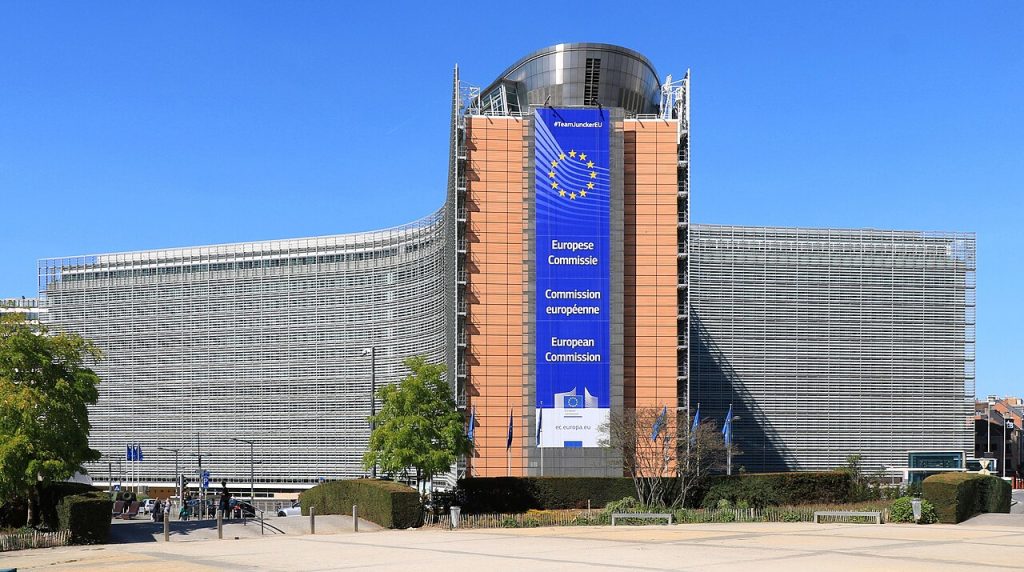
The European Commission has confirmed it was hit by an AI-driven cyberattack that forced its internal staff systems offline for more than 10 days. Attackers used ARTEX, a publicly available AI-powered penetration testing framework, against the EU’s executive arm — and investigators are still checking whether personal data was taken. Why it matters: this is one of the first confirmed cases of an AI hacking tool disrupting a major government institution, weeks after the FBI warned the same tool was being used against targets worldwide.
Brussels — November 20, 2026
What happened at the European Commission?
Commission spokesperson Thomas Regnier confirmed the attack at a press briefing on November 19. The intrusion was first detected on October 22 and confirmed as a cyberattack on October 26, at which point the Commission began taking systems offline and launched an investigation. Among the applications shut down were Sysper, the HR platform staff use for payslips, timesheets and leave requests, and MyPMO, which handles medical reimbursements. The Commission’s translation services were also affected, and the disruption lasted more than 10 days before most applications were restored.
“As a protective and preventive measure, we temporarily took down several applications, and most of them have since then been restored,” Regnier said. The incident was serious enough to trigger an emergency meeting of the Commission’s Corporate Management Board, and tech commissioner Henna Virkkunen briefed her fellow commissioners on Wednesday.
What is ARTEX, the AI tool used in the attack?
According to Politico, which first reported the incident, the Commission’s defenders identified ARTEX — an open-source framework that uses large language models to automate intrusions, from reconnaissance through credential hunting — in the attackers’ hands. In the Commission attack, the tool appears to have been used mainly to search for and locate credentials. CERT-EU, the cybersecurity service for EU institutions, had already warned on November 5 that it believed ARTEX-assisted attacks were underway against organizations it protects.
The FBI sounded a similar alarm on November 13, saying malicious actors have used ARTEX since at least August 2026 against organizations in financial services, government, technology, defense, energy, healthcare and telecommunications — with some intrusions reaching privileged access in under three hours. Researchers cited by the FBI found more than 1,600 ARTEX consoles exposed on the open internet. The tool’s developer released it on GitHub in July and pulled the repository in October after reports of misuse, but copies and a commercial edition remain in circulation.
Was any staff data stolen?
So far, the Commission says no. Regnier told reporters he was “not aware” of any ransomware demand and that the investigation has not detected “any evidence of a data breach affecting Commission staff” as a whole. The European Data Protection Supervisor has been notified, other systems are being checked preventively, and the investigation is still ongoing — so that assessment could change.
Why it matters
The pattern here is the story. ARTEX was built as a security-testing tool, published openly, and flagged by both the FBI and CERT-EU — and it still ended up disrupting payroll and medical systems at one of the world’s largest public institutions. Security executives quoted in the coverage make the mechanism plain: frameworks like ARTEX let a single actor run fleets of agents that plan, probe and exploit with almost no further human input once a goal is set, compressing work that once took days into hours. For any organization, the practical takeaway is unglamorous but urgent: a tool your own testers can download is a tool your attackers already have, and credential hygiene — the thing ARTEX was hunting for here — is where that fight is won or lost. Everything AI, tested — including, now, against the institutions that regulate it.
Frequently asked questions
What is ARTEX?
ARTEX is a publicly released AI-powered penetration testing framework that automates parts of a cyber intrusion, including mapping credentials and permissions. It was published on GitHub in July 2026, pulled by its developer in October after misuse reports, and flagged in an FBI advisory on November 13, 2026.
Which European Commission systems were affected?
Sysper (payslips, timesheets and leave), MyPMO (medical reimbursements) and translation services were among the applications taken offline for more than 10 days. Most have since been restored.
Was personal data breached in the Commission attack?
The Commission says it has found no evidence of a data breach affecting staff as a whole, and no ransomware demand was made. The investigation is ongoing and the EU’s data protection supervisor has been notified.
Sources: Politico, The Register, Infosecurity Magazine, CSO Online, FBI IC3 advisory on ARTEX.