
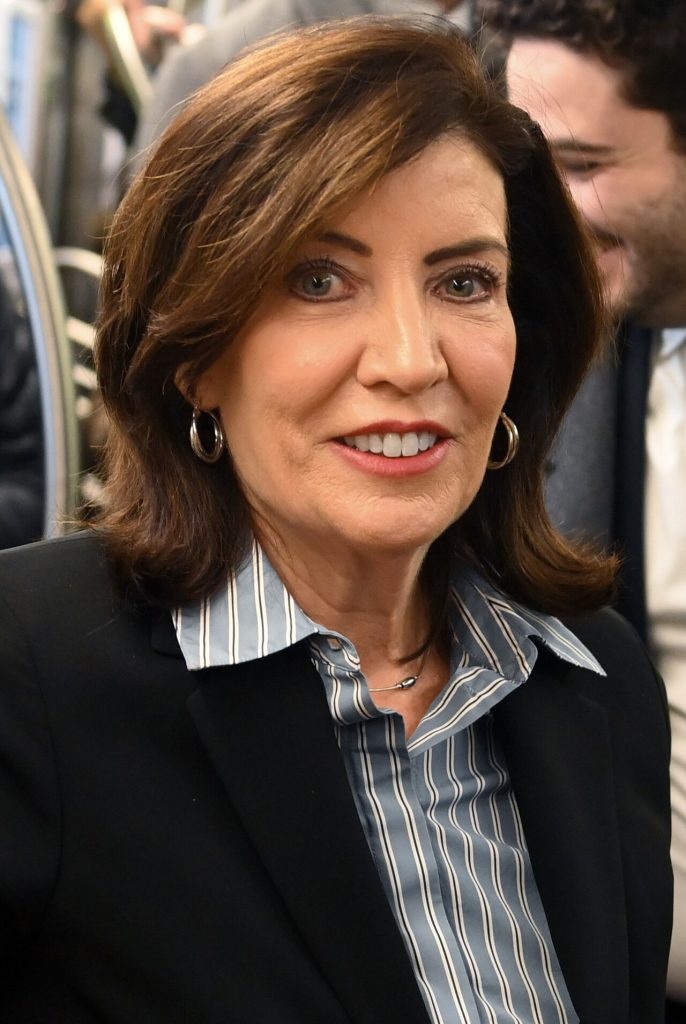
October 28, 2026 — New York Governor Kathy Hochul has signed a law that bars AI chatbots from offering minors a list of “unsafe” features — including simulated companionship, flattery designed to build attachment, and any content that promotes self-harm. It is among the strictest chatbot laws in the country, and it reaches the design of the products themselves, not just their worst outputs.
What happened
Bloomberg Government reported on October 28 that Hochul signed two child-safety bills ahead of next week’s gubernatorial election. The headline measure is the Prohibition of Unsafe Chatbot Features for Minors (S.9051, sponsored by State Senator Kristen Gonzalez, and A.10379, carried by Assemblymember Alex Bores), which adds a new Article 48 to New York’s General Business Law. The bill was written in partnership with Attorney General Letitia James’s office and Common Sense Media, and it passed both chambers unanimously in June — 137–0 in the Assembly. A second signed bill requires internet-connected baby monitors to ship with security features that block outside watchers and listeners.
What counts as an “unsafe feature”
Rather than banning chatbots for under-18s outright, the law lists the behaviours a chatbot offered to a minor may not have. The enumerated features include chatbots that portray themselves as having a personal, professional or authority-based relationship with the user; offer personal opinions or emotional appeals; flatter the user or act as a sycophant; probe the user’s emotions; promote self-harm, substance abuse or eating disorders; produce sexually explicit material; or encourage the user to keep secrets from adults. Chatbot operators must determine users’ ages and keep minors off any service that includes those features. The law expands the first-in-the-nation AI companion safeguards New York enacted last year.
Enforcement, timing — and the pushback
The attorney general enforces the law, with fines of up to $25,000 per violation. The chatbot measure takes effect in January 2027; the baby monitor rules take effect in 90 days. Industry groups pushed back during the debate: the Computer & Communications Industry Association called the bill vague and warned of a chilling effect on beneficial AI for young people, and business groups argued the “advanced chatbot” definition — any generative AI system with a natural-language interface that gives ongoing, adaptive responses — is broad enough to sweep in tutoring, accessibility and productivity tools. Supporters, including parents who campaigned for the signature, say that breadth is the point.
Why it matters
Most chatbot rules so far have targeted harmful outputs. New York’s law targets the machinery of attachment itself — the flattery, emotional probing and pretend relationships that keep a teenager talking. Because the definition is broad, general-purpose assistants, not just dedicated companion apps, may have to age-check New York users and strip companion-style features for minors or leave the state market. New York is not alone — companion chatbot laws were enacted in at least eight other states this year — but its version is the one the biggest platforms cannot route around. If you build or buy AI that talks to kids, January 2027 is now a compliance deadline, not a debate.
Frequently asked questions
Does New York’s law ban AI chatbots for kids outright?
No. It prohibits offering chatbots to minors when the service contains listed “unsafe” features, such as simulated companionship, sycophancy, emotional probing, or content promoting self-harm or sexually explicit material.
When does the New York AI chatbot law take effect?
The chatbot measure takes effect in January 2027. The companion baby monitor security rules take effect 90 days after signing.
Who enforces it, and what are the penalties?
The New York attorney general enforces the law, with civil fines of up to $25,000 per violation.
Does it cover general-purpose chatbots like ChatGPT and Claude?
The statutory definition of an “advanced chatbot” is broad — a generative AI system with a natural-language interface providing ongoing, adaptive responses — and supporters say it is broad enough to include general-purpose chatbots, which is exactly what industry groups objected to.
Sources: Bloomberg Government, New York State Senate (bill S.9051 / S.9508 records), State Affairs, Common Sense Media.