
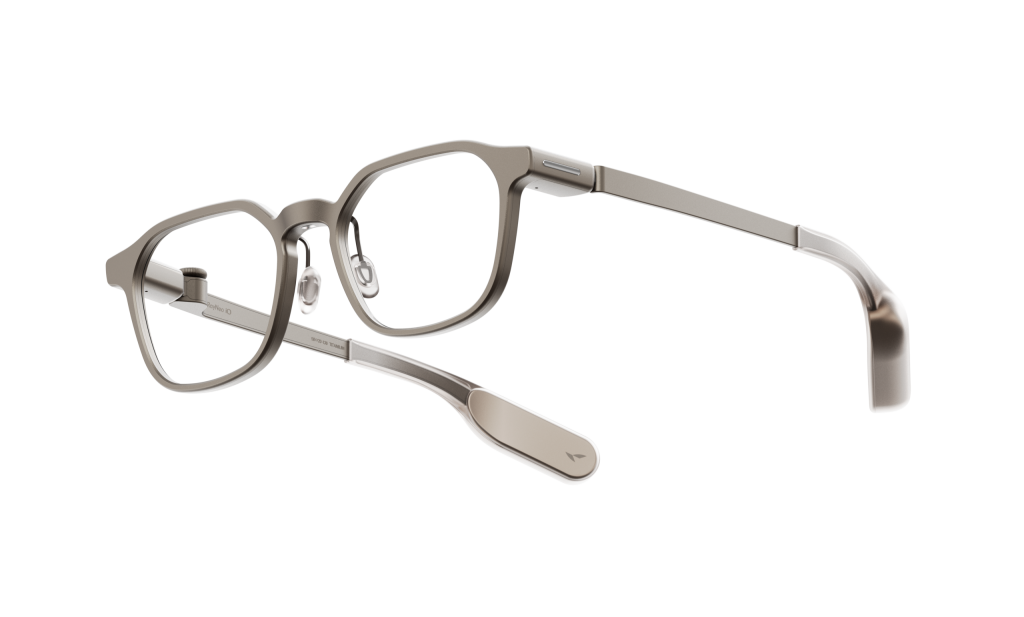
Quick verdict
Verdict first: The RayNeo iO is one of the lightest display glasses you can buy — 33 grams, no camera, and a monochrome waveguide display built for captions, live translation and meeting notes rather than entertainment. RayNeo split its lineup on purpose: the iO is for all-day AI assistance, not movies. Based on specs, pricing and early reviews, it is a focused, privacy-friendlier pick — as long as you accept no camera and no built-in speakers.
What is the RayNeo iO?
RayNeo, incubated by TCL, launched the iO alongside its GT entertainment glasses on September 4, 2026, and announced its Canadian retail rollout on October 21, 2026. The iO uses a binocular monochrome MicroLED waveguide display with a 23.5-degree field of view and up to 1,300 nits, intended for text: live captions, translations and notes. An LED lights when it is recording or translating. There is deliberately no camera.
Key specs and price
- Weight: 33g
- Display: binocular monochrome waveguide, 23.5° field of view, up to 1,300 nits
- Battery: up to two days of typical use; a 240mAh battery rated for 18 hours of continuous recording or 6.2 hours of continuous translation in launch materials
- Audio: 4-mic array plus bone conduction in launch materials; no speakers — audio via earbuds
- Connectivity: Bluetooth 5.4
- Price: $479 in the US, or $529 bundled with a charging case in launch reporting; C$749 in Canada
Who it’s for
People who work across languages, sit in a lot of meetings, or want captions in view without holding a phone. The no-camera design also makes it easier to wear in privacy-sensitive workplaces than camera glasses.
Pros and cons
Pros:
- Very light at 33g for all-day wear
- No camera — fewer privacy objections
- Up to two days of typical battery life
- Live translation and meeting notes in view
Cons:
- No camera and no speakers
- Small 23.5° text-focused display — not for video
- Continuous translation drains the battery far faster than typical use
- Most performance claims still come from launch materials, not long-term independent testing
Frequently asked questions
Does the RayNeo iO have a camera?
No. RayNeo deliberately omitted the camera; photo and video capture sits with models like its X3 Pro.
How long does the iO battery last?
RayNeo rates it for up to two days of typical use. Continuous translation is rated much lower, at about 6.2 hours in launch materials.
How much does the RayNeo iO cost?
Launch reporting put it at $479 in the US, or $529 with a charging case. In Canada it was listed at C$749 in the October 21, 2026 rollout.
Price and availability
The RayNeo iO went on sale September 4, 2026 through RayNeo’s website and Amazon in launch markets, and arrived in Canadian retail (Staples, Walmart and Best Buy Canada) in the October 21, 2026 rollout at C$749. US launch pricing was reported at $479, or $529 with a charging case. Check the current price before buying, as launch pricing varies by bundle and region. No exact Amazon listing was verified live today, so no Amazon link is included.