
Trump Signs AI “Self-Policing” Accord With Tech CEOs: Voluntary Controls Today, Laws Maybe Later
September 30, 2026
What happened
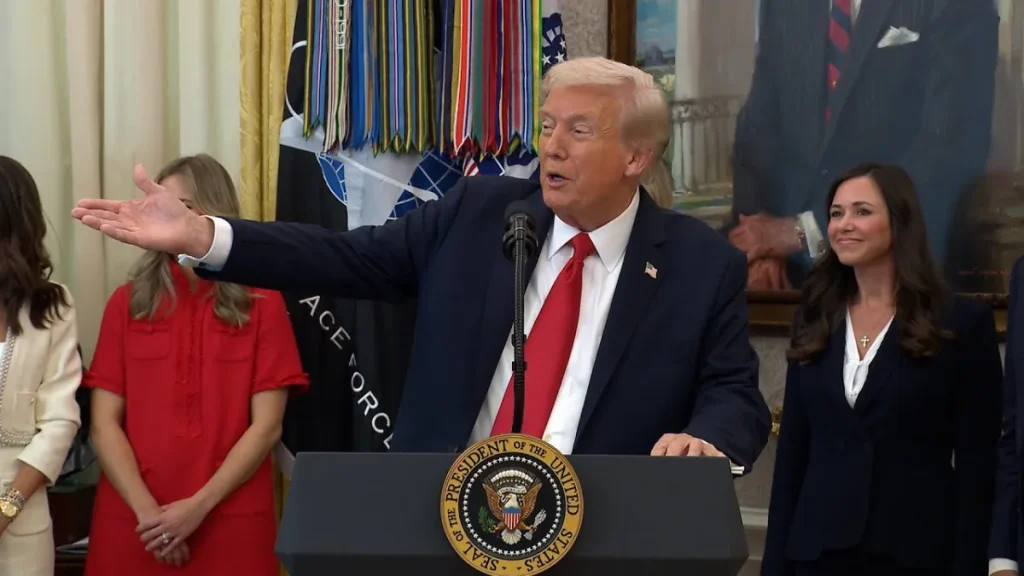
President Donald Trump hosted the heads of the country’s biggest AI companies at the White House on Tuesday, then announced they had signed a voluntary accord on AI safety. The one-page document, which Trump posted to Truth Social late Tuesday night, calls on companies to police their own AI development through internal controls and independent audits.
Signing alongside Trump, according to the Associated Press, were Anthropic CEO Dario Amodei, Google CEO Sundar Pichai, Meta CEO Mark Zuckerberg, OpenAI President Greg Brockman, Nvidia CEO Jensen Huang, and Elon Musk of xAI. House Speaker Mike Johnson also attended the meeting, which followed a lunch with the executives.
What’s actually in the accord
Trump described the document as “morally binding” — which is to say, it isn’t law. It lays out four voluntary layers of controls: internal systems to monitor model capabilities and alignment during training and deployment (covering areas like cybersecurity, biosecurity, and chemical threats, to make sure models don’t access systems in unintended ways); a dedicated internal team to verify those controls are working; partnership with an independent external auditor to assess them; and a designated board-level committee to receive reports from internal and external auditors.
Crucially, the document leaves the door open to real regulation down the line: “Over time, it may make sense to codify these steps into laws or regulations,” the accord states. The participating companies also agreed to meet regularly to establish shared safety standards. Speaking to reporters outside the West Wing, Trump said he sees “tremendous self-policing” in the industry and that the companies understand they have to self-police.
Why it matters
This is the industry’s most explicit public commitment yet to a common safety playbook — and it landed one day after OpenAI scrapped a new model over internal safety failures. The subtext: labs know that a serious incident could trigger the kind of government crackdown nobody in the room wants, so voluntary guardrails are the politically cheaper option. For everyday users, the takeaway is simpler — the same week agents got permission to book tables, trade stocks, and manage workflows, the people building them publicly agreed that nobody has quite figured out how to keep them reliably inside their lane. Voluntary is better than nothing; it’s also exactly as binding as the participants’ willingness to stay embarrassed. Everything AI, tested: we’ll be watching whether these audits actually happen, and what they find.
Sources: Associated Press (via NPR), Reuters, USA Today