
Quick verdict
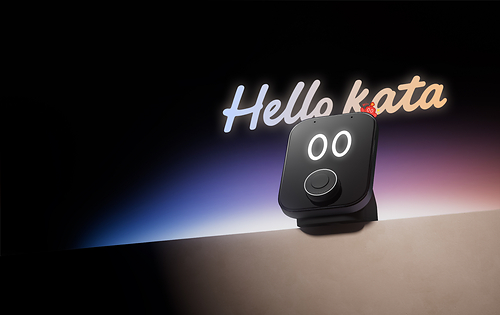
The SwitchBot Hub 4 is a $119.99 smart home hub that combines a Matter Bridge, an infrared blaster for more than 101,000 appliance models, a 2.8-inch color display, and “Hello Kata” — a voice assistant that routes your spoken requests through OpenAI’s GPT-6. It went on sale November 16, 2026 in the US, Canada, the UK, and Europe. The catch is in the fine print: Kata only works online, and it can run scenes you have already built but cannot create new automations for you. This is a research-based review built from SwitchBot’s own launch announcement, not hands-on testing.
What is the SwitchBot Hub 4?
Hub 4 is SwitchBot’s latest-generation home hub, designed as a shared household interface rather than a box that hides in a closet. It pairs a color display and an emotive on-screen face with physical controls: four customizable on-screen shortcut buttons and a rotary knob that adjusts lighting brightness, curtain position, and volume. It supports tabletop placement or wall mounting, runs on 2.4GHz Wi-Fi and Bluetooth, and is powered over USB-C with an included 5V/2A adapter. SwitchBot positions it as a home companion for families — a single place to control devices, check household information, and run preset routines. It is a natural companion to the company’s cleaning hardware, such as the SwitchBot S30 robot vacuum, which can be controlled through the same household interface.
What does Hello Kata actually do?
Kata is the headline feature. Dual omnidirectional microphones support voice wake-up from roughly three meters away (manual wake-up is also available). You can ask Kata to adjust a specific compatible device — SwitchBot’s own example is “Hello Kata, turn on the AC” — or handle supported actions across multiple devices in one request. Kata can also call up and execute scenes already configured in the SwitchBot App, so a preset Movie Night, Home, or Away routine runs from a single spoken request. You can ask about the home, too: temperature and humidity readings, CO2 data from compatible Meter devices, lock and sensor status, and device details such as battery levels, operating modes, and maintenance needs, with the 2.8-inch display providing visual feedback alongside voice responses.
What the launch announcement doesn’t make obvious
Three details from SwitchBot’s own fine print matter more than the headline features. First, Kata is online-only: it transmits audio for processing through OpenAI’s GPT-6, so no internet means no voice assistant — SwitchBot states plainly that local infrared control does not imply offline Kata operation. Second, Kata executes existing scenes, but automation creation and management stay in the SwitchBot App; the assistant runs your routines, it does not build them. Third, the Matter Bridge supports up to 30 sub-devices, but three of those slots are already taken by the hub’s own built-in motion, temperature, and humidity sensors — so the real budget for your other SwitchBot devices is 27.
Key specs and connectivity
- Infrared: 101,000+ appliance models (air conditioners, TVs, projectors, fans), with automatic matching; matched IR controls keep working locally with no internet connection
- Matter: Matter Bridge 1.3, up to 30 sub-devices (3 used by built-in sensors), bringing supported SwitchBot devices into Apple Home and other Matter platforms
- Streaming: controls selected Fire TV, Apple TV, and Android TV devices
- Display and controls: 2.8-inch color display, four customizable shortcut buttons, physical rotary knob
- Voice: dual omnidirectional microphones, wake-up from about 3 meters
- Power and radios: USB-C (5V/2A adapter included), 2.4GHz Wi-Fi, Bluetooth
Pros and cons
- Pros: Infrared database covers 101,000+ appliances and keeps working offline; Matter Bridge 1.3 connects SwitchBot gear to Apple Home; physical knob and shortcuts suit family members who won’t talk to a hub; one voice request can span multiple devices.
- Cons: Kata voice control is online-only and sends audio to GPT-6 for processing; Kata cannot create automations, only run existing scenes; 3 of the 30 Matter sub-device slots are consumed by the hub’s own sensors; 2.4GHz Wi-Fi only.
Who it’s for
Hub 4 makes the most sense for households already invested in SwitchBot curtains, lights, vacuums, or sensors — including wearable-adjacent gear like the SwitchBot AI MindClip — who want a shared control point guests and kids can use without a phone. It is also a sensible buy if your air conditioner, TV, and projector predate smart controls: the infrared blaster is the rare hub feature that makes dumb appliances feel modern. If your home is already all-Matter with a voice assistant you like, Hub 4 is an incremental upgrade rather than a transformation.
Frequently asked questions
Does SwitchBot Hub 4 work without internet?
Partly. Infrared controls you have already matched keep working locally offline, and automations run on the hub. Hello Kata voice control does not — it is an online-only feature that sends audio to OpenAI’s GPT-6 for processing.
How many devices can the Hub 4 Matter Bridge handle?
Up to 30 sub-devices, but three slots are taken by the hub’s own motion, temperature, and humidity sensors, leaving 27 for your other SwitchBot devices.
Can Kata create automations by voice?
No. Kata can execute scenes and automations you have already configured in the SwitchBot App. Creating and managing automations still happens in the app.
When did the SwitchBot Hub 4 go on sale, and where?
November 16, 2026, through SwitchBot’s official website and Amazon stores in the United States, Canada, the United Kingdom, and Europe.
Price and availability
SwitchBot Hub 4 is priced at USD 119.99 / CAD 149.99 / GBP 129.99 / EUR 129.99 and is available through SwitchBot’s official website and Amazon stores in the US, Canada, the UK, and Europe. We could not verify an exact Amazon product listing at publish time, so no Amazon link is included here rather than risk linking the wrong product.