
November 21, 2026 — The Claude-assisted proof of the Riemann Hypothesis now has independent certification: the Lean and Mathlib communities said on Saturday that they have “full confidence” the proof is correct. Why it matters: a claim this site held back as unverified on Friday is now backed by the field’s own proof-checking community — the strongest signal yet that AI has helped settle mathematics’ most famous open problem.
What happened
On November 20, Anthropic mathematician Levent Alpöge released a claimed proof of the Riemann Hypothesis as a library written in Lean, a programming language that mechanically checks each step of a mathematical argument. The library runs to 17 million lines of code. Alpöge said he worked with Anthropic’s Claude model for about six weeks on the proof, and credited the model with major contributions near the end of the work.
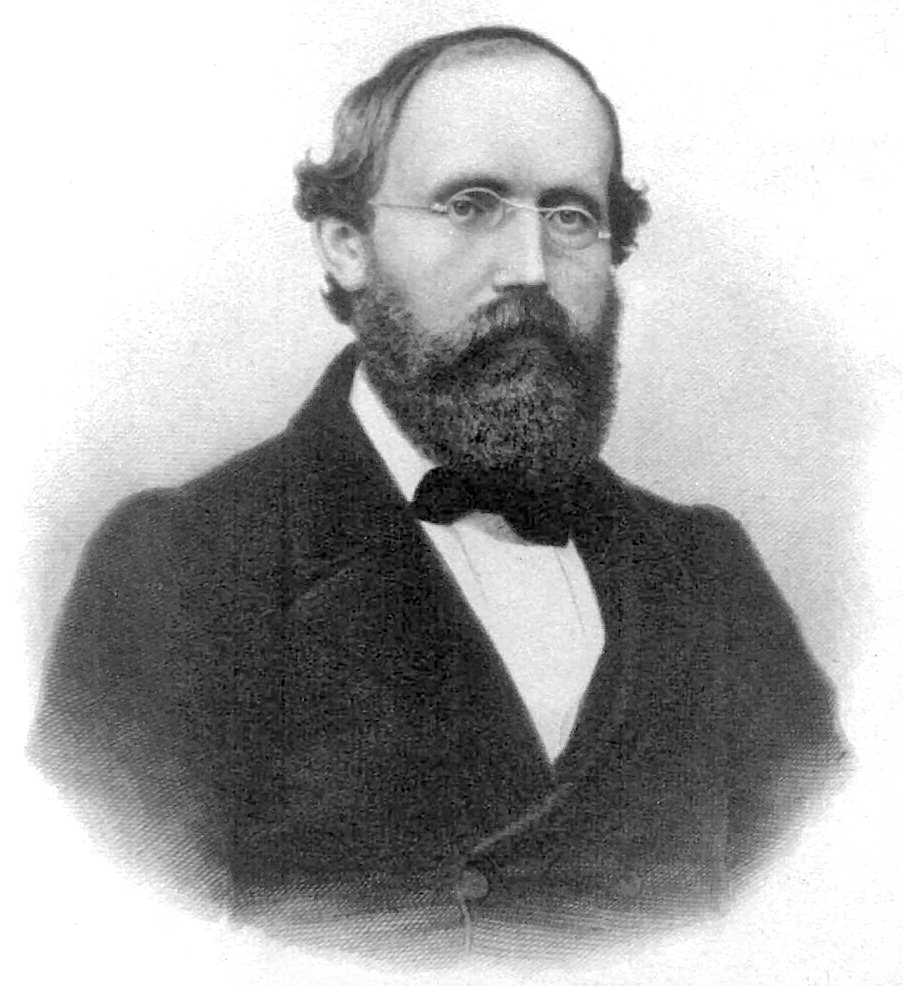
The hypothesis, proposed by Bernhard Riemann in 1859, concerns the distribution of prime numbers — specifically, whether every nontrivial zero of the Riemann zeta function has a real part of exactly one half. It is one of the Clay Mathematics Institute’s seven Millennium Prize Problems, each carrying a $1 million prize.
How the proof was checked
In a joint statement endorsed by the Lean Focused Research Organization and the Mathlib Initiative, the communities said all four of their verification criteria are satisfied. The statement being proved is Mathlib’s own vetted formulation of the Riemann Hypothesis. Dozens of people independently compiled Alpöge’s library without errors, reproducing the same raw proof export. Two independent comparison tools confirmed that the theorem proved is exactly that statement — not a subtly different one. And the exported proof was accepted by several checkers, including Lean’s official kernel and the independent con-leche and con-ron checkers, running on an inert copy of the proof where no code in the source files could interfere.
MIT mathematician Andrew Sutherland, who compiled the proof separately, told Scientific American that it was rechecked with only the three standard axioms and that the chance anything is amiss is approximately zero.
What is not settled yet
Certification of the formal proof is not the same as the field finishing with the result. The Clay Mathematics Institute still lists the hypothesis as unsolved, and its prize rules require a solution to be published and to win general acceptance in the mathematics community — a process measured in years, not days. Mathematicians also still have to understand and explain the new ideas inside a 17-million-line formal proof; the Lean statement itself closes by looking forward to that work. Alpöge’s further claim that his method also establishes the Generalized Riemann Hypothesis is a separate, broader claim and was not what Saturday’s statement certified.
Why it matters
For subscribers, the practical takeaway is about verification, not just the headline. This claim survived the exact tests skeptics demanded on Friday: the right statement, independent compilation, and checkers that cannot be fooled by a buggy kernel. That is a template for how AI-produced results in science should be judged — everything AI, tested, including the test itself. If the ideas in the proof hold up as mathematicians digest them, this becomes the clearest demonstration yet that a frontier model can contribute to research at the very edge of human knowledge.
Frequently asked questions
Did Claude prove the Riemann Hypothesis on its own?
No. Alpöge, a mathematician at Anthropic, developed the proof working with Claude over about six weeks and has credited the model with significant contributions, particularly near the finish.
What exactly did the Lean and Mathlib communities certify?
They certified that Alpöge’s Lean library proves Mathlib’s statement of the Riemann Hypothesis, that it compiles independently, and that multiple independent proof checkers accept the exported proof.
Has Alpöge won the $1 million Clay prize?
Not yet. The Clay Mathematics Institute still lists the problem as unsolved, and its rules require publication and general acceptance by the mathematics community before a prize can be awarded.
Does the certification cover the Generalized Riemann Hypothesis?
No. Alpöge says his method extends to the generalized version, but Saturday’s joint statement certified the Riemann Hypothesis itself.
Sources: Lean and Mathlib communities (joint statement), Scientific American, USA Today, The Wall Street Journal