
Quick verdict
Shaper Origin Review 2026: A Handheld CNC Router That Corrects Your Cut as You Steer
Updated November 19, 2026 – Tested Intelligence
Quick verdict: Shaper Origin is a handheld CNC router for carpenters and woodworkers: you steer it along a path shown on its touchscreen while an onboard camera reads ShaperTape on the workpiece and the spindle auto-corrects your hand movements, cutting joinery, inlays, hardware pockets and signage to digital precision without a gantry CNC or any programming. It costs $2,699 in Shaper’s US store. The catch is in the correction range — the machine can only fix about half an inch of wander, and it retracts the bit when you drift further than that.
What it is
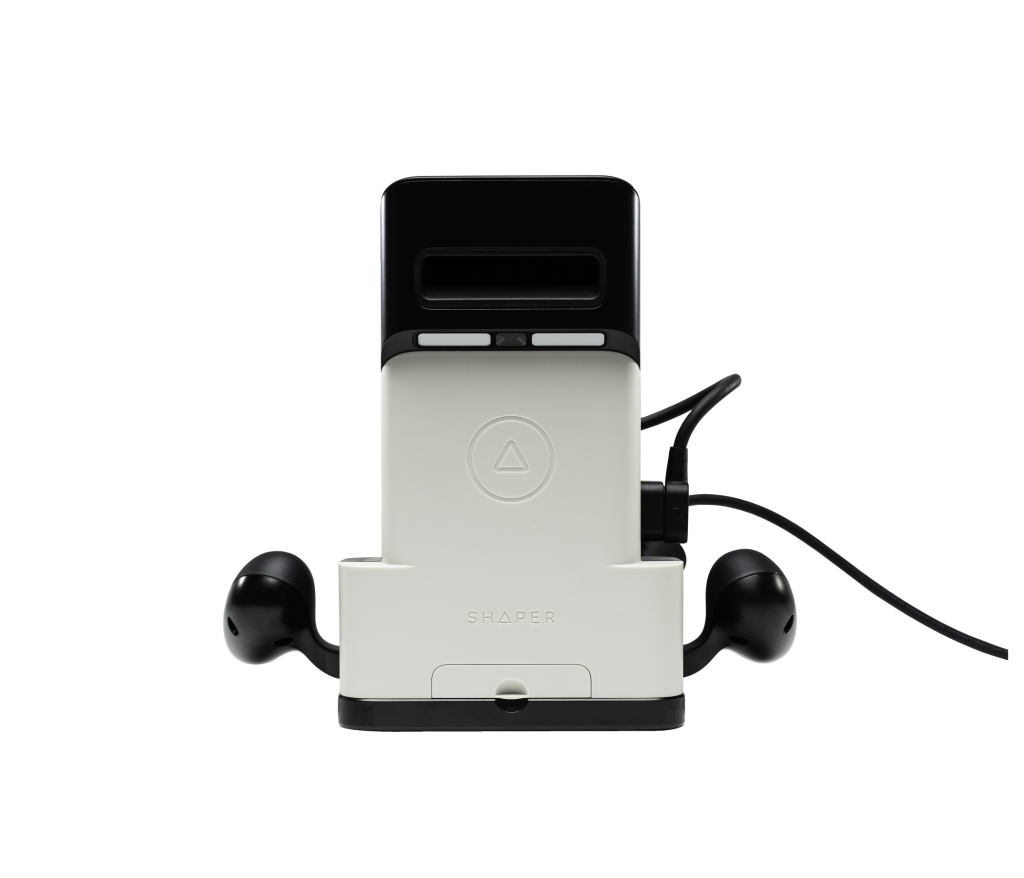
Origin (current model SO2-NN, assembled by Festool in Germany to Shaper’s design) looks like a large plunge router with a full-colour touchscreen, two handles and a camera. Before a cut you lay ShaperTape — a fiducial tape printed with a domino-like pattern — on or around the workpiece and scan the area; Origin detects the tape, builds and stores a digital Workspace, and shows your design on screen registered to the real board. You then push the tool roughly along the path while it makes small automatic corrections, so the bit follows the design even if your hands do not. Designs can be created on the tool, imported as SVG files from almost any design software via WiFi or USB, or built in Shaper Studio, the company’s simplified browser design tool, and synced across. Trade coverage has followed the category since the start — the Journal of Light Construction described the hand-held CNC as doing work “more than can be described here” when it first showed the tool to remodelers — and Shaper says its product line will join the Festool portfolio in 2027.
Key features
- Computer-vision positioning: an onboard camera tracks ShaperTape to locate the tool on the workpiece in real time
- Automatic cut correction: the spindle corrects your steering within a 1/2-inch (12 mm) range and automatically retracts when you go out of bounds
- Workspace scanning: scan once and the tool stores the space, so you can return to a cut or pull a forgotten measurement later
- On-tool design and imports: create simple designs on the touchscreen, or import files from other design software — no programming or G-code required
- Shaper Studio: simplified design tool that runs on any device and syncs or exports designs directly to Origin
- Hardware Catalog: free, pre-made digital templates from hardware manufacturers for precise hinge, lock and pull installation, especially with the optional Plate
- Jobsite format: corded 120 VAC tool shipped in a Tanos Systainer with a roll of ShaperTape (45 m per roll) and 3 mm, 6 mm and 60-degree engraving bits
- Optional BenchPilot clips Origin into a fixture for automated, hands-free cutting of repeat parts
Pricing
Shaper publishes US store pricing. Origin alone is $2,699 (shown against a $2,899 list price when checked on November 19, 2026). Bundles on the same store: Origin + Plate is $2,999, Origin + Workstation is $3,099, and Origin + Workstation + Plate is $3,249, each shown with a bundle saving against buying separately. Shaper recommends running Origin with at least one of Workstation or Plate. Shaper Studio is separate: the unpaid tier gives full design access but is limited to three exports a month; unlimited exports cost $60 a year on the Annual License or $300 one-time for a Perpetual License, both figures from Shaper’s own US store page.
What the pricing page doesn’t make obvious: the auto-correction that makes Origin feel like magic has a hard physical limit in Shaper’s own product copy — it corrects within a 1/2-inch range and retracts the cutter when you leave it. Steer more than half an inch off the line and the cut stops rather than being rescued, so Origin rewards a steady hand instead of replacing one. The second quiet cost is the tape: positioning depends on ShaperTape being visible to the camera, so tape is a running consumable on large or site work, not a one-time accessory.
Who it’s for
Finish carpenters, cabinet and furniture makers, and remodeling carpenters whose work is one-off precision rather than volume: custom joinery, inlays, curved templates, signage and lettering, flooring inlays and repairs, and repeatable hardware installation on doors and cabinets. It is also the CNC option for shops with no floor space for a gantry machine — the whole system stores in a Systainer and travels to the jobsite.
Who should skip it
Production cabinet shops that break down sheet goods all day should skip it: a gantry CNC or a panel-focused workflow will out-run a hand-steered tool on every sheet. High-volume repeat cutting is also a weak fit unless you add BenchPilot. And if your work is rough framing or deck building, there is nothing here for you — Origin’s value is finish accuracy, not speed through lumber.
Pros
- Real CNC precision in a hand tool: tight joinery and inlays without a gantry, a dedicated CNC room, or programming skills
- The correction-and-retract behaviour protects the workpiece — drifting too far stops the cut instead of ruining the board
- Design freedom: on-tool design, Studio, or SVG imports from the software a shop already uses
- Published US pricing for the tool, bundles and Studio licenses — no quote call needed
- Hardware templates and Plate make repeated hardware installation fast and repeatable on site
Cons
- Correction range is only about 1/2 inch — it assists a competent operator; it does not make cutting hands-free or foolproof
- Positioning depends on ShaperTape staying clean and visible; tape is an ongoing consumable
- Realistic cost climbs past $3,000 once Workstation or Plate is added, as Shaper itself recommends
- Studio’s free tier caps exports at three a month, so regular Studio users should budget the $60 annual or $300 perpetual license
- One bit, one pass at a time: throughput cannot match a gantry CNC on batch work
FAQ
Is Shaper Origin really a CNC if I have to push it?
Yes, in the way that matters for accuracy: the design, positioning and bit correction are digital and computer-controlled. You provide the rough motion along the path shown on screen; the camera, tape and correction system keep the cutter on the design within its 1/2-inch correction range, and retract it if you wander beyond that range.
What does Shaper Origin cost all-in for a working carpenter?
Budget $2,699 for Origin alone in the US, $2,999–$3,249 for the bundles Shaper steers most buyers toward, plus Studio at $60 a year or $300 perpetual if you design in Studio beyond three exports a month, and ongoing ShaperTape and router bits. All of those figures are from Shaper’s US store, checked November 19, 2026.
Can Origin replace a full-size CNC router?
No — and it is not trying to. It replaces the template-and-guide work, one-off joinery and site hardware work that a gantry machine handles badly or cannot reach at all. Batch sheet-goods production still belongs on a gantry CNC; Origin’s BenchPilot accessory narrows the gap for small repeat parts, at extra cost.
Bottom line
Origin is the most carpenter-shaped piece of AI-assisted machinery in this section: computer vision and automatic correction wrapped around a tool you still hold in both hands. At $2,699 it earns its place for finish work that is currently done with templates, jigs and patience — provided you go in knowing the correction range is half an inch, the tape is a consumable, and the useful system price is the bundle price.
Helpful to see the correction range spelled out. About half an inch of auto-correction before the bit retracts is generous for inlays and hardware pockets, but it also means this is a tool you still have to steer carefully, not a gantry CNC replacement. The ShaperTape workflow is clever, although I would like to know how much tape a typical sheet-goods project uses, since that becomes an ongoing cost on top of the $2,699 price. Thanks for being clear that this is a research-based review rather than hands-on.