
Quick verdict
eMaint Review 2026: Fluke-Backed CMMS With an AI Suite and AI Vibration Diagnostics
Updated November 16, 2026 – Tested Intelligence
Quick verdict: eMaint is a mature, highly configurable CMMS from Fluke Reliability — work orders, preventive maintenance, parts inventory and multi-site asset management — now layered with an AI Suite that answers questions from your own maintenance data and an AI condition-monitoring engine that turns Fluke vibration sensor readings into prioritized work orders. For maintenance technicians in plants and facilities that need reliability discipline, it is a serious system. It is also an enterprise sale: pricing is not public, both current plans are billed as a prepaid annual commitment, and implementation, on-site training and the vendor portal are all paid add-ons.
What it is
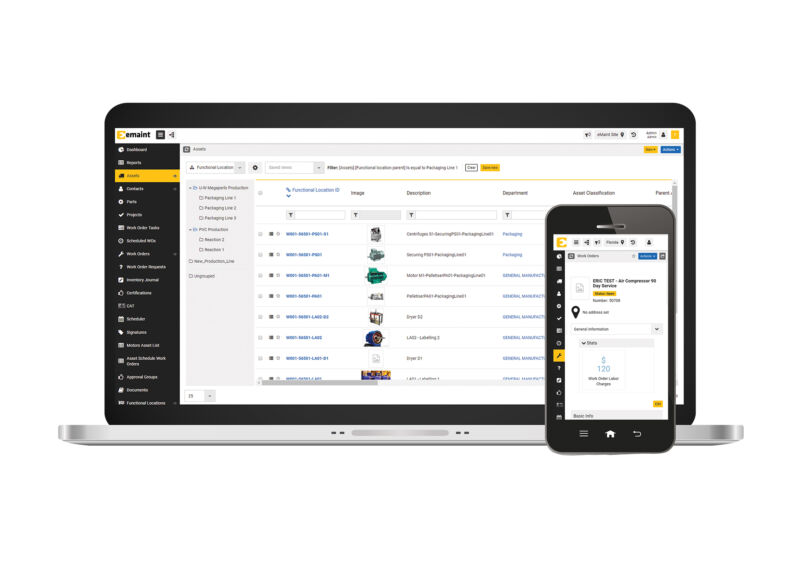
eMaint has been selling maintenance software since 1986 and launched a web-based CMMS in 1999, years before cloud CMMS was normal; today it operates as a Fluke brand. The core product is a CMMS/EAM: unlimited assets and work orders, preventive maintenance with checklists and nested scheduling, meter and condition-based triggers, parts and supplies inventory across multiple locations, downtime and asset performance tracking, and reporting that includes mean time between failure. The Fluke connection is the differentiator. A published Fluke case study describes SKF standardizing maintenance on eMaint across 81 factories with more than 76,000 assets — vendor-published, but a concrete sign of the scale the platform is deployed at. On top of the CMMS sit two AI layers: the eMaint AI Suite inside the system, and condition monitoring that pairs Fluke wireless vibration sensors with an AI diagnostic engine.
Key features
- AI Suite assistant: searches your maintenance data, manuals and SOPs and answers with a cited source, and can summarize asset performance, costs, downtime trends and team workload
- AI-powered condition monitoring: the Fluke diagnostic engine detects more than 1,200 fault conditions across 50 machinery component types and delivers plain-language, prioritized recommendations
- Sensor-to-work-order automation: when a reading crosses a threshold you set, eMaint generates a prioritized work order with asset history, linked manuals and parts availability attached
- Preventive maintenance with checklists, pass/fail inspection tasks, nested scheduling, and meter- and condition-based triggers
- Mobile app with offline work mode, QR and barcode scanning, and work orders with attached procedures and images
- Parts and inventory: unlimited parts, forecasting, cycle counts, requisitions and purchasing, and multi-location and global inventory
- Multi-site management, custom workflows and approval processes, failure codes and root cause analysis
- Integrations: API access plus pre-built connectors for ERP, BI, SCADA and other systems, and native connection to the Fluke sensor ecosystem
- Request intake three ways: requester logins, email submission that converts to a work request, and a web form
Pricing
Pricing is not public. eMaint’s current pricing page lists two plans — Professional and Enterprise — with a full feature comparison but no prices, and says pricing is customized and configurable, with individual features also available à la carte. Directory listings that still show older per-user tiers should be treated as directory-only figures, not a current rate card; the vendor’s own page is the authority, and it requires a quote. What the page does state plainly is the shape of the deal: a subscription is a renewable one-year contract, the price will not increase during the contract term but may change at renewal, and Professional and Enterprise are both billed as a prepaid annual commitment.
What the pricing page doesn’t make obvious: several things a maintenance manager would assume are included are marked “Add-on $” in eMaint’s own comparison table on both plans — implementation, on-site training, computer systems validation and test scripts, the Vendor Portal, and the Slow Track Release Server. So the first-year cost is the annual subscription, prepaid, plus paid implementation and any add-ons you need, before a single sensor is bought. Budget for the services line, not just the license, and get the add-on list priced in writing during the quote.
Who it’s for
Maintenance technicians and reliability teams in manufacturing, facilities and other asset-heavy operations that have outgrown spreadsheets and a basic work-order app: multiple sites, thousands of assets, audit and compliance pressure, and a preventive program that needs meter- and condition-based triggers rather than calendar reminders alone. Teams already using Fluke test tools or considering vibration monitoring get the most from it, because the sensor, diagnostics and CMMS layers are designed to work as one system — a fault becomes a prioritized, documented work order without a technician transcribing an alert.
Who should skip it
Small maintenance teams that need transparent, self-serve pricing and same-week setup should look at tools such as MaintainX or Limble, both reviewed here previously — eMaint is a quoted, implemented enterprise purchase with an average implementation the vendor puts at roughly eight weeks on its CMMS pages. Shops that only need work orders and PM scheduling will pay for configurability, global multi-site controls and reliability analytics they never open. And if you have no intention of using condition monitoring or the AI Suite, much of what justifies eMaint over a cheaper CMMS goes unused.
Pros
- Forty years in maintenance software, backed by Fluke, with deployments at genuine multi-site scale
- AI diagnostics turn vibration data into plain-language, prioritized fixes a technician can act on without reading a spectrum
- Sensor alarms can create work orders automatically, with history and parts attached
- Deep configurability: custom workflows, statuses, fields, approval processes and failure codes
- AI Suite answers are cited to their source document and the AI is trained only on your own data, per the vendor
Cons
- No public pricing — every number requires a sales quote
- Both plans are prepaid annual commitments; no monthly option is offered on the current page
- Implementation, on-site training and the Vendor Portal are paid add-ons on both plans
- Enterprise weight: implementation and configuration are a project, not an afternoon signup
FAQ
What does the eMaint AI actually do?
Two things. The AI Suite works inside the CMMS: it searches your work orders, manuals and SOPs, answers questions with the source cited, summarizes performance and workload, and helps generate procedures. Separately, the condition-monitoring AI analyzes Fluke vibration sensor data, detects fault conditions, ranks them by severity and urgency, and can trigger a prioritized work order automatically when a threshold is crossed.
How much does eMaint cost?
Pricing is not public. The current pricing page shows Professional and Enterprise plans with no prices, describes pricing as customized and configurable with à la carte features, and states that both plans are a prepaid annual commitment under a renewable one-year contract. Implementation and several other items are paid add-ons, so request an itemized quote. Older per-user figures in software directories are not a current rate card.
Do technicians need vibration expertise to use the condition monitoring?
No, according to the vendor: the diagnostic engine interprets the data and emails plain-language recommendations with prescribed corrections, so a technician can act without reading FFT spectra. Specialists can still open the spectrum, cascade and history views when they want to dig into a root cause.
Bottom line
eMaint is the right shortlist entry for a maintenance operation that treats reliability as a program, not a chore list: a proven CMMS core, an AI assistant that answers from your own records with citations, and Fluke sensor diagnostics that close the loop into work orders. Enter the purchase with eyes open — no public price, a prepaid annual term, and implementation and key extras sold as add-ons. Get the full first-year number in writing, and eMaint can be the system a growing maintenance team stays on for years.