
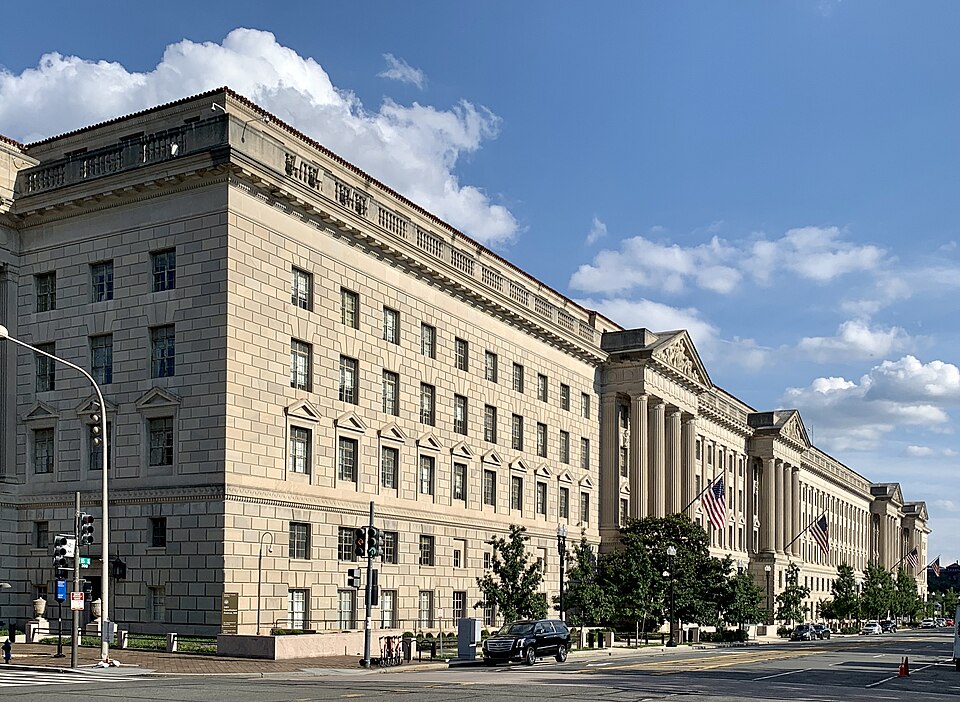
The U.S. Commerce Department issued an interim final rule on Monday that closes the remote-access loophole in AI chip export controls: data centers anywhere in the world will need a license before giving companies in China and other restricted countries access to large amounts of advanced U.S. computing power. Why it matters: renting chips abroad has been the main workaround to the chip ban, and Washington is now regulating the rental, not just the shipment.
Washington — November 16, 2026
What does the new chip rule actually require?
The rule, issued by the Bureau of Industry and Security (BIS) and written at the direction of the Treasury Department and the National Security Council, requires licenses to export, reexport or transfer advanced AI chips and servers to data centers that may provide compute to companies headquartered in the U.S. “D:5” group of restricted countries — China, Russia, Iran, North Korea and 18 others. It also covers indirect access through intermediaries or brokers, and it requires exporters and data center operators to monitor their customers’ ownership structures.
How much computing power triggers the rule?
The control applies to data centers or networks that can supply more than 12 million total processing performance (TPP), the export-control metric for computing power — roughly the maximum output of about 750 Nvidia H100 or H200 chips, as TechCrunch notes. “This new control is a logical extension of existing controls,” the rule reads. Commercial recommender systems, such as those used in e-commerce or social media, are exempt.
Which countries get new licensing requirements?
Separately, the rule adds license requirements for advanced semiconductor exports to Indonesia, Malaysia, Singapore, Thailand and Brazil, which Commerce says present a higher-than-normal diversion risk. Chips destined for U.S.-based companies are exempt from that part. Existing data center operators covered by the remote-access rule have 90 days from the rule taking effect to obtain licenses; the rule takes effect on publication in the Federal Register, with public comments due 60 days after publication.
The rule also formally rescinds the Biden administration’s January 2025 AI Diffusion Rule, which the Trump administration had already said it would not enforce.
Why it matters
The timing is not subtle: the rule lands days after Nvidia co-founder Jensen Huang resigned amid the Megaspeed scandal, and after Reuters reported Chinese AI companies rushing to secure computing capacity overseas ahead of tighter restrictions. If enforced as written, cloud regions in Southeast Asia can no longer be a quiet detour around the chip ban — and operators everywhere now carry a due-diligence duty for who is really renting their GPUs.
Frequently asked questions
Does the rule ban renting U.S. AI chips to Chinese companies?
Not outright. It requires a license before a data center provides more than 12 million TPP of covered computing to companies headquartered in China or other D:5 countries — including through brokers or intermediaries.
When does the rule take effect?
On publication in the Federal Register. Data centers already serving covered customers then have 90 days to obtain licenses, and public comments are due 60 days after publication.
What happened to the AI Diffusion Rule?
This rule formally rescinds it. The Biden-era framework imposed country-level caps on advanced chip exports; the administration had already declined to enforce it.
Sources: TechCrunch, Reuters, Nextgov, Unite.AI, Bureau of Industry and Security