
The United States and eight partner countries signed the San Francisco Declaration on Sunday, November 15, 2026, pledging to jointly identify and protect the AI technologies and supply chains behind them. Why it matters: it is the first Pax Silica document that commits allies to a shared, concrete deliverable — a joint list of what to defend — rather than another general statement of intent.
San Francisco — November 15, 2026
What happened
The United States, Japan, Australia, Israel, the United Kingdom, South Korea, India, Qatar and the United Arab Emirates signed the San Francisco Declaration on the Secure Foundations of Enduring Prosperity, according to the Financial Times, which was briefed by U.S. Under Secretary of State for Economic Affairs Jacob Helberg, who negotiated the pact. The declaration is the latest step in Pax Silica, Washington’s U.S.-led initiative to build resilient AI supply chains among allied countries as competition with China intensifies.
The details
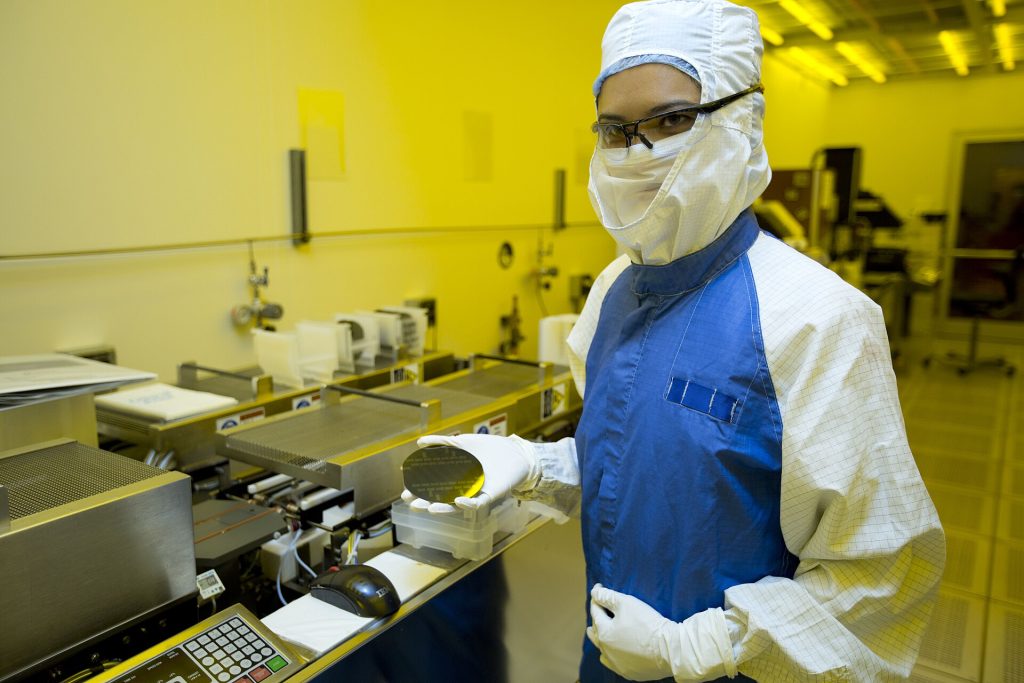
The signatories committed to build a joint list of sensitive AI technologies and critical supply chains that need extra protection, and to coordinate measures to keep them secure. The scope is deliberately broad: semiconductors, critical minerals, energy and industrial capacity — the full stack a country needs to build advanced AI, from the mine to the fab to the power plant.
“The know-how to design a chip, the machine that makes it and the port that ships it can all be in different countries,” Helberg told the FT. “What makes the San Francisco Declaration historic is that Pax Silica partners have agreed to treat the security of those technologies and the infrastructure behind them as a shared responsibility.”
Germany, Sweden, the Netherlands and the European Commission are expected to sign next week, Helberg said. The signing also lands days before President Trump’s planned meeting with Chinese President Xi Jinping at the Asia-Pacific Economic Cooperation summit in Shenzhen.
What is not in it — yet
For now, the declaration is a commitment to make a list, not the list itself. No signatory has published which technologies will be on it, and the reports describe no specific restrictions, funding commitments or implementation timetable. As of Sunday evening, the State Department had not published the declaration’s text. Whether the follow-through becomes export controls, investment screening or something softer will be decided in working-level talks.
Why it matters
AI capability runs on physical supply chains that no single country fully controls — Dutch lithography, Taiwanese and Korean fabrication, minerals processed largely in China. A shared allied list is the necessary first step before coordinated controls can work at all, because controls one country imposes alone mostly leak. For chipmakers, cloud providers and AI labs, the practical signal is that where facilities get built, where equipment is sourced and where capital gets committed will increasingly be shaped by this allied framework. Our take: the declaration itself changes nothing on the ground this week, but it is the clearest sign yet that AI supply-chain security is being organized as an alliance project, not a solo U.S. one — and everything AI runs on physical supply chains, tested or not.
Frequently asked questions
What is Pax Silica?
Pax Silica is a U.S.-led initiative, launched in 2025, to deepen cooperation among allied countries on AI supply chains — semiconductors, critical minerals, energy and industrial capacity — and reduce strategic dependence on China.
Which countries signed the San Francisco Declaration?
Nine: the United States, Japan, Australia, Israel, the United Kingdom, South Korea, India, Qatar and the United Arab Emirates. Germany, Sweden, the Netherlands and the European Commission are expected to sign next week.
Does the declaration ban anything?
Not yet. It commits the signatories to jointly identify technologies and supply chains needing protection and to coordinate security measures. No specific restrictions, list contents or timetable have been published.
Sources: Financial Times (reported via Seeking Alpha/TradingView and Aju Business Daily), CEO Magazine Poland