
Mirendil, a San Francisco AI lab founded by former Anthropic researchers, raised $1 billion in a Series A on November 12 — five times its $200 million seed from June — to sell a bold idea: that AI agents doing the hands-on work can let one researcher do what used to take a whole team. Why it matters: investors just put a billion dollars behind agent-run AI research, but the proof offered so far is the company’s own, with no valuation disclosed and no independent evaluation of its models.
November 13, 2026
The round
Mirendil announced the $1 billion Series A on November 12, led by Kleiner Perkins and Clearlake Capital, with participation from Battery Ventures, Doerr Capital, Gil & Co, Google, M13, Pear VC and S32, among other new and existing investors. The company did not disclose a valuation, and it did not say how much each investor put in.
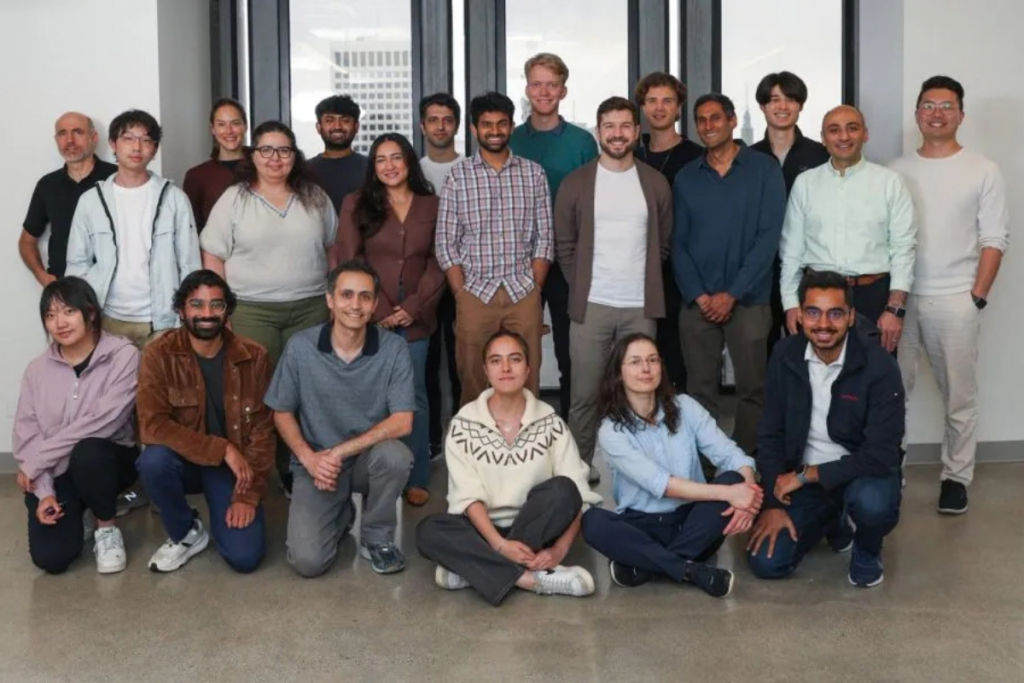
The speed is part of the story. Mirendil launched on June 24 with a $200 million seed round led by Andreessen Horowitz and Kleiner Perkins, a founding team of 20 researchers and engineers from Anthropic, xAI, Google DeepMind and OpenAI, and later investment from NVIDIA and others. In August it announced a multi-year Google Cloud partnership putting its training and research workloads on Google Cloud’s AI Hypercomputer. Less than five months after the seed, the same thesis has now attracted ten times the seed money in a single Series A.
The claim the money is betting on
Mirendil’s pitch rests on a result it reported on October 21: one researcher, working with agents, pretrained Mirendil-Base — a competitive coding model — from scratch in 3.5 months with less than $10 million in compute. The company says that figure is all-in, covering experiments, the final training run, agent token spending and data processing, and that agents wrote more than 99% of the code, ran experiments and diagnosed failures while the researcher chose what to try. Mirendil-Base sits in the 100 billion to 500 billion parameter range; larger versions were still in training when the report was published.
The company then post-trained that base model into Fern, which it says holds up to 10 million tokens of context — enough, it says, for days of an agent’s work. Its product is Lor, introduced on October 28 and now in a free, invitation-only private beta: a platform where hundreds of agents write code and run experiments for days at a time. Mirendil says it runs on Lor itself every day.
Why it matters
Read the numbers straight: every load-bearing claim here — the one-researcher training run, the under-$10 million cost, the 99% agent-written code, Fern’s 10-million-token context — is Mirendil’s own report, and no independent evaluation of Mirendil-Base or Fern has been published. The Series A release does not even state a valuation. What is verified is the money and the names: Kleiner Perkins returning to lead alongside Clearlake, with Google in the round, five months after a $200 million seed. That makes this a very large, very early bet that the bottleneck in AI research is no longer team size. Whether one lab’s internal result becomes a workflow outside scientists and engineers can repeat — Lor’s private beta is where that gets tested — is the question the billion dollars now has to answer.
Frequently asked questions
How much did Mirendil raise, and who led it?
$1 billion in a Series A announced November 12, 2026, led by Kleiner Perkins and Clearlake Capital, with Battery Ventures, Doerr Capital, Gil & Co, Google, M13, Pear VC, S32 and others participating.
What is Mirendil’s valuation?
Not disclosed. The company’s announcement does not state a valuation, and no source reviewed confirms one.
What does Mirendil sell?
Lor, a private-beta platform that runs hundreds of AI agents on research work — writing code and running experiments for days at a time — plus its Fern model, post-trained from the Mirendil-Base coding model.
Has Mirendil’s one-researcher training claim been verified?
No. The 3.5-month timeline, the under-$10 million compute cost and the 99% agent-written code figure are the company’s own reports, with no independent evaluation published so far.
Sources: Mirendil, Unite.AI, Times of AI