
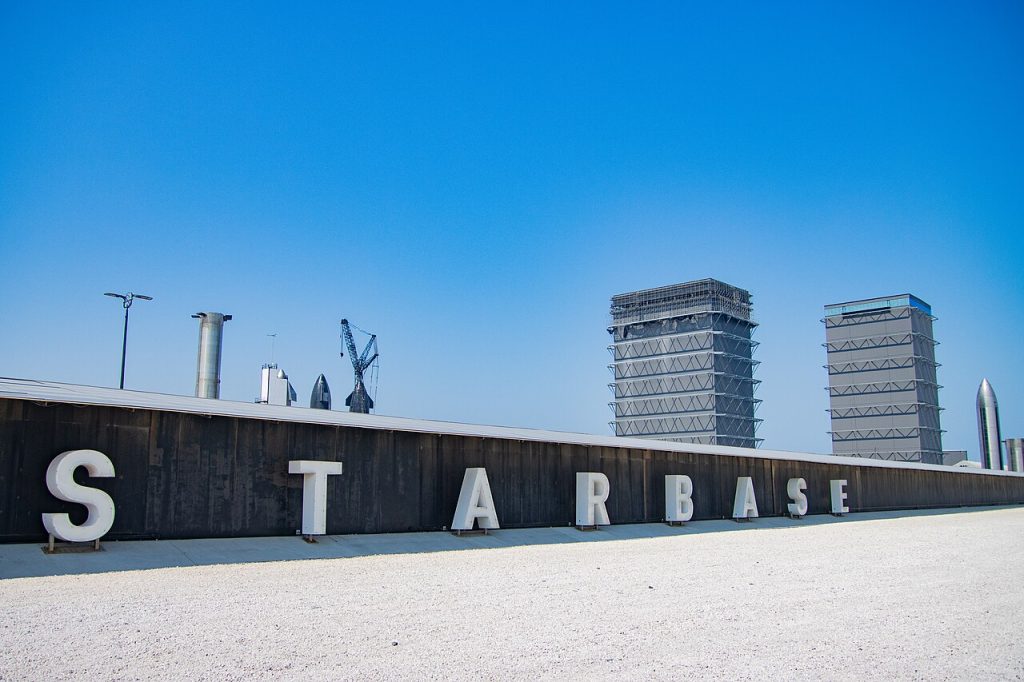
SpaceX says it will invest more than $74 billion in two AI supercomputing campuses — up to $24 billion at Starbase in Texas and roughly $50 billion in Cochise County, Arizona. Announced on November 12 under the company’s “Building the Future” initiative, it is one of the largest single AI infrastructure commitments of the year — and neither site is fully permitted yet.
November 13, 2026
What SpaceX announced
The Texas campus, on SpaceX-owned land near Starbase and the Port of Brownsville, would train frontier AI systems for uses the company lists as medical research, emergency response, advanced manufacturing and national security, and would double as a testbed for future space-based computing. It would generate its own electricity rather than draw from the public grid. SpaceX says construction there has already generated more than 3,000 jobs, with more than 500 permanent positions expected, and it has committed $220 million to Brownsville-area water and wastewater projects designed to add about 20 million gallons per day of capacity.
The Arizona campus is the bigger bet: nine compute buildings of about 493,000 square feet each, designed for up to 6 GW of power with as much as 24 GWh of battery storage, built in phases. Unlike Texas, it would draw grid power through two local electric cooperatives — Sulphur Springs Valley Electric Cooperative and Arizona Electric Power Cooperative — using sealed liquid loops and dry cooling, with no new wells or industrial groundwater use planned. SpaceX projects about 5,500 construction jobs at peak and 1,000 permanent jobs, and says cooperative members could see electricity bills fall — its own projections range from 10% to 40% over the project’s life in its detailed plan.
The catch: permission comes before compute
Both sites face local decisions on December 9. In Arizona, data centers are not allowed by right: the Cochise County Planning and Zoning Commission will hear the special-use application that day, and a petition with about 2,400 signatures asks the county to deny the permit. In Texas, the Starbase City Commission is due to consider a property-tax abatement the same day. SpaceX has not disclosed accelerator suppliers, network architecture, or commissioning schedules for either campus, so the $74 billion figure — SpaceX’s own number — cannot yet be converted into actual computing capacity. Reuters also reported that SpaceX’s AI segment generated more than half of the company’s third-quarter revenue, which is the business case underneath the buildout.
Why it matters
The AI race is increasingly a power-and-permits race. A 6 GW campus is roughly ten times the output of the nearby Apache Generating Station, and projects at this scale now live or die in county hearing rooms, not boardrooms. SpaceX is also an unusual builder: it is funding frontier-model training infrastructure off a revenue base where AI already outsells rockets and Starlink combined, per Reuters’ reporting of its quarter. If the December 9 votes go its way, SpaceX becomes one of the largest AI compute owners in the country; if they don’t, $74 billion is a press release. For readers tracking where AI capacity actually gets built, December 9 is the date to watch.
Frequently asked questions
How much is SpaceX investing, and where?
More than $74 billion in total: up to $24 billion at Starbase, Texas, and roughly $50 billion in Cochise County, Arizona. Both figures are SpaceX’s own planned values, not completed spending.
How big is the Arizona campus?
Nine compute buildings of about 493,000 square feet each, designed for up to 6 GW of power and up to 24 GWh of battery storage, on about 747 acres near the Willcox Playa.
What could stop the projects?
Local approvals. Arizona needs a special-use permit (hearing December 9, with a 2,400-signature petition asking for denial), and the Texas site has a property-tax abatement vote the same day.
Sources: Reuters (via Unite.AI and MLQ), Converge Digest, SpaceX “Building the Future” statement, November 12, 2026.