
Quick verdict
Google Nest Learning Thermostat (4th Gen) Review 2026
The short answer
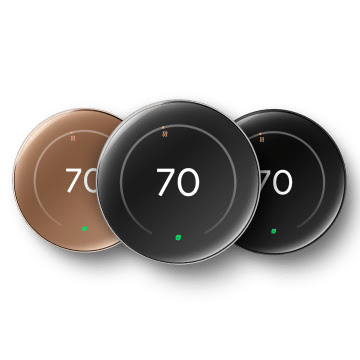
The 4th-gen Nest Learning Thermostat (2024) is Google’s smartest thermostat yet — and finally a modern one after nearly a decade of waiting. At $279.99 with a Nest Temperature Sensor included, it brings a 60% larger display, Dynamic Farsight, Matter certification, AI-driven Smart Schedule, and a System Health Monitor. It auto-programs itself with almost no input from you. Downsides: it’s the priciest Nest ever, has no air-quality sensor (Ecobee wins there), no touchscreen, and it’s managed entirely through the Google Home app. Best for Google Home households who want comfort on autopilot.
This is a research-based review. We have not tested the Nest Learning Thermostat (4th gen) hands-on; every fact below comes from the manufacturer’s published specs, pricing, and independent reporting. Prices and specs checked September 30, 2026.
Key specs
| Spec | Detail |
|---|---|
| MSRP | $279.99 (includes Nest Temperature Sensor 2nd gen) |
| Display | 2.7-inch domed crystal LCD, 60% larger than 3rd gen |
| Size | 3.9 in diameter × 1.1 in deep; 161.8 g |
| Sensors | Soli motion, temperature, humidity, ambient light |
| Wireless | Wi-Fi 2.4/5 GHz; Matter certified |
| Ecosystem | Google Home, Alexa, Siri, Matter (Apple Home, SmartThings) |
| C-wire | Not required in most homes (Power Sharing) |
| Certifications | ENERGY STAR; Matter certified |
| Finishes | Polished Silver, Polished Obsidian, Polished Gold |
| Warranty | 2-year limited |
Price and availability
The Nest Learning Thermostat (4th gen) launched August 20, 2024 at $279.99, and that remains the list price in 2026. Retailers discount it regularly — third-party listings showed it around $262.50 in early 2026 — and utility rebate programs often bring the effective price down substantially. The included Nest Temperature Sensor (2nd gen) is a $40 value on its own; extras are $40 each or $100 for three. Confirm the current price on the Google Store or a retailer before buying.
What it’s good at
- Truly self-programming. The headline feature: it learns your habits and builds a Smart Schedule automatically, asking permission before applying AI-suggested changes. For people who never want to touch a schedule screen, it’s unmatched.
- Beautiful hardware. The domed glass display, slim profile, and Dynamic Farsight (customizable clock/weather/temperature visible from across the room) make it look like a Pixel Watch for your wall. The 60% larger screen fixes the 3rd gen’s cramped UI.
- Matter certified. Unlike Ecobee, the 4th-gen Nest speaks Matter, so it integrates with Apple Home, SmartThings, and Alexa alongside Google Home.
- System Health Monitor. It watches your HVAC for anomalies and sends maintenance alerts — an underappreciated feature that can catch a failing system before a breakdown.
- Temperature sensor included. The 2nd-gen Nest Temperature Sensor manages hot/cold spots; you can prioritize rooms by time of day, and support up to 6 sensors.
- No C-wire in most homes. Power Sharing eliminates the most common installation blocker for older homes.
Where it falls short
- The price. $279.99 makes it the most expensive mainstream smart thermostat — $30 more than the Ecobee Premium, which includes air-quality monitoring the Nest lacks.
- No air-quality sensor. Ecobee’s built-in VOC/CO2/humidity monitor has no Nest equivalent; a strange omission at this price in 2026.
- No touchscreen. You still twist the ring — charming, but slower than a tap interface for schedule tweaks (though the app handles most of it).
- No built-in voice assistant. Unlike the Ecobee Premium’s built-in Alexa/Siri, the Nest needs a separate smart speaker for voice control.
- Google Home app required. The old Nest app is gone; everything runs through Google Home, which some longtime Nest users still find less thermostat-focused than they’d like.
Who should buy it
Google Home households — the integration with Google routines, presence sensing, and Nest Renew energy-shifting is deepest here. Also ideal for “set it and forget it” users who want the thermostat to learn them rather than the other way around, and design lovers who want the best-looking thermostat on the wall.
Who should skip it
Anyone who wants air-quality monitoring or a built-in voice assistant — the Ecobee Premium does both for $30 less. And anyone allergic to the Google Home app should look elsewhere.
Verdict
The 4th-gen Nest Learning Thermostat is a gorgeous, genuinely intelligent device that finally modernizes the line — Matter support, self-programming AI, and a display worthy of 2026. It’s overpriced relative to the Ecobee Premium’s feature set, but for Google-centric homes it’s the obvious choice. Rating: 4.5/5.
FAQ
Does the 4th-gen Nest work with Apple HomeKit?
It’s Matter-certified, so it integrates with Apple Home, SmartThings, and Alexa — not through classic HomeKit pairing, but via the Matter standard.
Is a temperature sensor included?
Yes — every unit ships with a Nest Temperature Sensor (2nd gen). Additional sensors cost $40 each or $100 for three, supporting up to 6 total.
Do I need a C-wire?
Not in most homes — Power Sharing lets the 4th gen run without one. Use Google’s online compatibility checker to confirm for your system.
What’s Dynamic Farsight?
A customizable display mode that shows the temperature, a clock, or weather from across the room, with automatic brightness adjustment.
Where to buy
As an Amazon Associate we earn from qualifying purchases.