
Quick verdict
Philips Hue White and Color Ambiance Starter Kit Review 2026
The short answer
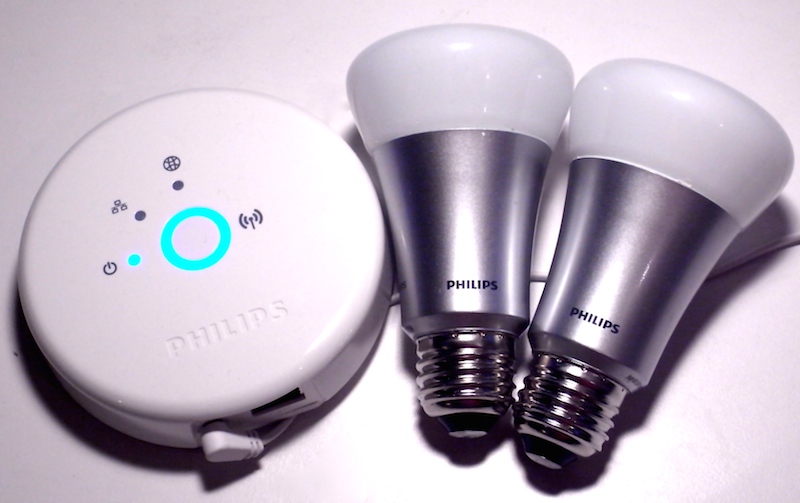
The Philips Hue White and Color Ambiance starter kit remains the gold standard for smart lighting in 2026 — and it remains expensive. The current 75W-equivalent A19 starter kit (four bulbs plus the Hue Bridge) delivers rock-solid reliability, the richest ecosystem of any smart light platform, and genuinely useful routines and automations. But at around $200 you are paying a premium over rivals like LIFX, and the Bridge is still required to unlock the full feature set. Buy it if you want the platform most likely to still be thriving in a decade; skip it if you just want a few color-changing bulbs on the cheap.
This is a research-based review. We have not tested the Philips Hue White and Color Ambiance starter kit hands-on; every fact below comes from the manufacturer’s published specs, pricing, and independent reporting. Prices and specs checked September 30, 2026.
Key specs
| Spec | Detail |
|---|---|
| Bulbs included | 4 × A19, E26 base, White and Color Ambiance |
| Brightness | 1100 lumens per bulb (75W-equivalent) |
| Color range | 16 million colors; 2000–6500K white range |
| Power draw | 10.5W per bulb; 0.2W standby |
| Rated lifetime | 25,000 hours |
| Wireless | Bluetooth + Zigbee (bridge uses Zigbee mesh) |
| Bridge | Hue Bridge included; supports up to 50 lights |
| Ecosystem | Alexa, Google Home, Apple Home (HomeKit), SmartThings |
| Dimming | Yes, via app, voice, or Hue accessories |
| Warranty | 2 years (manufacturer) |
Price and availability
The current 4-bulb 75W-equivalent starter kit lists around $199.99 at major retailers — the Google Store listed it at $199.99, while Dell’s listing showed $219.99. The older 3-bulb kit with dimmer switch historically streeted around $120–$180, and Amazon has listed the 3-bulb set as low as $179.99 (per TechRadar deal coverage in September 2026). Prices move constantly, so confirm on the retailer’s site before buying. Individual White and Color Ambiance bulbs list around $59.99 each, so the kit represents meaningful savings over buying bulbs and a Bridge separately.
What it’s good at
- The most reliable smart lighting platform. The Zigbee-based Hue Bridge mesh network is famously stable — bulbs respond instantly and automations run locally even if your internet goes down. This is the core reason reviewers and long-term users keep coming back.
- Huge accessory ecosystem. Hue motion sensors, dimmer switches, tap dials, smart plugs, outdoor lights, light strips, and third-party integrations (from home theater sync with the Hue Sync Box to security camera integrations) mean the kit is a genuine platform, not just a bulb.
- Rich automations. Schedules, wake-up fades, geofencing (Home & Away routines), and scene galleries with gradients give you far more than on/off color control. Routines can even run on the Bridge itself without your phone present.
- Works with everything. Native Alexa, Google Home, Apple Home (HomeKit), and SmartThings support, plus Matter compatibility on newer hardware, make Hue the easiest platform to fit into an existing smart home.
- Bright enough for real rooms. At 1100 lumens, the 75W-equivalent bulbs are genuinely usable as primary room lighting — not just accent glow. The 2000–6500K white range covers candle-warm to daylight.
- Longevity. Philips Hue has been continuously supported for over a decade, with firmware updates still rolling out to older hardware. Few smart-home brands inspire as much confidence that your investment will keep working.
Where it falls short
- It’s expensive. Around $200 for four bulbs and a Bridge is a lot when single LIFX or Govee bulbs cost under $30. Expanding beyond the kit (additional bulbs, sensors, switches) adds up fast.
- The Bridge is still essentially required. Bluetooth-only control of up to 10 bulbs works without it, but the routines, remote access, and most ecosystem features need the Bridge wired to your router — one more box, one more Ethernet port.
- Colors can look muted compared to rivals. Reviewers consistently note that LIFX’s SuperColor LEDs produce more saturated reds and greens; Hue’s palette is refined but less punchy at the extremes.
- No multi-zone per bulb. Each A19 bulb is a single zone — one color at a time. Rivals (including Nanoleaf’s panels and Govee’s segmented strips) offer multi-zone effects Hue A19s can’t match.
- App complexity. The Hue app exposes an enormous feature set, which means a steeper learning curve for casual users than the simpler apps from LIFX or Govee.
Who should buy it
Anyone building a serious whole-home lighting setup — multiple rooms, outdoor lights, motion-based automation — where reliability and ecosystem breadth matter more than price. Homeowners already invested in Apple Home, Alexa, or Google Home will find Hue slots in seamlessly, and the local-execution reliability is a real comfort for always-on automations.
Who should skip it
Renters or casual users who just want one or two fun color bulbs, and anyone on a tight budget — the value-per-bulb is weak compared with hub-free rivals. If you want hyper-saturated colors or multi-zone gradients on a strip, look at LIFX or Govee instead.
Verdict
The Philips Hue White and Color Ambiance starter kit is still the safest, most future-proof entry point into smart lighting, and the current 75W-equivalent kit is bright enough for primary use. It costs more than it should, but you’re buying a platform with a decade of support behind it and a roadmap ahead. Rating: 4.8/5.
FAQ
Do I need the Hue Bridge?
For the full experience — remote access, routines, more than 10 lights, and integrations — yes. Bluetooth lets you control up to 10 bulbs nearby without it, but the kit includes the Bridge for a reason.
Does Philips Hue work with Apple HomeKit?
Yes. The Hue Bridge is HomeKit-compatible, so your Hue lights appear in the Apple Home app and respond to Siri.
Can I mix Hue bulbs with non-Hue Zigbee bulbs?
Hue is built on Zigbee, but Philips officially supports Hue bulbs; third-party Zigbee bulbs may pair with varying success and can cause mesh issues, so Hue accessories and bulbs are the safe bet.
How many lights can one Bridge handle?
Up to 50 lights plus 12 accessories per Bridge. For very large installs you can add a second Bridge (a Bridge Pro option with higher capacity also exists).
Where to buy
As an Amazon Associate we earn from qualifying purchases.