
The short answer: warehouse AI pays back fastest where it fixes inventory accuracy. Gather AI and Dexory automate the count itself, Locus Robotics attacks picking labor, and Cin7 and Zoho Inventory fix the records and forecasting layer underneath. FourKites covers the inbound side, predicting which shipments actually arrive when. Start with the problem that costs you the most shifts, not the flashiest robot.
Best AI tools for warehouse managers at a glance
| Tool | Price | Best for |
|---|---|---|
| Gather AI | Not published (quote) | Inventory accuracy without cycle-count labor |
| Dexory (DexoryView) | Subscription, not published | Daily wall-to-wall scans in tall racking |
| Locus Robotics | Per-robot subscription, not published | Picking throughput alongside human pickers |
| Cin7 Core | From $349/month | Multi-channel inventory with AI demand forecasting |
| Zoho Inventory | Free plan; paid from $29/month billed annually | Small warehouses that need order and stock control cheaply |
| FourKites | Enterprise quote, not published | Inbound shipment ETAs and dock planning |
What the pricing pages don’t make obvious
Zoho Inventory looks like simple per-month software pricing, but Zoho’s own pricing page shows the plans are priced per organization and capped by monthly order volume: the free plan stops at 50 orders a month (and 20 purchase orders), with one user and one location, and the $29 Standard plan caps at 500 orders a month. A seasonal spike can push a small warehouse up a tier mid-year, so budget against your peak month, not your average one. At the robotics end, almost nobody publishes prices at all — Gather AI, Dexory, and Locus all quote per site, so the honest comparison is payback period, not sticker price.
1. Gather AI — drone and forklift cameras that count for you
Gather AI flies autonomous drones through your aisles and mounts cameras on forklifts to photograph pallets as they move, then reads barcodes, lot codes, text, expiry dates, and case counts from the images and flags where the floor disagrees with your WMS. Per Gather AI’s own FAQ, the drones navigate with no GPS, no Wi-Fi, and no infrastructure changes, which matters in older buildings with dead zones. Pricing is not published. Best for: 3PLs and distribution centers losing hours to manual cycle counts.
- Pros: counts without pulling staff off fulfillment; reads more than barcodes, including expiry dates and occupancy
- Cons: quote-only pricing; value depends on how bad your record accuracy is today
2. Dexory — a robot that scans the whole building daily
Dexory’s autonomous robot carries a 12-metre extendable tower that scans full-height racking in a single pass and feeds DexoryView, a live digital twin that reconciles what is physically on the shelf against your WMS and flags discrepancies, damage risks, and slotting opportunities. Dexory says one robot typically covers a site with daily wall-to-wall scans, deploys in one to two weeks with nothing bolted to your racking, and is sold as a monthly subscription; the price itself is not published. Best for: large, tall warehouses that currently discover stock errors at pick time.
- Pros: daily full-building scans instead of sample counts; no fixed infrastructure to install
- Cons: one more vendor subscription per site; overkill for small single-story facilities
3. Locus Robotics — picking robots on subscription
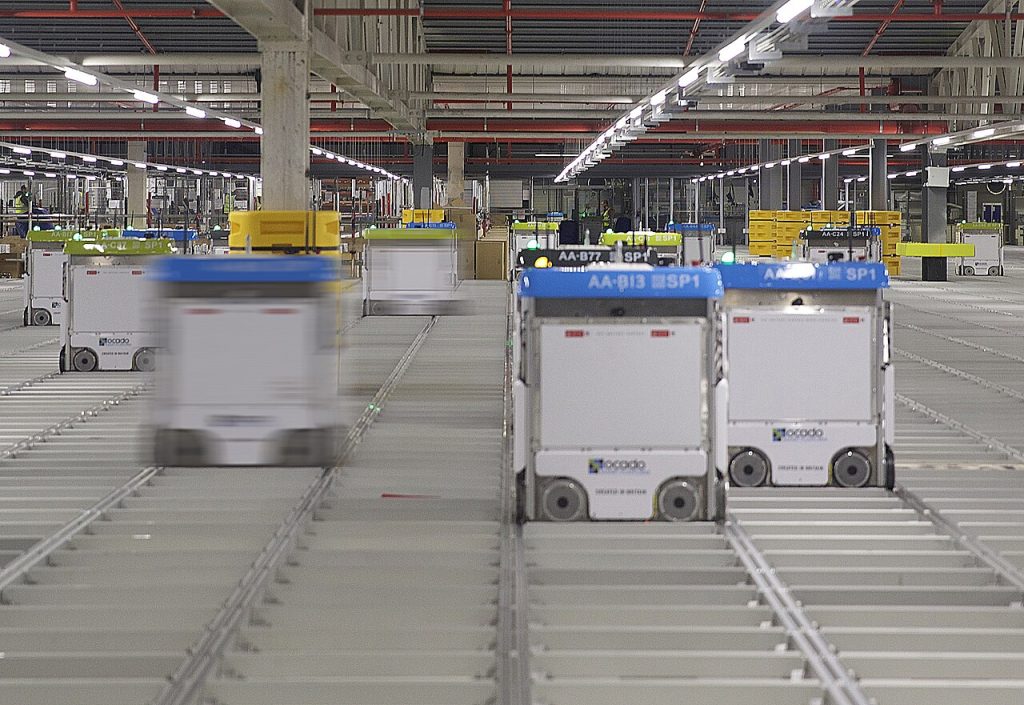
LocusBots roll to your pickers with totes so staff stop walking miles between shelves, coordinated by the LocusOne platform. The model is robots-as-a-service: a monthly per-robot subscription that bundles the hardware, software, maintenance, and support, and fleets can scale up for peak season and back down after. Locus does not publish its per-robot rate, so get the quote in writing with the peak-season terms spelled out. Best for: fulfillment operations where walking time is the biggest labor cost. If your pain is the trucks feeding the building rather than the picking inside it, see our roundup of the best AI tools for trucking companies.
- Pros: no big capital purchase; robots work alongside existing staff and racking
- Cons: pricing is quote-only; payback needs sustained pick volume
4. Cin7 Core — inventory software with AI forecasting
Cin7 Core is the records layer: multi-location inventory, purchasing, and warehouse workflows with 700+ integrations, plus ForesightAI demand forecasting that turns sales history into purchase suggestions across channels like Shopify, Amazon, and wholesale. Core Standard starts at $349/month, with Pro and Advanced tiers above it and a 14-day free trial. Best for: multi-channel sellers whose warehouse problems start as forecasting problems.
- Pros: forecasting and warehouse workflows in one system; deep integration catalog
- Cons: $349/month floor is steep for a single small warehouse
5. Zoho Inventory — the budget starting point
Zoho Inventory handles orders, stock, barcoding, and bin locations for small operations at prices the robotics vendors will not match: a free plan (50 orders a month, one user, one location), Standard at $29 per organization per month billed annually, and Premium at $79 adding bins, serial and batch tracking, and a vendor portal. It will not count your shelves for you, but it gives a small warehouse clean records to automate against later. Best for: small warehouses and growing sellers — the same lean-stack logic as our best AI tools for small business owners roundup.
- Pros: genuinely free tier; per-organization pricing keeps small teams cheap
- Cons: monthly order caps (see the pricing note above); not a substitute for physical counting
6. FourKites — know what is actually arriving, and when
FourKites tracks inbound freight across road, rail, ocean, and air and uses machine learning to predict ETAs, flag exceptions, and support dock appointment scheduling, so receiving labor can be planned against reality instead of the original booking. Pricing is enterprise and quote-based; FourKites does not publish it. Best for: warehouse managers whose dock schedule is wrecked by late or surprise inbound loads. Pair it with disciplined fleet maintenance on your own yard equipment — our Fleetio review covers the maintenance-software side.
- Pros: predictive ETAs across every transport mode; strong exception alerting
- Cons: enterprise pricing puts it out of reach for small facilities
Frequently asked questions
What warehouse AI pays back fastest?
Usually inventory accuracy. Miscounts create expedites, double-handling, and lost sales every week, so tools that automate counting (Gather AI, Dexory) tend to show returns before big automation projects.
Do picking robots replace warehouse staff?
LocusBots are collaborative: they carry totes to human pickers rather than picking themselves. The saving is walking time, which lets the same crew handle more orders — it changes the job more than it eliminates it.
Why don’t warehouse robotics vendors publish prices?
Because the quote depends on site size, racking height, robot count, and contract length. Treat any per-robot figure you see on third-party sites as an estimate and get your own written quote.
What should a small warehouse buy first?
Clean records. Zoho Inventory’s free plan or Cin7 if you sell across channels will do more for a small operation than a robot counting stock the system already has wrong.