
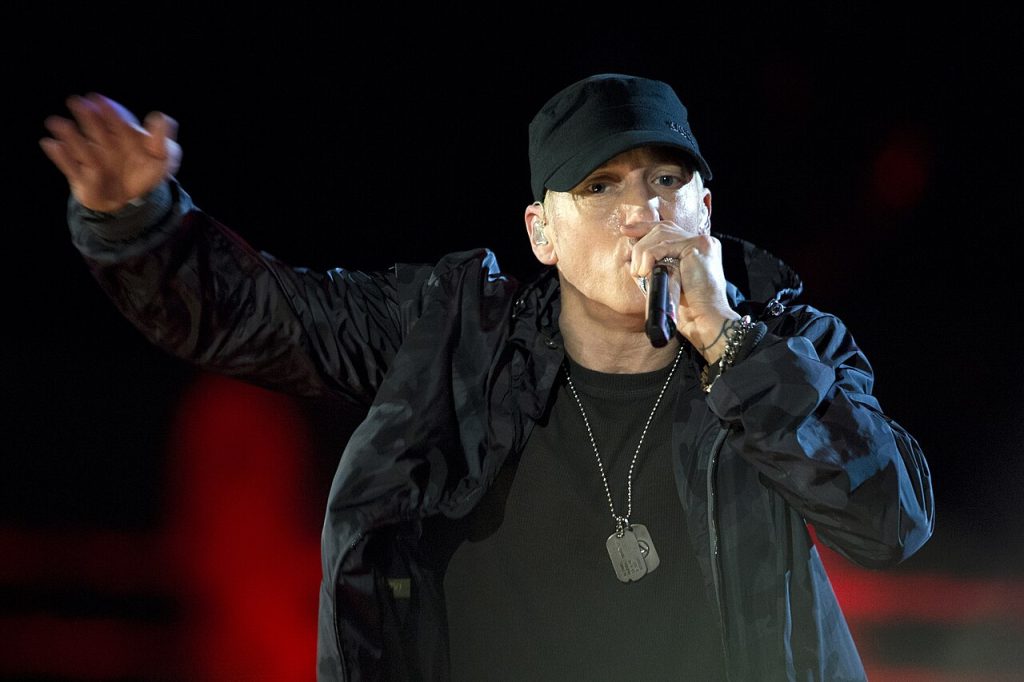
Eight Mile Style, the publisher that controls 269 Eminem compositions, sued AI music generator Suno in federal court on November 6, seeking more than $41 million and alleging the songs were copied without a license to train Suno’s models. Why it matters: it is the latest — and one of the largest per-catalog — copyright challenges to how AI music tools were built, and it leans on Suno’s own past court statements about what it trained on.
November 7, 2026
What happened
The Ferndale, Michigan-based publisher Eight Mile Style, together with Martin Affiliated, filed a 32-page complaint late Friday, November 6, in the U.S. District Court for the Northern District of California. The suit covers 269 Eminem compositions the publisher owns or administers, including “Lose Yourself,” “Without Me,” “‘Till I Collapse,” “The Real Slim Shady” and “Stan.” Eminem himself is not a plaintiff — the case is brought by the publishing company that controls the songs.
The complaint accuses Suno of direct copyright infringement, circumventing protection measures, and removing or altering copyright management information embedded in the songs. Eight Mile Style is asking for $150,000 per work — the maximum statutory damages for willful infringement — which comes to $40.4 million across the 269 songs, plus a further $672,000 tied to the alleged removal of copyright information. It also asks the court to order the impoundment or destruction of unauthorized copies.
The details
The complaint quotes Suno’s own earlier court disclosure that its model was trained on “essentially all music files of reasonable quality that are accessible on the open Internet.” Eight Mile Style alleges Suno used a service to scrape millions of songs and lyrics from YouTube Music, Deezer and Genius, and points to generated output as evidence: a Suno track titled “Slim Shady x Rosefalls” with AI-generated Eminem cover art and vocals the publisher says were clearly derived from his voice, plus generated tracks reproducing lyrics from “Lose Yourself” and other songs verbatim or nearly so.
Suno blocks prompts that name specific artists, but the publisher argues those guardrails are easily bypassed with descriptive prompts instead of names. Suno, in a statement reported by the Detroit Free Press and CBS News, said it “exists to help people create new, original music, not to trade on anyone’s name or likeness,” that it prohibits unauthorized use of an artist’s work, blocks artist-name prompts, and works with third-party providers to screen uploads. The allegations have not been tested in court, and Suno has not yet filed a response.
The filing did not arrive alone. Rights holders for Elvis Presley filed a separate suit against Suno the same day in the same court, alleging the generator clones Presley’s voice, according to reporting on the complaints. Suno has been in music copyright litigation since the Recording Industry Association of America sued it in June 2024 on behalf of major labels; since then, BMG and Warner Music Group have reached licensing deals with the company, while Universal Music Group — Eminem’s record label — remains a plaintiff in that case.
Why it matters
For anyone using AI music tools, this case is a reminder that the licensing question is still unresolved: some labels have settled and licensed, others are still suing, and publishers are now bringing their own claims song by song at the maximum statutory rate. If courts accept the argument that training on unlicensed catalogs was willful infringement at $150,000 per work, the exposure for AI music companies runs far beyond any single catalog — and the pressure to license first, rather than settle later, grows. For listeners and creators, the practical takeaway is the one we keep coming back to: everything AI, tested — including, increasingly, tested in court.
Frequently asked questions
Who is suing Suno over Eminem’s songs?
Eight Mile Style, the Michigan-based publishing company that owns and administers 269 Eminem compositions, together with Martin Affiliated. Eminem personally is not a plaintiff.
How much is the lawsuit seeking?
More than $41 million in total: $150,000 per work across 269 songs ($40.4 million) plus $672,000 over the alleged removal of copyright information, along with destruction of unauthorized copies.
What does Suno say?
Suno says its platform is for creating new, original music, that it prohibits unauthorized use of artists’ work, blocks prompts naming specific artists or songs, and screens uploads with third-party providers. It has not yet responded to the complaint in court.
Sources: Detroit Free Press, CBS News (via KION), AllHipHop
The detail that Eight Mile Style is leaning on Suno’s own earlier court disclosure – that the model was trained on essentially all reasonably high-quality music it could reach – is what makes this more than a routine catalog lawsuit. Seeking $150,000 per work across 269 compositions, plus the copyright-management-information claim, is clearly meant to test willful-infringement damages rather than quietly settle a license. I also noted Eminem himself is not a plaintiff; the publisher that administers the songs is. Curious whether courts treat that ‘we trained on everything accessible’ statement as notice that licenses were never on the table.