
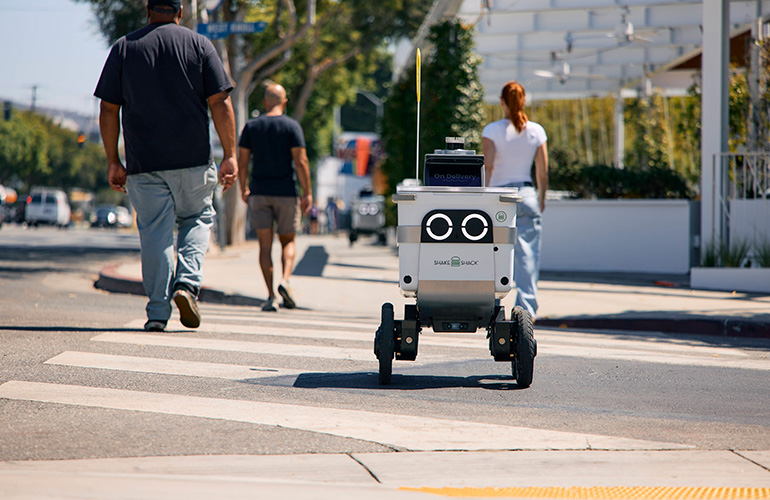
Serve Robotics, the sidewalk delivery robot company, is opening up the connectivity and data tools it built for its own fleet and selling them to other robot makers as a new business line called Physical AI Services. Why it matters: Serve is betting the durable money in robotics is not only in running robots, but in selling the infrastructure every robot company needs — the same playbook Amazon followed with AWS.
November 5, 2026
What happened
Serve Robotics announced Physical AI Services on November 5, 2026, alongside its third-quarter earnings. The company, which spun out of Uber’s acquisition of Postmates in 2021 and went public in 2024, will offer other companies building robots its connectivity and data tools. Bedrock Robotics, a startup developing self-driving systems for construction equipment, is already a customer, according to Serve. Serve is also working with T-Mobile to bring AI computing power closer to robots in the field.
Chief executive and co-founder Ali Kashani told TechCrunch the company is solving the problem of robots operating in human spaces, and described the move as the company’s AWS moment: technology built first for its own fleet, then opened up for others to build on. The delivery business is not going away — Serve also runs a hospital robot business from its acquisition of Diligent Robotics, and its sidewalk delivery operation is expanding while shifting away from Uber toward partners including DoorDash and Wonder.
What Physical AI Services sells
The new business line has three products. Serve Link connects robots in the field to AI systems running in data centers, so a robot can tap more powerful models than it can carry onboard; Kashani said the hard part is keeping that connection reliable over unreliable networks, whether the robot is collecting data or needs exception handling when something goes wrong. A data curator tool helps companies find edge cases in the large volumes of real-world data a robot collects, so those cases can be fed back into training to improve performance. The third product is a real-world, foundation-model data catalog built from Serve’s own sidewalk robots, meant to teach AI models how to understand complex human environments.
The target customers are companies building robots for farms, warehouses and other uncontrolled environments — places where, like sidewalks, the robot has to share space with people.
Why it matters
Every robotics company hits the same wall: the robot itself is only part of the problem, and the unglamorous layers underneath — connectivity that survives bad networks, data pipelines that surface the moments a model got confused, training data from real human environments — take years to build. Serve has spent those years at fleet scale, and it is now testing whether rivals would rather buy those layers than build them. If Physical AI Services signs on customers beyond Bedrock, Serve becomes a platform supplier to the industry it also competes in; if it doesn’t, the launch is a reminder that infrastructure built for one fleet does not automatically fit everyone else’s robots. Either way, it is a notable strategic turn for one of the few publicly traded pure-play robotics companies.
Frequently asked questions
What is Serve Robotics’ Physical AI Services?
A new business line, announced November 5, 2026, that sells Serve’s connectivity and data tools to other robotics companies: Serve Link for connecting field robots to data-center AI, a data curator for finding training edge cases, and a foundation-model data catalog from Serve’s sidewalk fleet.
Who is using it?
Bedrock Robotics, which builds self-driving systems for construction equipment, is a customer, according to Serve. Serve is also working with T-Mobile on bringing AI computing closer to robots.
Is Serve quitting food delivery?
No. Kashani emphasized the existing businesses continue: sidewalk delivery (expanding, with partners including DoorDash and Wonder) and hospital robots from the Diligent Robotics acquisition.
Sources: TechCrunch, The Robot Report