
Quick verdict
Protex AI Review 2026: Computer-Vision Safety on the Cameras You Already Have
Updated November 4, 2026 – Tested Intelligence
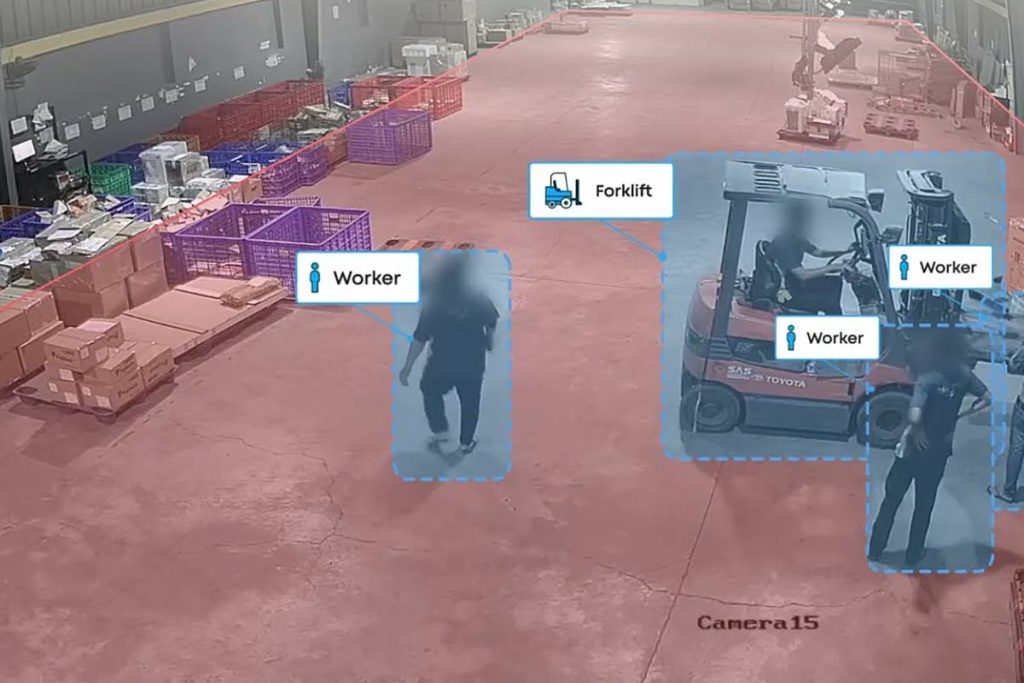
Quick verdict: Protex AI turns existing CCTV into a safety monitoring layer, using configurable rules and an on-site edge device to flag PPE gaps, zone breaches and vehicle-pedestrian near misses. Its strength is privacy by design: no facial recognition, and patterns reported by zone, not by named worker. It fits large, fixed-camera operations best; pricing is quote-based, and open outdoor sites are its weakest setting.
What it is
Protex AI is a workplace safety platform built for EHS teams in warehousing, manufacturing, ports and construction. Instead of asking a site to install a new camera network, it plugs into existing CCTV, processes events locally on an edge device, and surfaces the patterns a safety team would otherwise only find by auditing hours of footage by hand.
That matters in construction. A plant room, precast yard or enclosed fit-out has fixed cameras, repeatable routes and defined zones – exactly what this system needs. An open earthworks site with cameras that move weekly is a harder fit; test that in a pilot rather than assume warehouse results transfer.
Key features
- Configurable zone detections: PPE and hi-vis, restricted-area entry, forklift-pedestrian proximity and route deviations
- Ergonomic detections such as overreaching and incorrect lifting, before they become lost-time injuries
- A rule builder for site-specific behaviour rules, based on zone, speed, direction and count
- Event feed, dashboards and heat maps showing where and when risk recurs across shifts
- Corrective-action workflows so a flagged pattern becomes an assigned fix, not just a chart
- Connections to WMS, MES, TMS, EHS and CMMS systems, plus an open API
Pricing
Pricing is not public. Protex sells on a quote basis, and directory listings consistently report custom, quotation-based pricing with no free plan. Get the camera, site and detection breakdown in writing.
What the pricing page does not make obvious: the privacy architecture is part of the product, verified on Protex’s own site. Detection happens locally on edge devices, raw CCTV does not stream off site, anonymisation is standard, and the platform performs no facial recognition or individual identification and does not rank or score workers. The vendor also says most customers are live within a week of device delivery. On unionised sites, that is often the difference between acceptance and a stalled deployment.
Who it’s for
Large operators with an existing camera estate, an EHS leader who will work the data, and enclosed work areas: logistics hubs, plants, ports, yards and large fit-outs. Vendor-reported results include an 80 percent reduction in incidents at a Marks & Spencer distribution centre – a vendor case figure, and a warehousing result, not a construction one.
Who should skip it
Small sites with few cameras and no dedicated EHS owner will pay enterprise money for insight nobody acts on. Teams whose risks are falls on open, weather-exposed structure should look carefully too: a 2026 heavy-industry comparison rated Protex strongest in enclosed settings and noted it is not explicitly hardened for large open construction sites.
Pros
- Uses existing CCTV – no camera replacement programme
- Clear privacy position: no facial recognition, zone-level patterns, local processing
- Broad rule set covering PPE, zones, vehicles and ergonomics
- Corrective actions push it beyond alerting toward a programme
Cons
- No public pricing or self-serve trial – every evaluation runs through sales
- Strongest evidence is warehousing and manufacturing, not open sites
- Value depends on fixed, well-placed cameras
- Headline reduction figures are vendor-reported, not independently verified
FAQ
How much does Protex AI cost?
Pricing is not public. Protex uses custom, quote-based pricing, and third-party directories report no free plan or free trial. Ask for the per-camera, per-site and edge-hardware breakdown in the quote.
Does Protex AI identify individual workers?
No, by the vendor’s own account. Protex says it performs no facial recognition or individual identification, analyses anonymous event patterns at zone level, processes detection locally and does not stream raw CCTV off site.
Does Protex AI need new cameras?
Generally no. It is designed to work with existing camera infrastructure, with event detection running on a secure on-site edge device. Camera position and coverage still decide what it can actually see.
Bottom line
Protex AI is a credible pick where work happens under fixed cameras and a real EHS team will act on leading indicators. Pilot it on your worst enclosed site, measure it against your own audits, and only then talk portfolio pricing.