
Quick verdict
The short version: Stacklens is a line of AI-powered smart safety glasses from ZenaTech, unveiled on October 9, 2026, that puts a hands-free AI assistant, a camera, live video support from a remote expert, and thermal imaging into certified-style safety eyewear for field technicians, inspectors, and industrial crews. Why it matters: consumer smart glasses are everywhere, but the jobs where hands-free answers matter most — up a ladder, inside a panel, under a vehicle — still run on phones and paper. The honest caveat: Stacklens is a prototype. Customer pilots are not expected until 2027, and pricing has not been disclosed.
Bottom line: Stacklens is the right idea aimed at the right workers, and it is one of the first smart-glasses pitches built for the jobsite instead of the coffee shop — but today it is a prototype with no price, no certification in hand, and no ship date.
What is Stacklens?
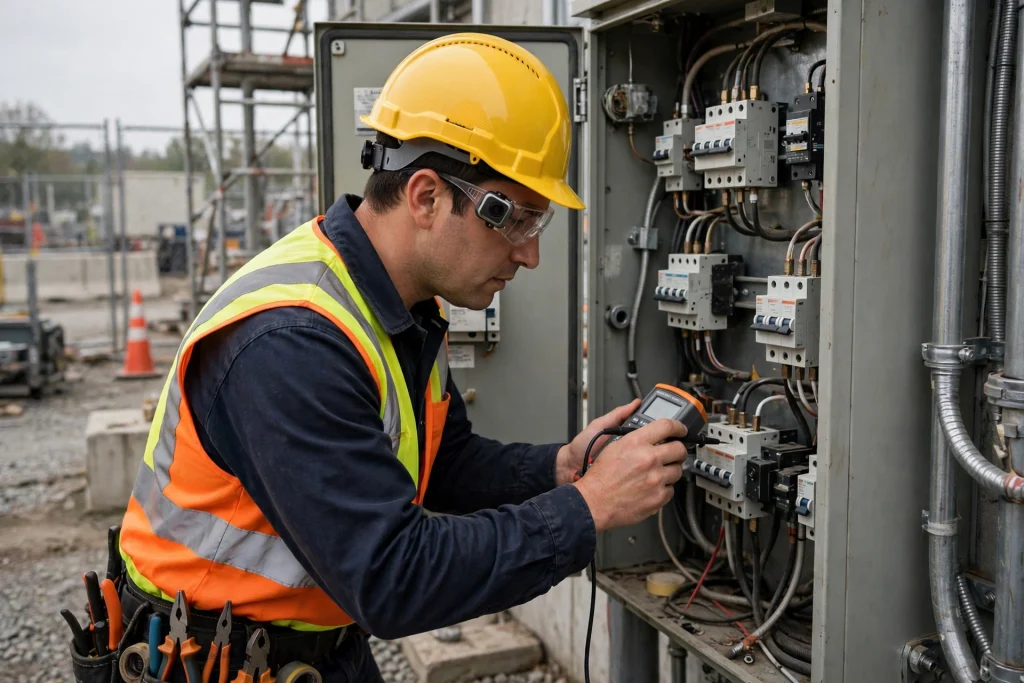
Stacklens is being developed by Tillerstack, a ZenaTech subsidiary inside the company’s Zoo Office AI software ecosystem. The pitch is to take the hands-free camera, audio, and AI features of consumer glasses — think the category defined by the Ray-Ban Meta smart glasses — and build them into safety eyewear a technician can wear all shift. The wearer can see instructions, call an expert over live video, and capture an inspection without putting down tools or taking off gloves.
ZenaTech CEO Shaun Passley put it plainly at the unveiling: “Stacklens puts an AI expert, a camera and a direct line to a senior technician right in a pair of safety glasses.”
Key features
- Hands-free AI assistant: Voice-driven help and instructions while both hands stay on the job
- Live video support: A remote expert can see what the technician sees
- Thermal imaging: Positioned for inspection and maintenance work where heat signatures matter
- Camera and audio: Capture inspections hands-free for records and reporting
- Three versions planned: Each suited to a different field environment and use case
- Ecosystem link: Designed to connect with ZenaTech’s drone and Drone as a Service platforms
The contrast with camera-free designs like the Even Realities G2 is deliberate: Stacklens is built around the camera, because inspection capture is the whole point on a jobsite.
Who is Stacklens for?
Field service firms, inspection companies, and industrial maintenance teams — especially operations where a junior technician regularly needs a senior’s eyes on a problem, or where inspection photos and records are part of compliance. It is an enterprise fleet product, not something an individual consumer will buy at retail.
Pros and cons
Pros
- Designed for safety eyewear from the start, not a consumer frame adapted later
- Thermal imaging plus live expert video is a genuinely useful pairing for inspections
- Backed by a listed company (Nasdaq: ZENA) with an existing field-services and drone business
Cons
- Prototype stage only — customer pilots are not expected until 2027
- Pricing and subscription details have not been disclosed
- Safety certifications are still being pursued, not yet in hand
Price and availability
There is no price to report: ZenaTech says pricing and subscription details have not yet been disclosed, the product is at the prototype and testing stage, and customer pilots are expected to begin in 2027. There is no retail or Amazon listing, and we will not invent one. If your crew needs hands-free capture today, current consumer smart glasses are the only shipping option — Stacklens is a 2027 planning item, not a purchase.
Frequently asked questions
When can you buy Stacklens?
You cannot buy it yet. Stacklens is at the prototype and testing stage, and ZenaTech expects customer pilots to begin in 2027.
How much will Stacklens cost?
ZenaTech has not disclosed pricing or subscription details.
Is Stacklens certified safety eyewear?
Not yet. ZenaTech says it is pursuing the applicable safety certifications and will update as it reaches certification and pilot milestones.
Based on the manufacturer’s unveiling announcement and specifications; we have not hands-on tested Stacklens.