
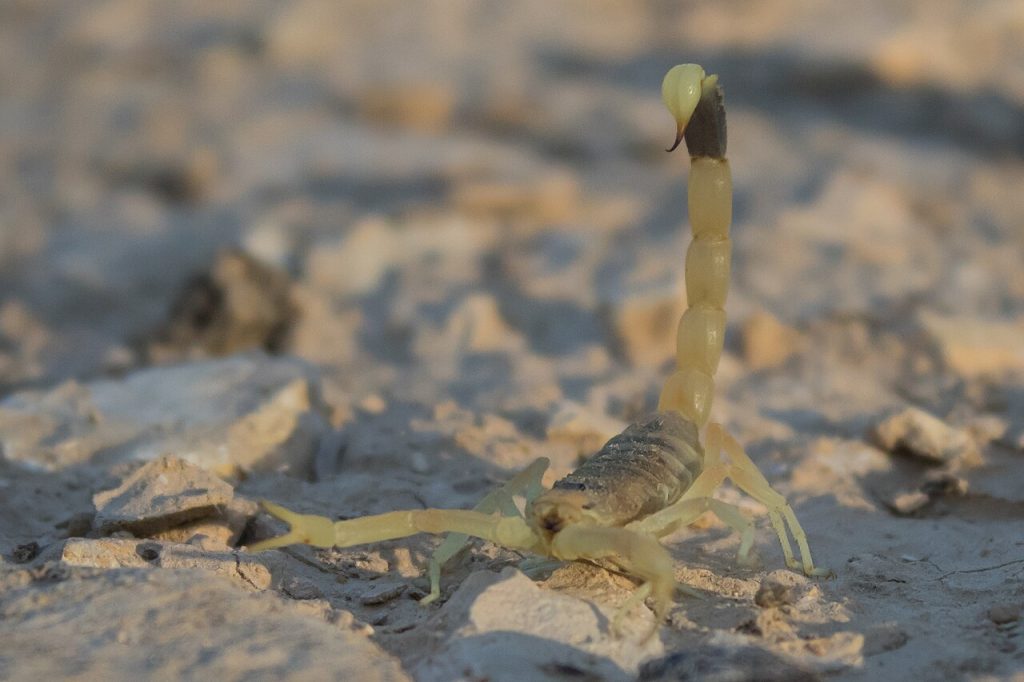
Anthropic says Claude ran a largely autonomous 64-hour protein-design campaign against scorpion neurotoxins — and two independent labs confirmed that 17 of its designs actually bind their targets. Why it matters: it is lab-verified evidence, not a benchmark claim, that an AI model can do the earliest stage of drug discovery against a neglected disease — though Anthropic itself stresses this is not an antivenom.
October 20, 2026
What happened
In a research post published Tuesday, Anthropic described giving an internal research model one initial prompt and four follow-ups, developed with the financial research firm Citrini Research, which had asked whether AI could help motivated non-experts tackle a genuine health problem. Working inside Claude Science, the model targeted five scorpion neurotoxins — Cn2 (Mexico), Ts1 (Brazil), AaH I and AaH II (North Africa) and LqhIII (Middle East) — aiming at each toxin’s channel-binding site.
The campaign by the numbers
Claude used 12 design tools to generate 318,484 protein designs and screened 553,052 design-toxin pairs, in a run Anthropic puts at roughly 10,000 GPU hours. It picked 180 designs for testing; the team added 31 more, for 211 total. Contract labs Adaptyv Bio and Twist Bioscience produced and tested all 211. Seventeen met Anthropic’s strict criteria: binding evidence in every replicate at both labs, every measured affinity at 1 µM or tighter, and no signal against an unrelated human protein used to check for off-target “stickiness.” All 17 bind a single toxin — seven against Cn2, four each against AaH II and AaH I, and two against LqhIII. None of the multi-toxin designs cleared the bar. The two strongest, Cn2-B1 and Cn2-B2, bound in the single-digit nanomolar range, and competition experiments suggest they attach on or near the same site as an antibody reported to neutralize Cn2 in mice.
Why it matters
Scorpions sting 1.2 million or more people a year and kill over 3,250, mostly children in places with limited medical care, and existing antivenoms are made by immunizing horses — a months-long process that yields products effective against only a few toxins, often expensive or unavailable where stings happen. Anthropic is careful about the limits: the binders were tested only against recombinant toxins, with no cell-based neutralization tests and no animal studies, so no therapeutic claim is being made. The honest takeaway is narrower and still significant — the “design a credible binder” step, once a bottleneck, took days, and Anthropic is releasing all 211 designs and their binding data for other researchers. The bottleneck now moves to the unglamorous work of turning binders into safe, affordable drugs.
FAQ
Did Claude create a scorpion antivenom?
No. Anthropic explicitly does not claim an antivenom. The designs were shown to bind toxins in lab tests, but they have not been tested for neutralization in cells or for efficacy in animals.
How many of Claude’s designs worked?
Of 211 lab-tested designs, 17 met Anthropic’s criteria for a binder, each against a single toxin. Among the 60 single-toxin designs, 11 were binders — an 18% hit rate Anthropic says is consistent with typical protein design campaigns.
How autonomous was the run?
Claude worked mainly autonomously for 64 hours from one prompt and four follow-ups under the life science team’s supervision, choosing toxin structures, target hotspots, quality thresholds and tool use itself.
Can other researchers use the results?
Yes. Anthropic is releasing all 211 designs and their binding data as a resource for the field.
Sources: Anthropic, AI Weekly