
Quick verdict
Linguise Review 2026: Cloud AI Translation With Unlimited Languages for WordPress
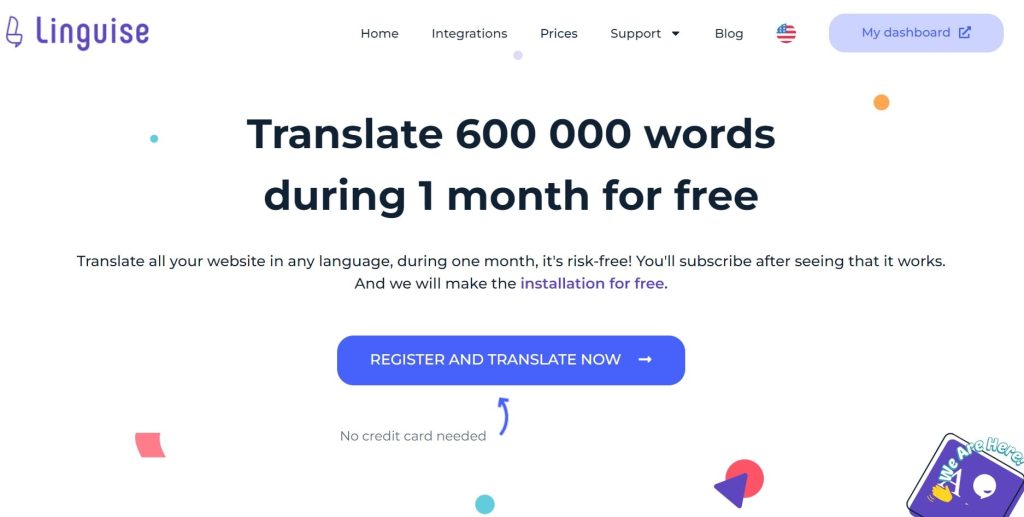
Linguise is a WordPress plugin that connects your site to a cloud AI translation service and translates everything — pages, posts, WooCommerce checkout, URLs and SEO metadata — into 85+ languages, with no limit on how many languages you add. There is a one-month free trial covering up to 600,000 words with no credit card, then Start is $15/month for 200,000 translated words. Its WordPress.org listing (version 2.2.70) is small at around 1,000+ active installations — a trade for unusually simple per-word pricing.
What it is
Linguise works differently from database-based multilingual plugins. The free WordPress.org plugin connects your site to Linguise’s service with an API key; when a visitor opens a translated page, the service returns a translated version stored on Linguise’s own high-speed cache servers, with dedicated URLs, canonical tags and alternate-language (hreflang and x-default) tags generated for search engines. Nothing is duplicated into WordPress posts per language, which is why setup takes minutes — and why an active subscription is part of the deal.
Translation quality comes from cloud AI models — Google Cloud AI by default, with an optional Linguise AI add-on built on LLM models. Linguise claims about 95% of a human translator’s quality, and suggests roughly 10% of pages may still deserve human revision in the front-end live editor.
Key features
- Whole-site AI translation in 85+ languages. Pages, posts, menus, dynamic AJAX content, WooCommerce products, checkout and even WooCommerce emails, translated automatically as new content appears.
- Multilingual SEO built in. Translated URLs, canonical and alternate-language tags, translated XML sitemaps and editable meta information, compatible with Yoast, Rank Math and All in One SEO.
- Live editor and translation rules. Click any string on the front end to fix it, invite translators by language, and set global rules to replace terms everywhere or exclude content by language, URL or CSS class.
- Unlimited languages and page views on every plan. Plans differ only by translated-word volume — language count is never the upsell, and translated page views are not metered.
- Lightweight WordPress integration. A small plugin with SVG-flag language switchers (menu, dropdown, popup, side-by-side or floating), local cache options, browser-language redirects, and tested compatibility with Elementor, Divi, Avada and major page builders.
Pricing
Pricing is from Linguise’s own pricing page, and every plan includes a one-month free trial of up to 600,000 words with no credit card and free installation help. Start is $15/month, or $165/year: 200,000 translated words for one website. Pro is $25/month, or $275/year: 600,000 translated words for one website. Large is $45/month, or $495/year: unlimited translated words, subject to a fair-usage policy aimed at extreme cases such as regularly exceeding 100,000 multilingual page hits a day. All plans include unlimited languages, unlimited translated page views and cloud AI translation; the optional Linguise AI higher-quality model is a paid add-on priced by usage. Word count is calculated as source words multiplied by the number of languages, so a 50,000-word site in four languages uses a full Start quota.
Who it’s for
- Content and WooCommerce sites going international that want many languages live fast, including checkout and email translation, without building a language-by-language site tree.
- Sites burned by per-language pricing: if you need five or ten languages, Linguise’s word-based pricing with unlimited languages is structurally cheaper than per-language rivals.
What to watch out for
- An active plan is required. Translations are stored and served by Linguise; when your word quota is reached, new translations stop (existing ones keep serving), and the service model means a lapsed subscription is a real dependency, not a one-off purchase.
- Word maths surprises people. Quota is source words × languages, so large catalogues in many languages can burn through 200,000 words quickly — do the multiplication before choosing Start.
- Small install base. Around 1,000+ active installations on WordPress.org is tiny next to the big multilingual plugins — less community troubleshooting history to lean on.
- AI translation still needs review for high-stakes copy. The vendor itself suggests around 10% human revision; legal, medical and brand-defining pages should get that pass in the live editor.
- Research-based review. This review is based on Linguise’s WordPress.org listing and its own pricing pages; we have not translated a live store with it ourselves.
Pros
- Unlimited languages and page views on every plan — pricing is words only.
- One-month free trial up to 600,000 words, no credit card, free installation offered.
- Full SEO handling: translated URLs, canonicals, hreflang/x-default and sitemaps.
- Translates WooCommerce end to end, including checkout and customer emails.
Cons
- Translations depend on Linguise’s servers and an active subscription.
- Word quota is multiplied by language count, punishing very large multi-language sites.
- Small WordPress.org install base (around 1,000+) versus established rivals.
Frequently asked questions
Is Linguise free?
Not free forever, and the vendor says so plainly. The WordPress plugin itself is free, and every account starts with a one-month free trial covering up to 600,000 translated words with no credit card required. After the trial, Start is $15/month for 200,000 words.
How many languages can I add with Linguise?
As many as you like: 85+ languages are available and no plan limits the language count or translated page views. Your only meter is translated words — your site’s word count multiplied by the number of languages you translate into.
Does Linguise work with WooCommerce and SEO plugins?
Yes. Linguise states full WooCommerce compatibility including the checkout process and customer emails, and compatibility with Yoast, Rank Math and All in One SEO. It generates translated URLs, canonical tags, alternate-language tags and translated sitemaps itself.