
Quick verdict
Tenna Review 2026: Mixed-Fleet Equipment Tracking Built by Contractors
Updated October 15, 2026 – Tested Intelligence
Quick verdict: Tenna is a construction-only equipment operations platform that puts heavy iron, trucks, tools, attachments, and materials on one live map, then layers maintenance, utilization, and dispatch on top of the tracking data. It fits mixed-fleet contractors tired of separate systems per brand. If you only need cheap GPS for a few vehicles, it is more platform than you need.
What it is
Tenna is based in New Hope, Pennsylvania. Founded in 2015 as BuildSourced and renamed in 2017, it was built out of a contracting background, not just software. In February 2026 Deere & Company closed its acquisition of Tenna, which said it would keep operating independently under the Tenna name.
The core idea is one system for a mixed fleet. Instead of checking an OEM portal for one brand, a rental tracker for another, and a spreadsheet for tools, Tenna pulls everything into a single dashboard with location, status, assignment, and history. Its site says more than 750 construction businesses use it — a vendor figure, not an independent count.
Key features
- Tracking matched to the asset: GPS trackers for powered equipment and vehicles, Bluetooth and QR tags for tools and unpowered assets
- Live master map with sites and geofences, plus trip history and entry/exit alerts
- Utilization reporting by asset and by project, using engine and usage data from trackers, CAN bus, and OEM integrations
- Preventive maintenance scheduling, service requests, work history, and inspections in the same record as the tracking data
- Resource management for requesting, approving, scheduling, and dispatching equipment and labor
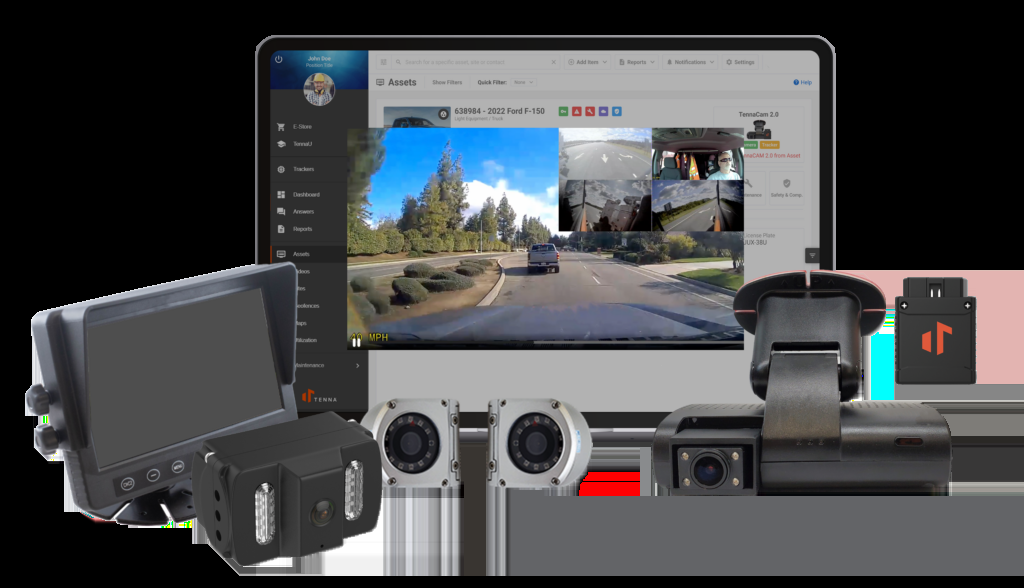
- TennaCAM AI safety cameras — dual-facing dash cameras that flag hard braking, speeding, fatigue, and distraction, with clips reviewable in the platform
- Driver scorecards, integrations with common project and accounting systems, and a mobile app for field, shop, and office users
Pricing
Pricing is not public on Tenna’s own site. Sales are quote-based, depending on asset count, tracker types, and modules. Third-party directories have listed a starting figure around $100 per user per month — directory-sourced and to-verify, not a Tenna price, so do not budget off it. Get hardware, installation, and contract terms in writing.
Who it’s for
Heavy civil and specialty contractors and rental operations running a genuinely mixed fleet — multiple brands, trucks, and a long tail of tools — where utilization, maintenance, and knowing what is on which site drive money, and where equipment, dispatch, and project teams need the same live picture.
Who should skip it
Small contractors with a few trucks and a short equipment list: a simpler GPS or tool-tracking app will cost less and deploy faster. Also skip it if you want a published price and self-serve signup — Tenna is sales-led, and rollouts take weeks, not an afternoon.
Pros
- Construction-specific from the ground up, not a generic fleet tool relabeled for contractors
- One record for location, utilization, maintenance, and safety instead of stitched-together systems
- Tracker options for small tools as well as heavy iron, so the whole yard can live in one place
- Now backed by Deere while continuing to sell as a mixed-fleet, brand-neutral product
Cons
- No published pricing — you have to go through sales to learn what your fleet will cost
- Deployment is a project, not a download: trackers, tags, and training across the fleet take time
- Value depends on tagging the small assets too, not just big machines
FAQ
Does Tenna only track John Deere equipment?
No. Tenna’s pitch is mixed-fleet tracking across brands, and after the February 2026 Deere acquisition it said it would continue operating independently under the Tenna name for construction customers.
How much does Tenna cost?
Tenna does not publish pricing. It is sold on a quote based on fleet size, tracker types, and modules. Directory listings citing a starting price should be treated as unverified until Tenna quotes your fleet directly.
Can Tenna track tools, not just machines?
Yes. Alongside GPS trackers for powered assets, Tenna uses Bluetooth and QR tags for tools, attachments, and other unpowered assets, with scans recording location and time in the same platform.
Bottom line
For a contractor whose fleet is big, mixed, and spread across sites, Tenna attacks a real cost problem: idle iron, missed maintenance, and nobody knowing where anything is. The trade is a sales-led price and a real deployment. Get the quote broken down by asset, and pilot it on one yard before tagging everything you own.