
Quick verdict
SafeAI Review 2026: Retrofit Autonomy That Turns Any Maker’s Machines Autonomous
Updated October 13, 2026 – Tested Intelligence
Quick verdict: SafeAI takes the opposite route to buying new autonomous trucks: it retrofits the fleet you already own, from any manufacturer, with AI, sensors and onboard computing so machines can operate autonomously. The MACA programme to retrofit 100 mining trucks in Australia shows its scale. Pricing is not public, and this is a serious fleet programme, not a single-machine add-on.
What it is
SafeAI, based in Milpitas, California and founded in 2017, builds a retrofit autonomy platform for mining and construction. Instead of selling a new autonomous vehicle, it adds hardware and software to existing machines – haul trucks, dozers, dump trucks and more – turning them into self-operating assets, in the company’s words.
The system combines a multimodal sensor suite – LiDAR, radar and cameras – with AI software and onboard processing power. Trade coverage describes software that leverages artificial intelligence, including deep neural networks, to detect and classify obstacles such as rocks or other vehicles and decide the best course of action in real time.
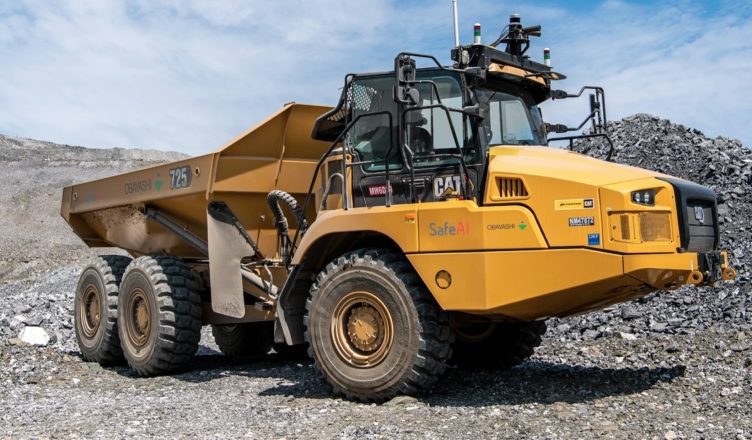
The proof point most often cited is Australia. After a successful proof of concept at Karlawinda in Western Australia, SafeAI, its Australian partner Position Partners and contractor MACA agreed to retrofit a mixed fleet of 100 mining trucks – described as one of the largest autonomous heavy equipment fleets in Australia. SafeAI has also worked with Obayashi in construction, including a retrofitted Caterpillar 725.
Key features
- Vehicle-agnostic retrofit: any vehicle, from any manufacturer, including mixed fleets (vendor claim)
- Multimodal sensors – LiDAR, radar and cameras – for detecting and classifying obstacles
- AI software with onboard computing for real-time decision-making at the machine
- Open, interoperable platform, described as Autonomy 2.0 versus closed first-generation systems
- Full autonomy for routine operation, designed to run 24/7 without fatigue
- Ecosystem integrations, including Goodyear tyre intelligence on a retrofitted Cat 725
Pricing
Pricing is not public. Expect a programme quote covering sensors, hardware, software, installation and support, priced by fleet size and scope. The vendor’s economic case is comparative: retrofitting should cost less than replacing a fleet with new autonomous vehicles from a single manufacturer – ask for that comparison, in writing, for your fleet.
Who it’s for
Mining and large construction operators with a substantial mixed fleet, repetitive haulage cycles, and a safety or labour case for removing operators from the cab. It suits firms that want autonomy without being locked to one OEM’s new machines. The MACA example fits exactly: a contractor scaling autonomy across sites, rather than buying a single-purpose truck.
Who should skip it
Small contractors and crews with one or two machines doing varied, skilled work. Retrofit autonomy pays on repetitive cycles at fleet scale. Also skip it if your machines are near end of life – trade interviews note retrofitting is usually only cost-effective on vehicles well within their service life – or if you need published pricing and a quick install.
Pros
- Protects the fleet you own – no forced replacement with one manufacturer’s new autonomous models
- Mixed-fleet, interoperable approach matches how contractors actually buy and run iron
- Removes the operator from hazardous, repetitive work while running around the clock
- Credible scale proof: 100-truck MACA programme after a Karlawinda proof of concept
Cons
- No public pricing
- Fleet programme, not a product you can buy and fit in a weekend – scoping and site work required
- Most public proof is in mining haulage; construction use cases are less documented
- Full autonomy raises site, safety-case and workforce questions a buyer must plan for
FAQ
What machines can SafeAI retrofit?
The vendor says any vehicle from any manufacturer, including haul trucks, dozers and dump trucks. Confirm your models, age and condition during scoping.
Is SafeAI fully autonomous or remote-controlled?
SafeAI positions it as full autonomy: machines that detect obstacles and decide onboard, rather than a remote operator driving each cycle. Site supervision still forms part of a real deployment.
How much does SafeAI cost?
Pricing is not public. Expect a fleet programme quote based on machine count, sensors and computing, installation and support.
Bottom line
SafeAI is for operators who want autonomy on the fleet they already paid for. If you run many machines on repetitive cycles and do not want to hand your roadmap to a single OEM, it deserves a serious scoping conversation – starting with the MACA evidence and a hard look at your oldest machines.